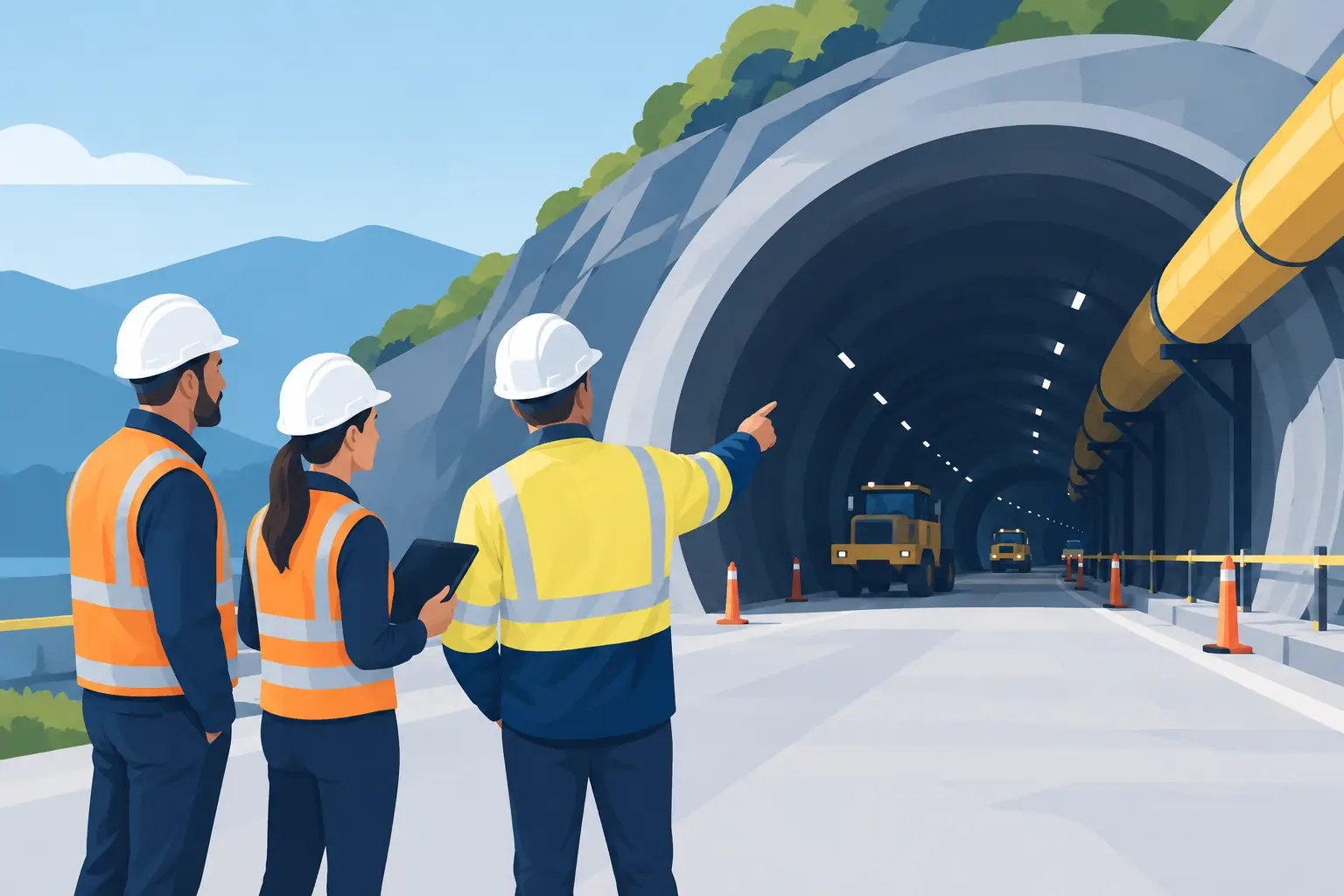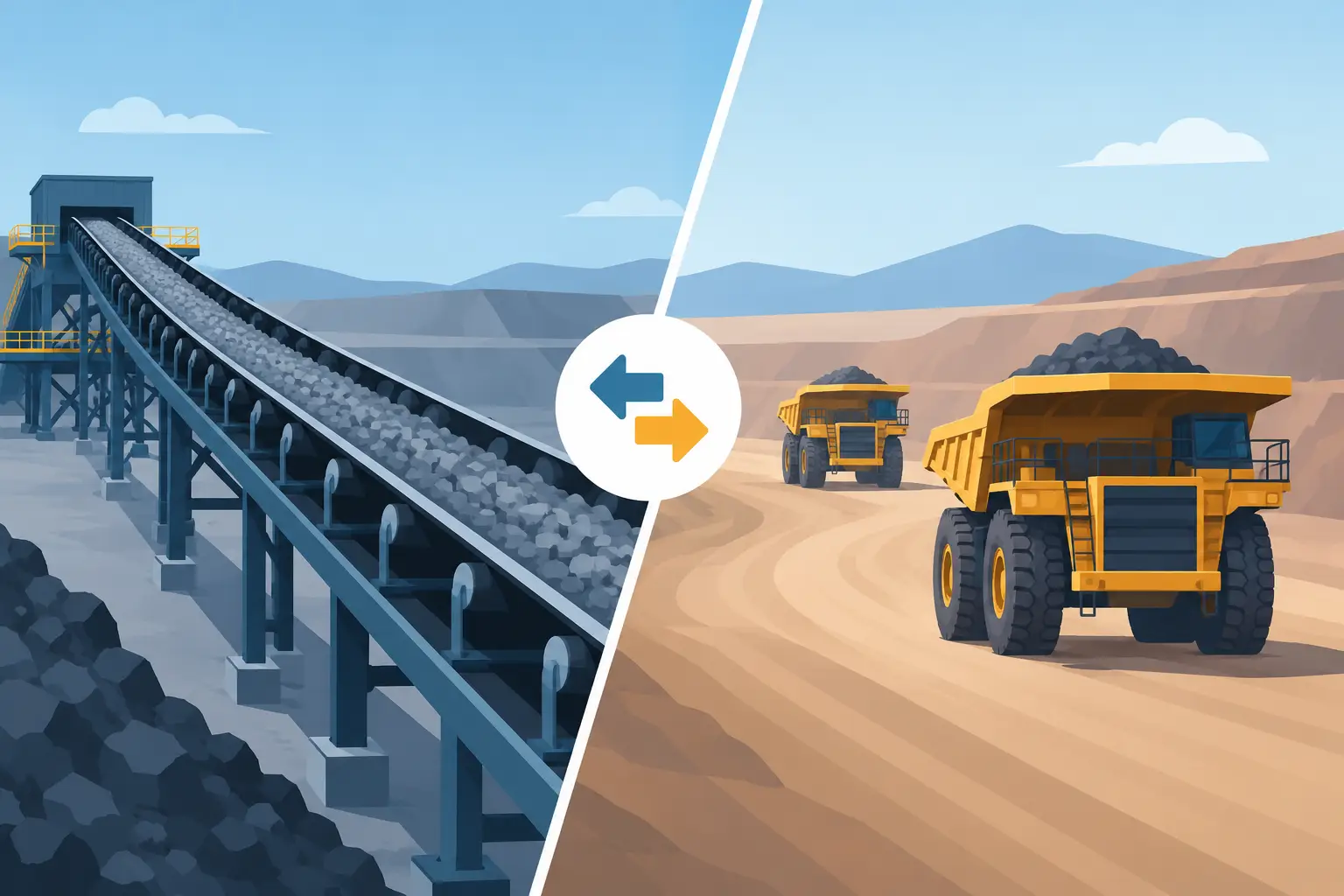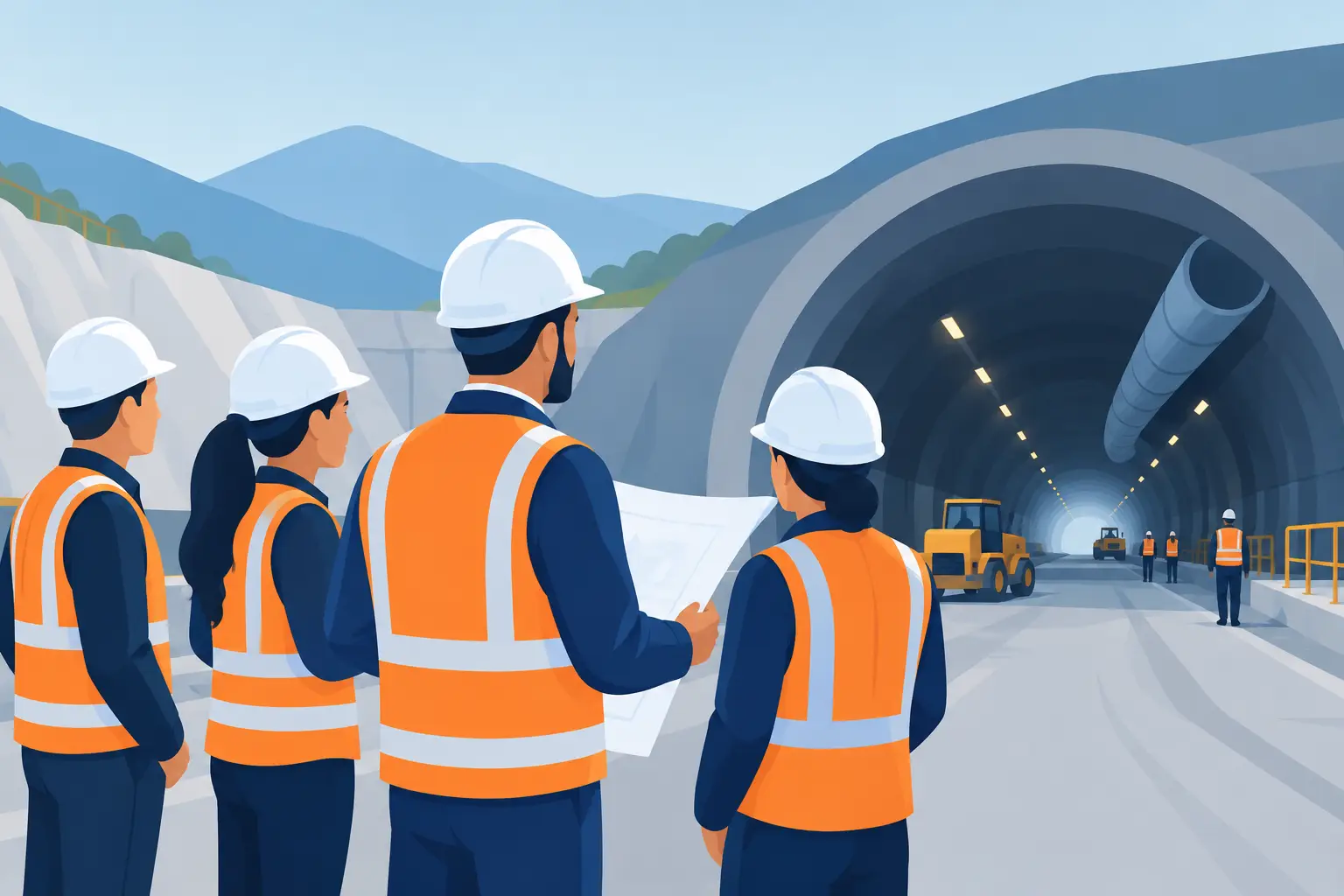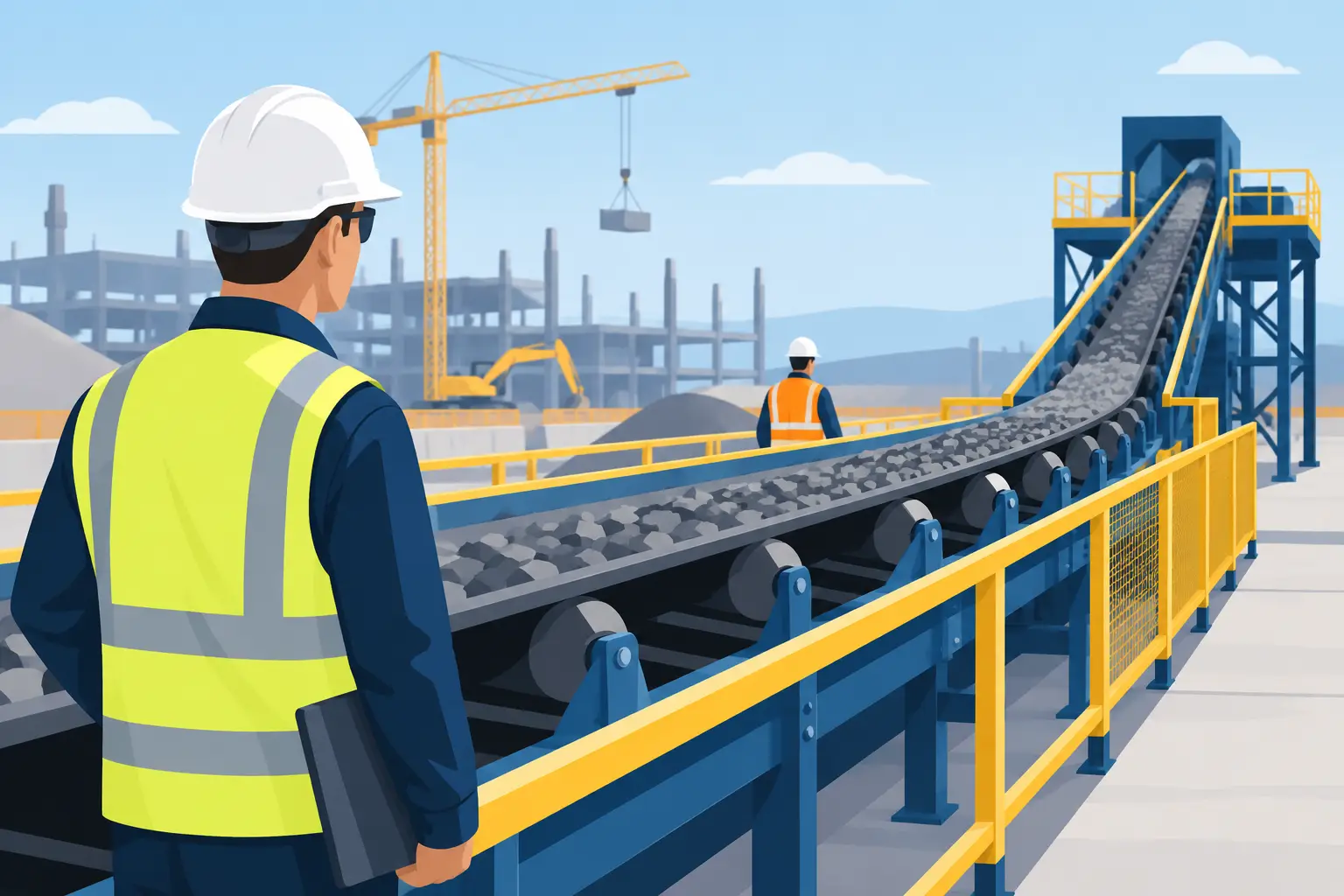
A conveyor rarely fails at a convenient time. On a tunnel, civil infrastructure or production site, it is often operating alongside crews, mobile plant and a schedule that cannot absorb extended downtime. Conveyor safety is therefore not just a compliance requirement. It is a daily operating discipline that protects people while keeping material moving under controlled conditions.
The highest-risk events are usually not caused by a single dramatic failure. They develop when a small fault, such as material build-up, mistracking, a damaged guard or a slipping belt, is handled informally. A worker tries to clear the issue while the system is live, a guard is left off after a repair, or an isolation boundary is misunderstood during a shift change. Effective control comes from designing these situations out where possible, then ensuring crews have clear procedures when intervention is necessary.
Conveyor safety starts with the operating environment
A safe conveyor system has to suit the work it is asked to do. That is particularly true in underground tunnelling, where restricted access, dust, moisture, variable ground conditions, noise and continuous production place extra pressure on both equipment and personnel. The same principle applies to quarrying, mining, manufacturing, agriculture and logistics operations with long run times or high material volumes.
Before a conveyor is installed, modified or recommissioned, the operating environment should be assessed as part of the engineering and planning process. This includes belt speed, material characteristics, transfer-point design, access routes, cleaning requirements, emergency egress, lighting and the space available for maintenance. A layout that is workable during installation can become unsafe once skirts, chutes, walkways, services and operating crews occupy the same area.
Access is a practical example. Personnel need safe, defined routes to inspection points, pull-wire switches, drives, take-ups and transfer stations. Where inspections require workers to climb over structures, work from unstable ground or reach across moving components, the system is relying on individual judgement rather than proper control. Fixed walkways, platforms, handrails and adequate clearance often prevent the shortcuts that lead to incidents.
Guarding must control the real hazards
Nip points at pulleys, idlers, drives, take-up assemblies and return rollers can draw in clothing, tools or body parts quickly. Guards must prevent access to these hazards without creating a maintenance problem that crews will be tempted to bypass. A guard that is difficult to remove, poorly fitted or damaged by vibration may be treated as an obstacle rather than a safety control.
Effective guarding is secure, appropriately designed for the equipment and routinely checked as part of inspections. It also needs to be reinstated before the conveyor returns to service. This sounds basic, but it requires discipline in busy shutdown windows where several trades may be working across the same conveyor line.
Guarding does not remove the need for controlled work practices. It works alongside lockout and isolation procedures, exclusion zones, training and supervision. Emergency stop devices are also essential, but they should never be considered a substitute for guarding or a safe method of isolating plant for maintenance.
Isolation is the critical control for maintenance work
Cleaning, tracking adjustments, replacement of rollers, belt repairs and fault finding all create circumstances where people may be close to hazardous movement. If there is a possibility that a person can be exposed to a moving belt or rotating component, the job must be planned around isolation.
A suitable isolation process identifies every energy source that could cause movement. Depending on the system, this may include electrical supply, stored mechanical energy, gravity take-up movement, hydraulic or pneumatic equipment, and material that can release unexpectedly from a chute or hopper. The authorised person should isolate the relevant equipment, apply personal locks and tags, verify the system is de-energised, and communicate the work boundary to everyone affected.
Complex sites need particular care. A conveyor may be linked to upstream feeders, downstream conveyors, a crusher, a TBM spoil handling system or automated controls. Stopping one section from a local station does not necessarily establish a safe work area. The isolation must reflect the full system logic and any potential for remote or automatic restart.
Shift handovers are another point of exposure. The incoming crew needs a clear picture of plant status, outstanding work, active isolations and changes made during the previous shift. Formal handover records are valuable, but the conversation between supervisors, operators and maintenance personnel is equally important when conditions are changing quickly.
Inspection prevents faults becoming exposures
Preventive maintenance is one of the most effective forms of conveyor safety because it identifies issues before workers are forced to respond under pressure. Regular inspections should focus on the conditions that create both equipment failure and personnel risk: belt tracking, roller condition, bearing noise, spillage, guard integrity, structural damage, abnormal vibration, pulley lagging, emergency-stop function and the condition of electrical equipment.
Inspection frequency depends on the duty cycle, material handled, operating environment and consequence of failure. A conveyor carrying spoil continuously from an underground heading requires more attention than a lightly loaded intermittent system. Dust, water and abrasive material can accelerate wear, while poor loading at transfer points can lead to spillage, belt damage and recurring clean-up work.
The inspection process needs to produce action, not just paperwork. Defects should be recorded with a clear assessment of urgency, assigned to a responsible person and closed out after repair. A damaged return roller may be a planned maintenance item in one location, while the same defect beneath a public access route or near a confined work area may require immediate control.
Housekeeping is a safety control, not a finishing task
Material spillage is often accepted as part of conveyor operation until it creates a slip hazard, obstructs access or builds around moving components. Accumulated material can interfere with rollers, increase belt mistracking and create conditions where workers feel compelled to clean close to live equipment.
Good transfer-point design, suitable skirting, belt scrapers and properly adjusted sealing arrangements reduce the source of the problem. Regular cleaning then maintains the area to a safe standard. The trade-off is that cleaning systems and containment equipment require inspection and adjustment themselves. Ignoring them simply transfers the risk to labour-intensive manual clean-up.
Competent people make controls effective
Conveyor safety depends on more than the people who operate the belt day to day. Operators need to understand start-up warnings, emergency devices, reporting requirements and exclusion zones. Maintenance personnel need the competency to isolate, test, repair and recommission equipment safely. Supervisors need to coordinate work permits, access and handovers when multiple crews are active.
On major infrastructure projects, workforce capability can vary across shifts and subcontractors. Site induction alone is not enough. Personnel need task-specific instruction on the conveyor arrangement they are working around, including local emergency stops, communication methods, isolation points and site rules for clearing blockages or performing adjustments.
This is where experienced fitters, electricians, operators, supervisors and specialised tunnel personnel add value. They recognise that a recurring tracking issue, excessive carryback or unusual drive noise is not merely a production nuisance. It may be an early warning that requires planned intervention before it becomes a breakdown or injury risk.
Manage changes before they reach the belt
Conveyor systems change throughout a project. Belt routes are extended, transfer chutes are modified, drive arrangements are upgraded, new controls are added and operating conditions evolve as production increases. Each change can affect guarding, access, load capacity, emergency-stop coverage, electrical protection and maintenance requirements.
A disciplined management-of-change process ensures modifications are reviewed before work begins and tested before handover. It should confirm that drawings, isolation information, operating procedures and maintenance plans reflect the revised system. Commissioning should test not only production performance, but also safety functions and the practical ability of crews to inspect and maintain the equipment.
For critical assets, rapid-response support is still necessary. However, the best outcome is not a fast repair after a failure. It is a maintenance approach that uses inspections, spare-parts planning and reliable technical support to reduce the likelihood of emergency intervention in the first place.
HP Rural supports conveyor-dependent projects with installation, commissioning, maintenance, repairs and operational personnel suited to demanding environments. The focus is straightforward: keep systems reliable, ensure work is controlled, and address defects before they place people or project delivery at risk.
A safe conveyor is one that gives crews time, access and authority to do the job properly. When those conditions are built into daily operations, safety and uptime stop competing with each other.