A conveyor belt tracking problem rarely begins with the belt itself. On a tunnelling or high-throughput materials handling system, the belt moving towards one side is often the visible symptom of a structural, loading, pulley or maintenance issue. Treating it as a simple adjustment task can damage belt edges, create spillage, overload components and turn a manageable defect into an unplanned shutdown.
Tracking faults demand prompt attention because conveyors are interconnected systems. A belt that consistently runs off-centre can contact guards or steelwork, wear through the edge, damage skirts and rollers, and affect transfer performance. In underground works, where access is restricted and production windows are tight, the cost of allowing the issue to continue can be significant.
What causes a conveyor belt tracking problem?
A correctly installed belt should run centrally through its load zone, along the carrying run and around its pulleys under normal operating conditions. Minor movement can occur, particularly during changes in load or material characteristics. Persistent movement to one side, however, requires investigation.
The most common causes are not isolated. Several small defects can combine to produce a tracking issue that appears intermittent or only occurs when the conveyor is loaded. The direction of belt travel matters as well. A fault affecting the return run may have a different cause from one that develops through the carrying run.
Structure that is out of square
Conveyor frames, stringers, pulley supports and idler brackets must be aligned square to the centreline of the belt. If an idler set is skewed, the belt tends to move towards the side it contacts first. A misaligned head pulley, tail pulley or bend pulley can have a more pronounced effect because it changes how the belt enters and leaves a critical point in the system.
This issue can develop after installation. Ground movement, vibration, impact damage, poorly controlled modifications or repeated loading of a temporary conveyor structure can alter alignment. In tunnelling applications, regular verification is particularly valuable as the conveyor arrangement is extended, relocated or modified to match project progress.
Uneven loading at transfer points
Material should be placed centrally and in the same direction as belt travel. When material lands heavily on one side, the belt can be pushed or pulled off-centre. Chute geometry, worn liners, poor material trajectory and blocked or damaged skirts are frequent contributors.
A conveyor may track correctly while empty but drift under load. That is a useful diagnostic sign. It suggests the inspection should focus on the loading zone and material flow rather than starting with tracking rollers at the head or tail end.
Contamination, build-up and seized rollers
Carryback and material build-up on pulleys can create an uneven running surface. The belt then rides higher on one side, changing its path. Wet spoil, sticky fines and water ingress make this more likely, especially where scrapers are ineffective or wash-down arrangements are inadequate.
Seized rollers, damaged bearings and worn idlers also affect belt behaviour. A roller that no longer turns increases friction and can pull the belt towards that side. Damaged idler frames may produce the same result, even where the roller itself remains serviceable.
Belt condition and splice quality
Belts with uneven wear, damaged edges, a distorted carcass or an incorrectly prepared splice may not run predictably. A splice that is not square can influence tracking each time it passes through a pulley or idler set. The pattern is often cyclical, so observing the belt over several full revolutions helps distinguish a belt-related fault from a fixed structural issue.
Belt tension also requires assessment. Insufficient or uneven tension can reduce traction at the drive pulley and make the belt more susceptible to wandering. Excessive tension creates a different set of risks, including premature bearing, pulley and belt damage. The correct setting depends on the conveyor design, belt specification, take-up arrangement and operating duty.
Investigate before making adjustments
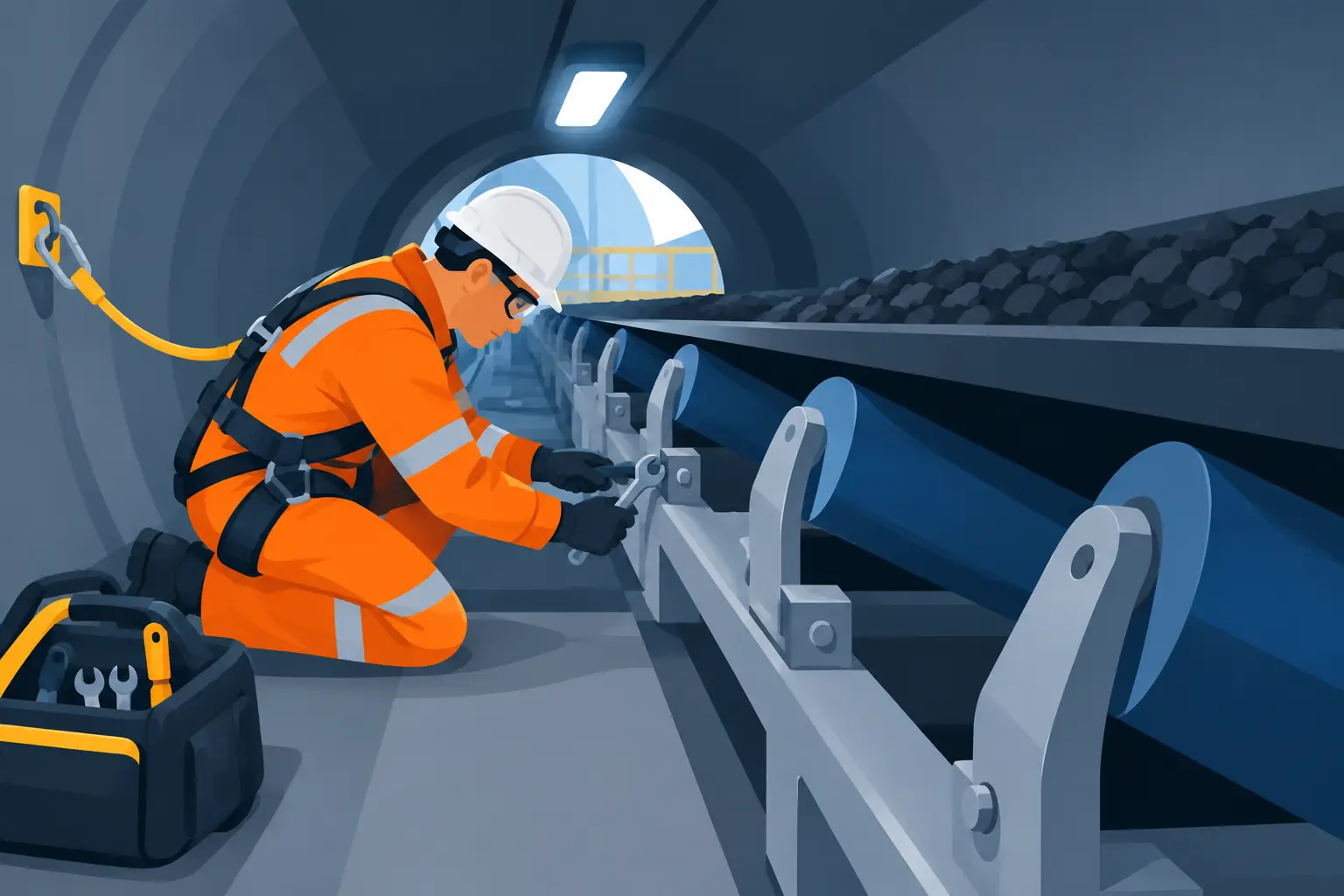
Tracking adjustments made without identifying the cause often shift the problem elsewhere. A practical inspection starts by recording where the belt first moves off-centre and whether it occurs on the loaded or return run. Inspectors should observe the system from a safe position while it is operating, then isolate, lock out and verify the conveyor is de-energised before any hands-on work.
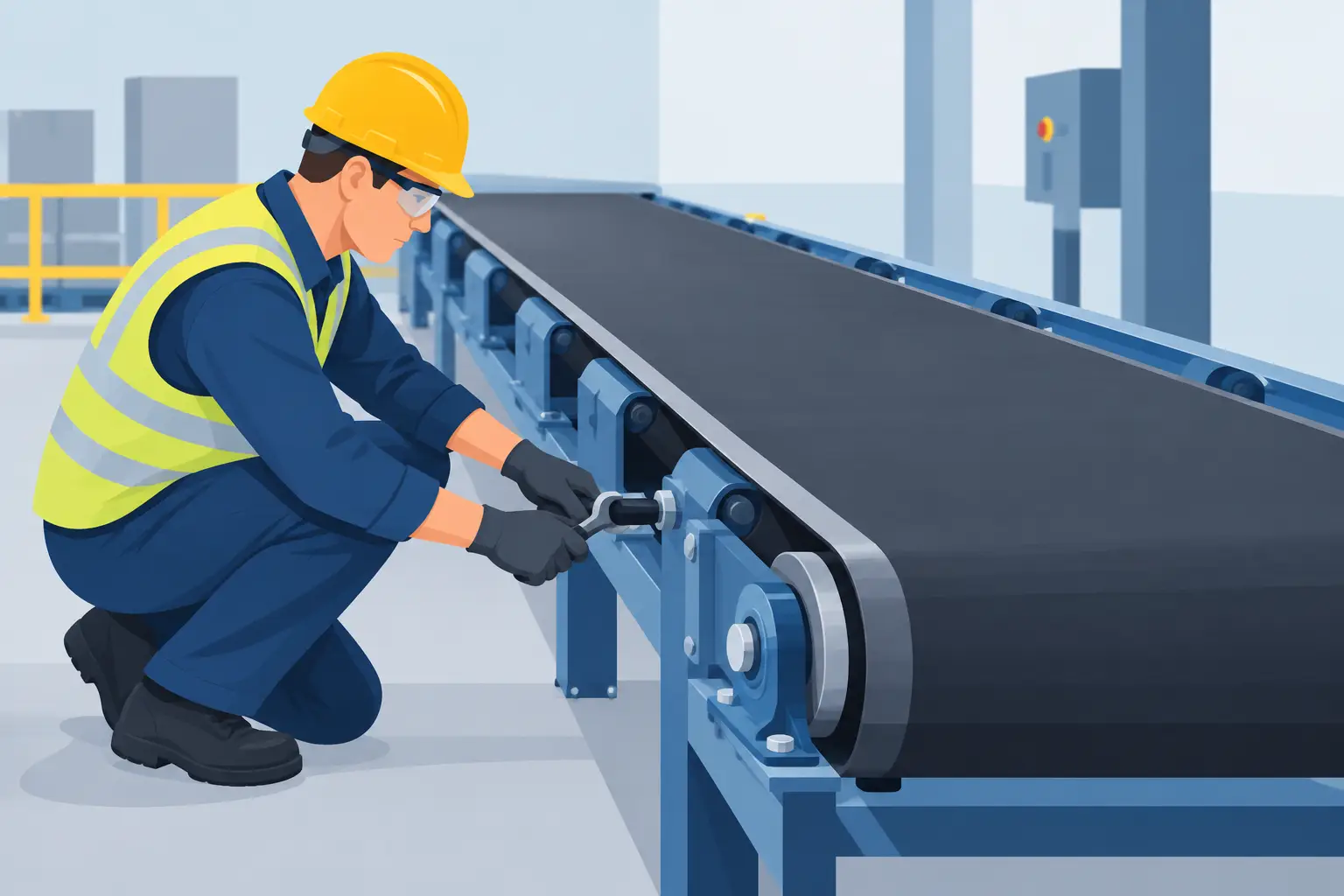
The inspection should establish whether the belt is entering a pulley centrally, whether material is loading symmetrically, and whether idlers are free-running, level and square. Check for accumulated material on pulleys and return rollers, damaged skirting, belt-edge wear, loose supports and signs of recent impact.
It is also worth reviewing what changed before the fault emerged. A new belt splice, an altered transfer chute, replacement rollers, a conveyor extension or a change in material moisture can provide the missing context. This is more efficient than repeatedly adjusting tracker frames while the underlying cause remains in service.
Correcting tracking faults without creating new risks
Once the cause is confirmed, corrective work should address the earliest point at which the belt begins to wander. If the belt is being loaded off-centre, correct the chute and skirt arrangement first. If a pulley or structure is misaligned, measure and realign it to the conveyor centreline. If build-up is changing the pulley profile, restore effective cleaning and resolve the source of carryback.
Tracking idlers and self-aligning frames can be useful control devices, but they are not a substitute for correct installation and maintenance. They work best on a conveyor with sound structure, suitable material loading and clean pulley surfaces. Over-reliance on them can mask an alignment defect until belt-edge damage becomes severe.
Adjustments should be small, controlled and documented. After each change, run the conveyor under the operating conditions that produced the problem, including normal load where safe to do so. Confirm belt position at the affected area and at adjacent pulleys. A correction that appears successful on an empty belt may not hold once material is introduced.
Where belt-edge damage, a failed splice or substantial pulley lagging wear is identified, temporary tracking adjustments may only buy limited time. Planned repair or replacement is generally the safer decision, particularly on a critical conveyor where a belt failure would stop excavation, spoil removal or plant feed.
Preventing recurring belt tracking issues
The most effective prevention program combines routine inspection with disciplined housekeeping and accurate maintenance records. Operators are often the first to notice a belt moving differently, new spillage or unusual roller noise. Giving them a clear escalation path allows small defects to be addressed before they affect production.
For high-duty systems, inspection frequencies should reflect operating hours, material characteristics, environmental conditions and the consequence of failure. Wet and abrasive material, long conveyors, frequent extensions and confined underground access all justify closer attention. The objective is not to adjust a belt at every inspection. It is to identify changes in alignment, loading and component condition early enough to schedule corrective work safely.
A useful program includes checks of pulley and idler condition, belt cleaners, skirting, transfer chutes, tensioning equipment, belt edges and structural fasteners. It should also capture recurring fault locations. If the belt repeatedly tracks at the same transfer or bend, that trend points to a design, alignment or loading issue requiring a permanent remedy.
When specialist support is warranted
Escalate the issue when tracking persists after basic cleaning and verification, when the belt contacts fixed structure, or when there is visible edge damage, a splice concern or evidence of pulley misalignment. These conditions can require survey equipment, controlled alignment work, belt repair capability and a clear understanding of the wider conveyor system.
For major infrastructure and tunnelling operations, the repair plan must also account for isolation requirements, access constraints, lifting arrangements, permits and the impact on connected plant. HP Rural supports conveyor inspections, repairs, modifications and preventive maintenance with qualified technicians experienced in high-demand operating environments.
A belt that runs true is not simply a maintenance preference. It protects the conveyor’s service life, reduces spillage and gives the operation a better chance of maintaining planned production when the system is under pressure.