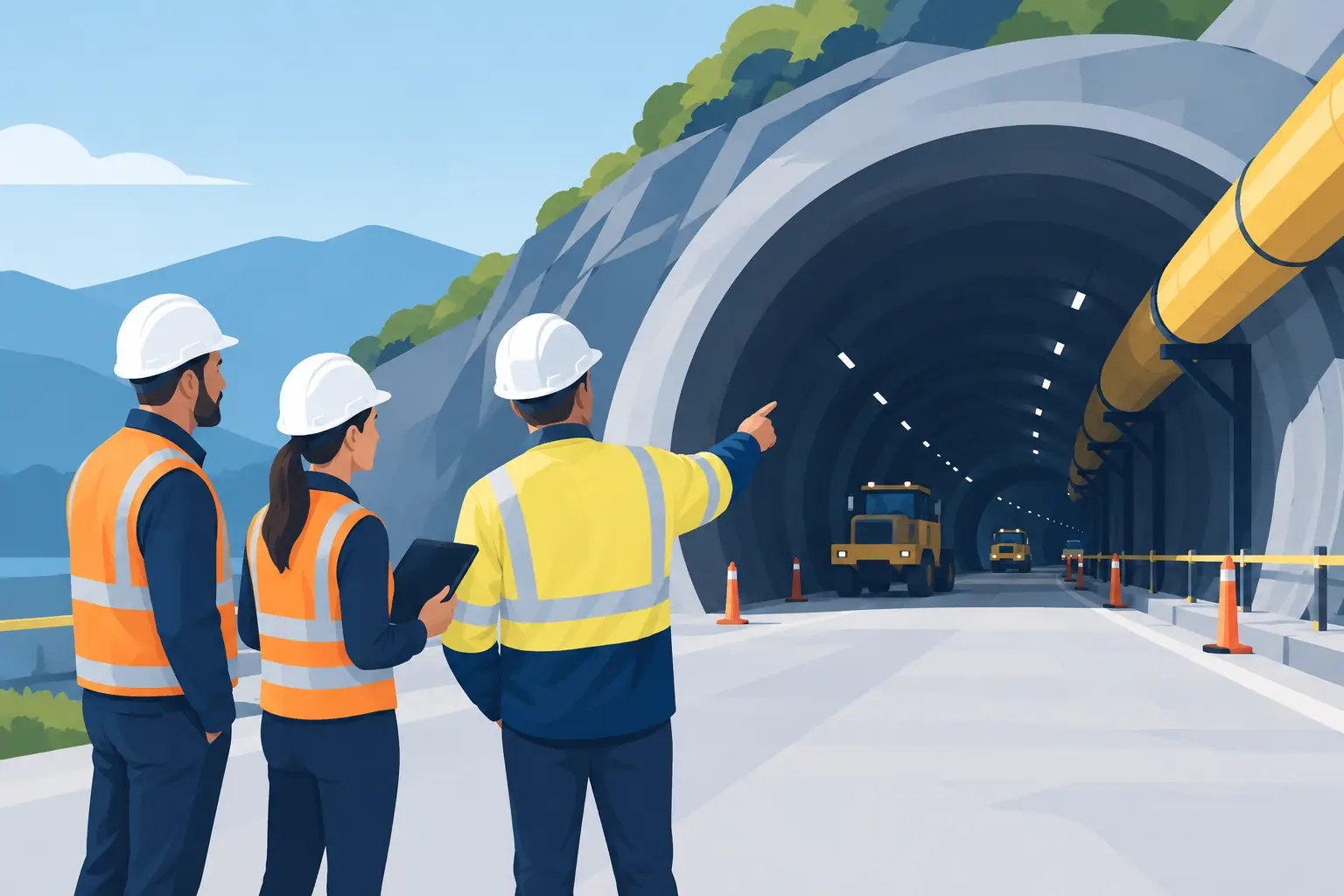
A stopped conveyor is rarely just a mechanical issue. On a tunnel or major infrastructure project, it can halt spoil removal, disrupt TBM production, create congestion underground and place immediate pressure on the programme. The choice between planned maintenance versus reactive repairs directly affects safety exposure, labour deployment, spare-parts demand and the certainty of daily output.
Reactive repairs will always have a place in high-demand operations. Components can fail without warning, belt damage can occur after a single incident and unforeseen conditions need an immediate response. The operational objective is not to eliminate reactive work. It is to reduce the avoidable failures that turn a manageable defect into a costly, high-risk breakdown.
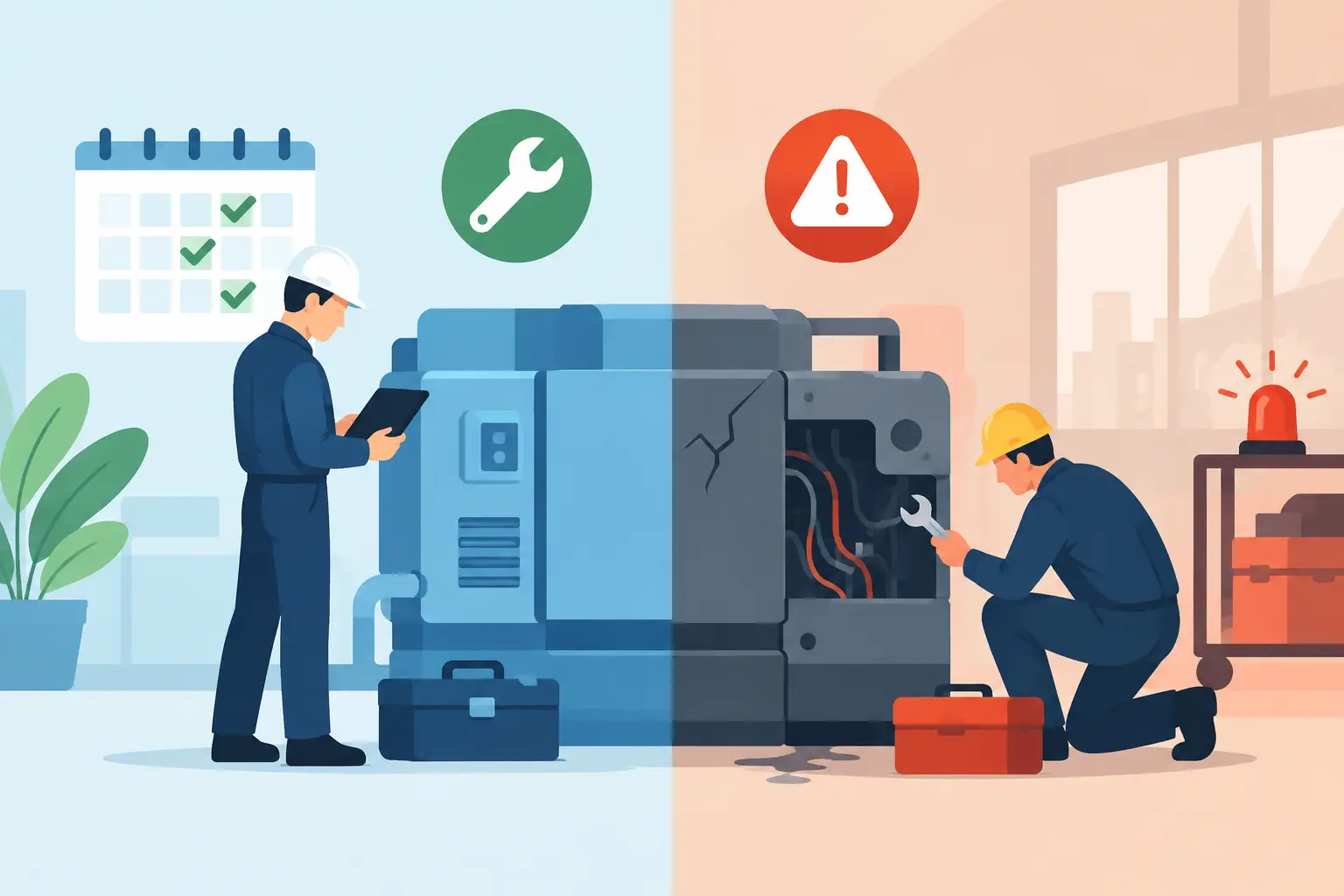
Planned maintenance versus reactive repairs
Planned maintenance is scheduled work based on operating hours, inspection findings, manufacturer requirements, condition trends and the known duty of the conveyor. It includes routine inspections, lubrication, belt tracking checks, idler and roller assessment, pulley inspections, drive-system checks, guarding reviews and timely replacement of worn components.
Reactive repair begins after a fault has affected, or is about to affect, operation. It may involve replacing a seized roller, repairing a damaged belt, changing a failed gearbox, rectifying a tracking issue or responding to an electrical fault. The work is often urgent, undertaken under time pressure and dependent on the availability of the right people, access equipment and spare parts.
The difference is not simply scheduled work versus emergency work. It is controlled intervention versus unplanned disruption. A planned shutdown can be coordinated around production needs, isolations, permits and workforce availability. A breakdown usually dictates its own timing.
For conveyor-dependent sites, planned maintenance creates a clearer picture of asset condition. Maintenance teams can identify recurring problems, record component life, investigate root causes and plan corrective work before the system reaches a failure point. This supports more reliable budgeting and reduces the need to make rushed decisions when production is already affected.
Why reactive repairs cost more than the repair itself
The invoice for an emergency repair does not show the full cost of a conveyor failure. The greater impact often sits in lost production, delayed shifts, standby labour, disrupted logistics and recovery work needed to bring the operation back to its planned rate.
In tunnelling environments, the consequences can be more pronounced. Spoil handling systems operate as part of a wider production chain. If the conveyor cannot remove material, the TBM or roadheader may need to slow or stop. Delays can then affect crews, support activities, materials movement and downstream construction interfaces.
There is also a safety consideration. Emergency repairs can require technicians to work in constrained areas, during unscheduled hours or while other site activities are being reorganised around the failure. Competent personnel, effective isolation procedures and safe access remain non-negotiable, but the pressure to restore operation can make careful planning even more important.
Reactive work also reduces purchasing control. A component that could have been ordered during a planned replacement window may suddenly need expedited freight or a substitute solution. If the site does not hold a suitable critical spare, the outage can extend well beyond the physical repair time.
What planned maintenance should look for
A useful maintenance programme is not a generic checklist completed for compliance alone. It should reflect conveyor length, belt speed, material characteristics, operating hours, environmental conditions, access limitations and the consequence of failure.
On high-duty conveyors, technicians should monitor belt tracking and belt condition, including cover wear, edge damage, tears and splice integrity. They should assess idlers, rollers and bearings for noise, heat, seizure, wear and material build-up. Pulleys, lagging, scrapers and skirting require attention because poor transfer-point performance can accelerate belt damage and create clean-up requirements.
Drive assemblies need the same disciplined approach. Motors, gearboxes, couplings, brakes, guards, sensors, electrical connections and control equipment should be inspected in line with their duty and failure history. A minor vibration change or irregular operating temperature may provide early warning of an issue that would otherwise become a major outage.
Housekeeping is part of conveyor reliability, not a separate concern. Carryback, spillage, blocked chutes and accumulated material can affect tracking, overload components and create slip, trip and fire risks. A maintenance plan should assign responsibility for identifying and rectifying these conditions before they escalate.
Condition data turns inspections into decisions
Regular inspections become more valuable when findings are recorded consistently. A maintenance supervisor needs more than a note that a roller was replaced. They need to know where it was located, why it failed, whether comparable components are deteriorating and whether the issue relates to alignment, contamination, loading or component selection.
This information helps teams move from replacing individual failed parts to managing failure patterns. For example, repeated roller failures near a transfer point may indicate impact loading, inadequate sealing or material build-up rather than poor-quality rollers. Repeated belt tracking corrections may point to structural alignment, loading distribution or damaged idlers.
Condition monitoring does not need to be overly complicated to be useful. Inspection reports, operating-hour records, thermal checks, vibration observations and component-change history can provide practical evidence for scheduling work. On critical systems, more advanced monitoring may be justified where it gives early warning of bearing, drive or belt-related issues.
The level of monitoring depends on risk. A short conveyor with redundancy may justify a simpler approach than a long underground conveyor that is central to continuous excavation. Maintenance planning should follow the operational consequence of failure, not a one-size-fits-all interval.
When reactive repairs are the right response
Not every defect needs an immediate planned shutdown. Some issues can be monitored until the next available maintenance window, while others demand rapid action to protect people and equipment. The key is a clear escalation process based on condition and consequence.
Reactive response is appropriate when there is an immediate safety risk, a developing belt failure, a failed critical drive component, significant tracking loss, electrical protection trips or damage that could worsen quickly if the conveyor continues operating. In these cases, qualified personnel need to attend, isolate the equipment, assess the fault and return the system to service safely.
The strongest maintenance arrangements combine planned work with capable breakdown support. A contractor must be able to mobilise fitters, mechanics, electricians, welders, supervisors and specialised personnel when conditions require it. They also need familiarity with the site, equipment configuration, safety systems and critical spares. Rapid attendance matters, but it is more effective when supported by prior knowledge of the conveyor and its operating history.
Building a practical maintenance strategy
Start by identifying the conveyors that are genuinely production-critical and the components most likely to create extended downtime. This should include belts and splices, drive assemblies, pulleys, bearings, rollers, electrical controls and transfer points. Consider access constraints, lead times for replacements and whether a failure can be contained without stopping the wider operation.
Critical spares should then be selected according to risk rather than stored in large quantities without purpose. A site may need nominated belt-repair materials, rollers, bearings, pulley components, sensors, electrical parts and drive-related spares. The right holding depends on equipment standardisation, supplier lead times, storage conditions and the cost of an extended outage.
Planned shutdowns should be used properly. They are an opportunity to complete inspections and corrective work that cannot safely be performed while the conveyor is running. Coordinating mechanical, electrical and cleaning tasks in the same window reduces repeat isolations and limits the number of interruptions to production.
Competency is equally important. Conveyor maintenance in confined, underground or high-output environments requires technicians who understand mechanical systems, isolation requirements, lifting practices, guarding, belt work and site-specific controls. Where a project needs additional maintenance coverage, skilled labour hire can strengthen planned works without compromising supervision or safety standards.
HP Rural supports conveyor systems across installation, commissioning, preventive maintenance, repairs, upgrades, spare-parts support and emergency breakdown response. For project teams, the practical value is continuity: a contractor that understands how the system was installed, how it operates and what is required to keep it moving safely.
The most effective maintenance programme is not the one with the most inspections. It is the one that finds meaningful defects early, schedules the right work, keeps critical parts available and ensures qualified people can respond when the unexpected still occurs.