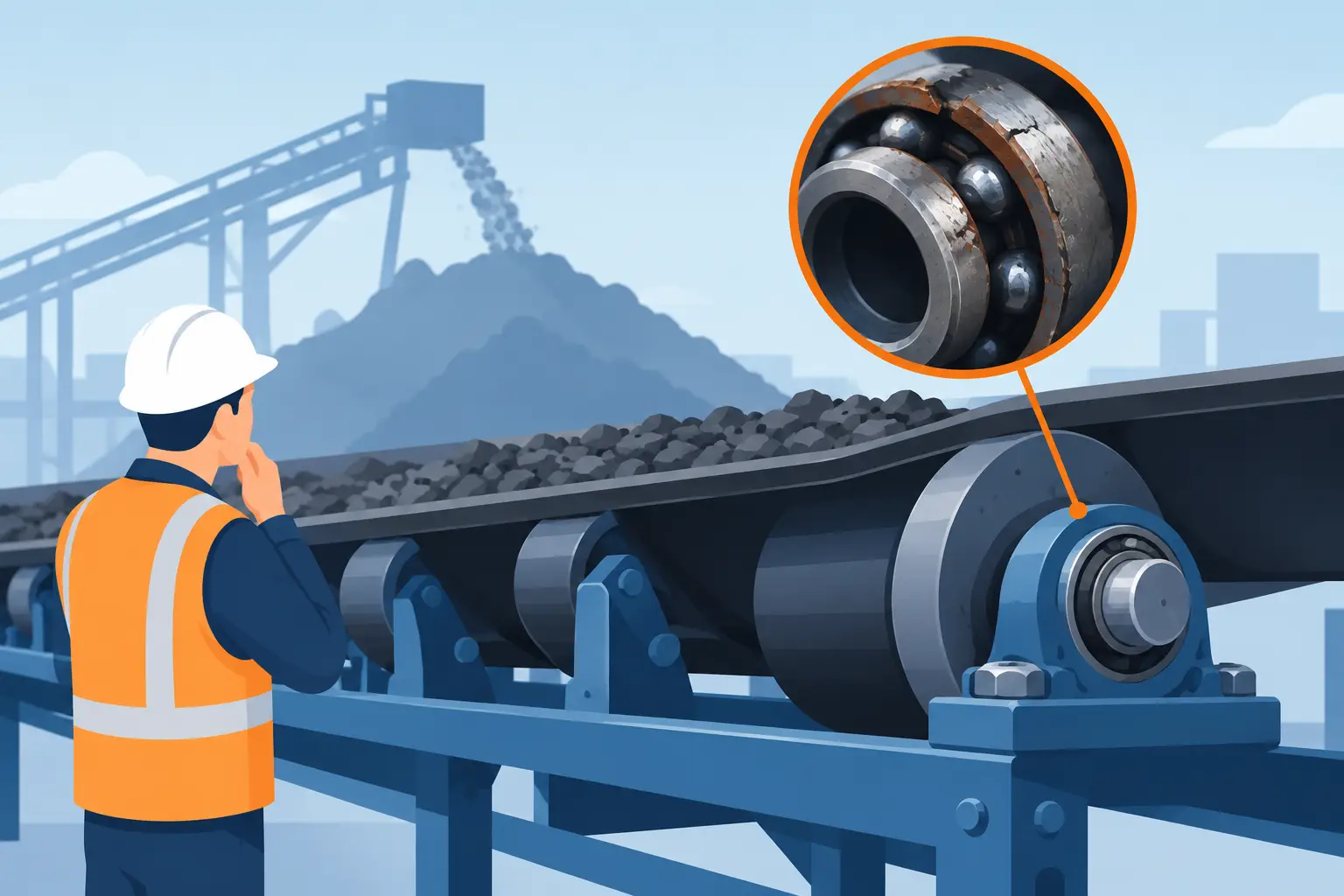
A seized idler can start as a minor running noise and end as a belt-damaging, production-stopping event. Why do conveyor bearings fail? Usually, the bearing has been exposed to a condition it was not selected, installed or maintained to manage – often contamination, misalignment, inadequate lubrication or excessive load. In high-demand conveyor operations, particularly underground and on major infrastructure projects, the failure is rarely isolated. It is usually a signal to inspect the surrounding system.
Why Do Conveyor Bearings Fail in Conveyor Systems?
Conveyor bearings support rotating components including idlers, pulleys, drive assemblies and take-up systems. Their job is simple, but their operating environment often is not. Dust, slurry, moisture, vibration, belt tracking issues and changing material loads can place continuous stress on seals, housings and rolling elements.
Bearing failure accelerates when those stresses are allowed to continue unnoticed. A bearing may overheat, develop excessive radial play, run rough or lock up entirely. Once it does, the effects can spread: worn shafts, damaged idler shells, belt cover damage, increased drive power demand and a greater risk of fire where friction and combustible materials are present.
The right response depends on the component and failure mode. A sealed idler bearing in a wet, abrasive transfer area requires a different inspection approach from a regreasable pulley bearing in a drive station. However, the underlying causes are consistent across most conveyor installations.
Contamination Is the Most Common Cause
Fine dust and moisture are persistent threats to bearing life. In tunnelling, quarrying, mining and civil construction, airborne fines can work past compromised seals. Water, washdown residue and slurry can then displace lubricant and create corrosion inside the bearing.
A bearing does not need to be fully submerged to be affected. Repeated wet-dry cycles can pull moisture through damaged seals as the bearing cools. Abrasive particles suspended in grease act like grinding compound, scoring raceways and rolling elements. The result is a rough-running bearing that generates more heat and deteriorates quickly.
Contamination is often traced to failed or unsuitable seals, pressure washing directed at bearing locations, inadequate guarding, damaged end caps or a component specification that does not suit the duty. In abrasive or wet zones, the practical question is not whether contamination exists, but whether the sealing arrangement, inspection interval and replacement plan account for it.
What maintenance teams should check
Inspect idlers and pulley bearings for damaged seals, evidence of grease leakage, rust staining, abnormal noise and heat. Also inspect the surrounding chute work, skirting and spray patterns. A bearing problem near a transfer point may be caused by spillage or water ingress from the process, rather than the bearing itself.
Incorrect Lubrication Causes Both Starvation and Overgreasing
Lubrication failures are not limited to too little grease. Overgreasing can be equally damaging, particularly in housed bearings. Excess grease creates churning, raises operating temperature and can force seals out of position. If incompatible grease types are mixed, the base oil and thickener can separate or lose their intended consistency.
Under-lubrication leaves metal surfaces without an adequate film, increasing friction and wear. This is common where grease points are difficult to access, lubrication schedules are not matched to operating hours, or personnel assume a bearing is sealed when it is designed for periodic regreasing.
A workable lubrication programme identifies the correct grease, volume, frequency and application method for each bearing type. It should account for ambient temperature, speed, loading, contamination and operating hours. A conveyor that runs around the clock needs a different regime from one that runs intermittently, even where the components appear identical.
For critical pulley assemblies, maintenance records should capture lubricant type, quantity, date, operating condition and any observed change in temperature or vibration. This turns lubrication from a routine task into a controlled reliability activity.
Misalignment Loads Bearings Beyond Their Design
Bearings are designed to carry load in particular directions. Shaft misalignment, crooked mounting surfaces, incorrect housing fit or pulley misalignment introduces forces that shorten bearing life. Even small alignment errors can matter when the conveyor operates continuously.
On a conveyor, misalignment may begin with poor installation, but it can also develop over time. Structural movement, loose fasteners, worn lagging, shaft deflection, frame damage and uneven belt loading can all change how the load reaches the bearing. Belt tracking issues are especially relevant. When a belt persistently runs to one side, it can create side loads on idlers and pulleys that were never part of the original design condition.
Signs include uneven wear, repeated failure at the same location, hot bearing housings, belt edge damage and unusual vibration. Replacing a failed bearing without checking shaft condition, housing bores, pulley alignment and belt tracking simply resets the clock on the next failure.
Installation quality matters
Incorrect fitting damages bearings before the conveyor returns to service. Driving force through the rolling elements during installation can indent raceways. Poorly prepared shafts, burrs, incorrect interference fit and loose housings can allow creep, fretting and heat generation.
Qualified fitters should use the correct tools and fitting method, verify shaft and housing tolerances, and protect components from dirt during assembly. On major projects, this discipline is particularly valuable during commissioning, when alignment and installation defects can be identified before full production loads expose them.
Overloading and Shock Loading Reduce Service Life
Conveyor bearings are selected around expected speed, radial load, axial load and service conditions. When actual loading exceeds that basis, fatigue life decreases. Material surges, oversized rock, blocked chutes, poor feed control and frequent stop-start operation can all produce loads beyond normal running conditions.
Shock loading is common at transfer points and during belt clean-up issues. A seized roller, mis-tracking belt or material build-up may create local resistance that adds strain across the conveyor. At drive and take-up pulleys, incorrect belt tension can also overload bearings. Too little tension causes slip and dynamic movement; too much raises bearing and shaft loading.
The solution is not always a larger bearing. It may be improved feed control, revised chute geometry, a review of belt tension, stronger idler frames or a component selected for the actual duty cycle. Failure data should guide that decision. If a specific location repeatedly fails after correct installation and lubrication, the operating conditions require investigation.
Heat, Vibration and Electrical Damage Need Attention
Heat is both a symptom and a cause. High ambient temperatures, inadequate lubricant performance, friction from damaged seals and excessive speed can raise bearing temperature until lubricant oxidises and clearances change. Routine temperature monitoring is useful because it identifies a worsening condition before seizure occurs.
Vibration has a similar compounding effect. Loose structures, out-of-balance pulleys, damaged idlers and drive issues transmit vibration into bearings, reducing fatigue life. Condition monitoring does not need to be overly complex to deliver value. Regular visual inspections, listening for noise, handheld temperature checks and trend-based vibration monitoring on critical drives can reveal change early.
Where conveyor systems use variable-speed drives or electrically driven equipment, electrical discharge damage may also be relevant to motor bearings. Fluting or patterned damage on raceways can indicate stray current passing through the bearing. This requires an electrical and mechanical review, not repeated mechanical replacement alone.
Preventing Repeat Conveyor Bearing Failures
The most effective maintenance programmes focus on failure patterns, not just failed parts. Record the bearing location, component type, operating hours, visible damage, lubricant condition, load conditions and environmental exposure. A repeated failure at a transfer zone, drive station or wet heading points to a system issue that should be corrected.
Planned inspections should prioritise high-consequence locations: drives, take-ups, head and tail pulleys, high-load transfer areas and sections where access is difficult during operation. Critical spares should be available before a breakdown occurs, with verified part numbers and suitable storage conditions. Bearings stored in dusty, damp or poorly controlled areas can be compromised before they are ever fitted.
Safe access is part of reliability. Isolation, lockout procedures, guarding controls and competent personnel are essential whenever inspecting or replacing conveyor components. Rushed repairs during production pressure often introduce the installation and contamination errors that create the next outage.
HP Rural supports conveyor installation, maintenance, repairs and breakdown response in demanding material-handling environments, with qualified personnel able to assess the wider cause of a recurring component failure. The useful goal is not simply to get a conveyor turning again. It is to return it to service with the loading, alignment, sealing and maintenance controls needed to keep it running.