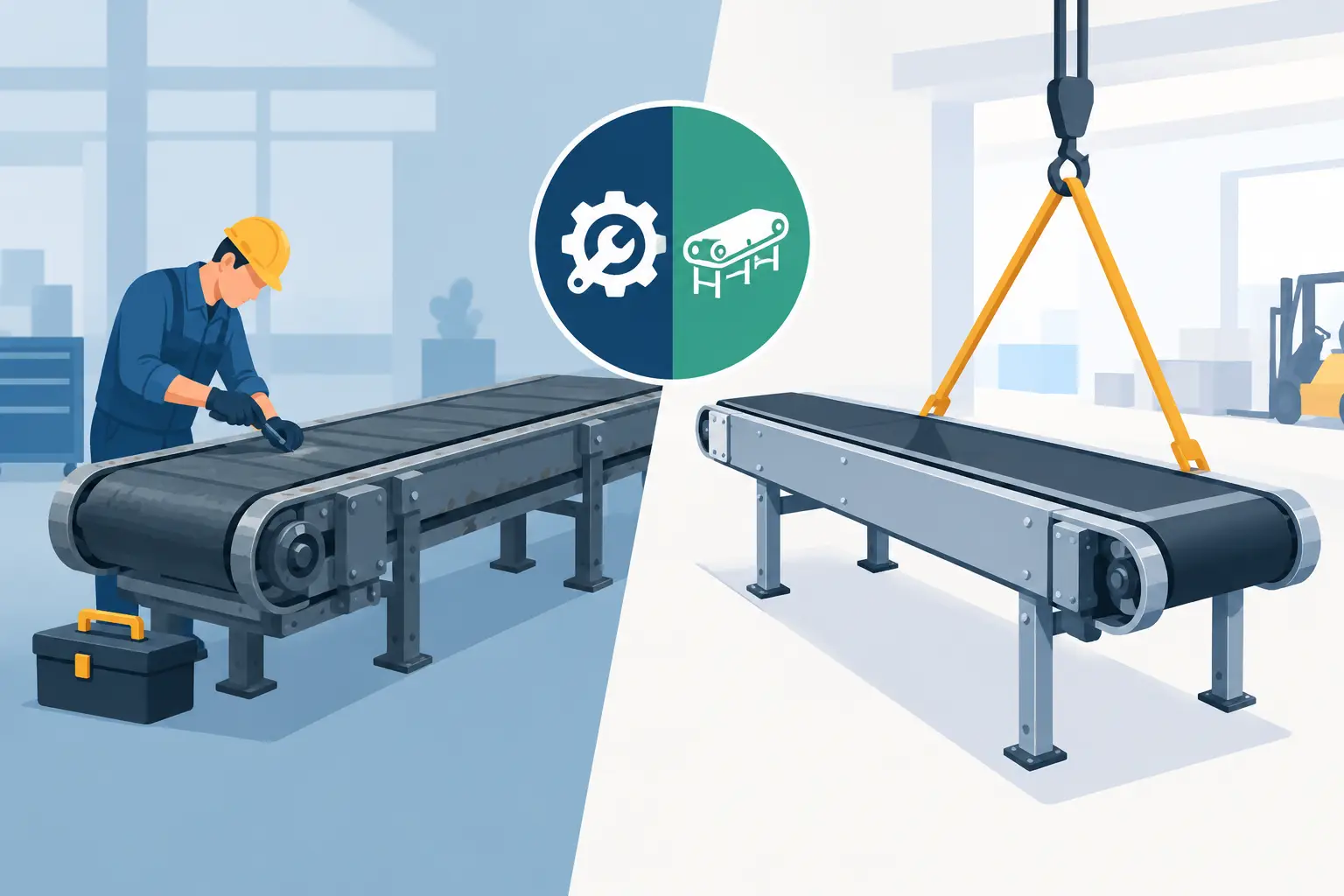
A failed drive pulley, recurring belt tracking issue or deteriorating structure can quickly turn conveyor refurbishment versus replacement into an urgent project decision. For tunnel, civil, mining and other high-demand operations, the right answer is rarely based on purchase price alone. It depends on the system’s condition, remaining service life, safety exposure, production requirement and the outage window available to complete the work.
A conveyor that continues to run is not necessarily a conveyor that is fit to remain in service. Equally, replacing an entire system can consume capital and programme time when a targeted refurbishment would restore reliable performance. The decision needs a disciplined assessment of the asset and the operational consequences of each option.
When conveyor refurbishment is the practical option
Refurbishment is generally suitable where the conveyor’s core design remains sound and the issues are confined to wear, degradation or components nearing the end of their service life. This may include replacing idlers and rollers, pulley lagging, belts, bearings, skirting, chutes, guards, sensors, drives or sections of damaged structure.
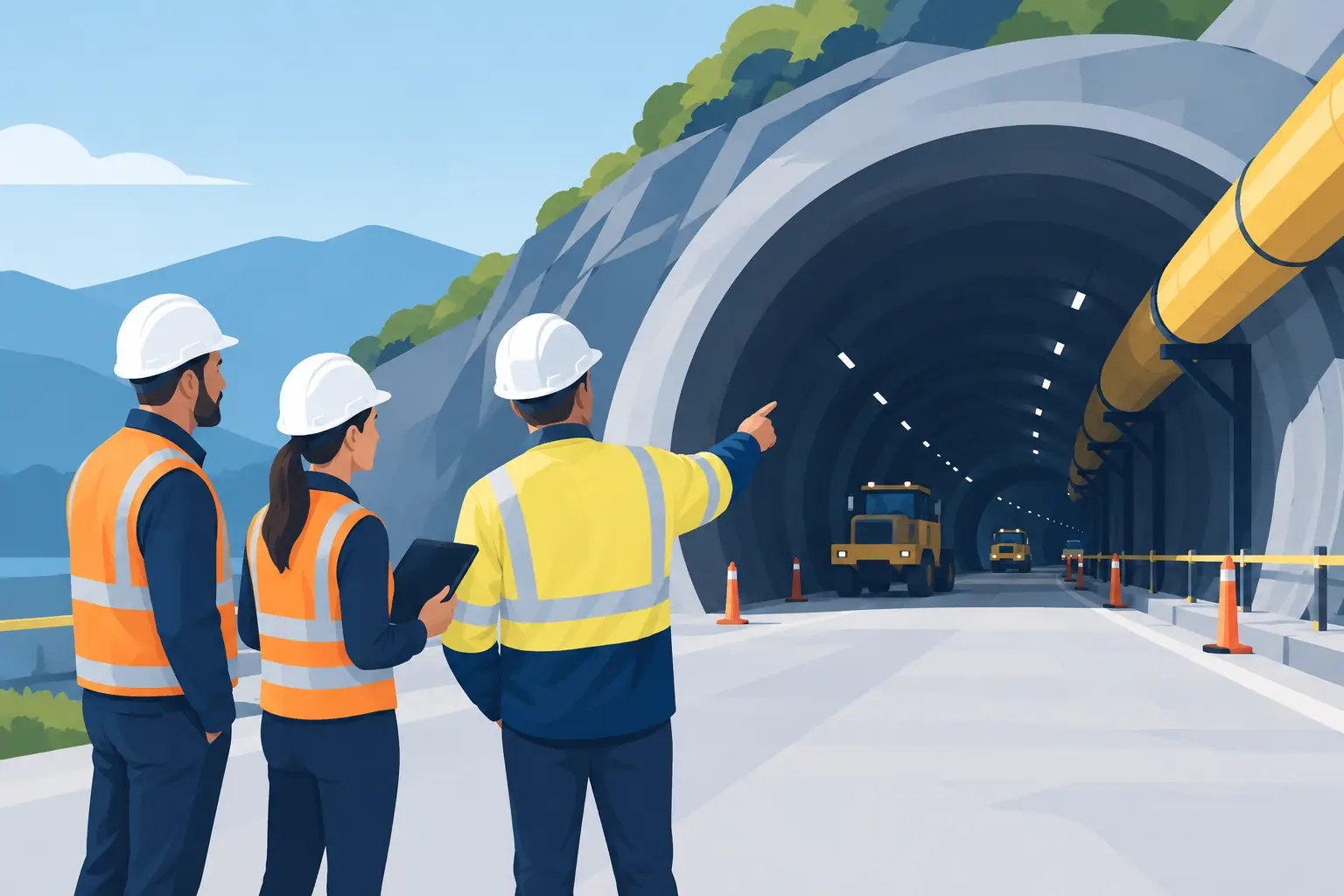
For a conveyor operating in a tunnelling environment, planned refurbishment can be an effective way to maintain throughput while controlling the scope of work. A shutdown can be aligned with planned maintenance, a production hold point or another construction activity, reducing disruption to the broader programme.
The strongest case for refurbishment is made when an inspection confirms that the conveyor still meets its required duty. The structure must have adequate integrity, the drive arrangement must be appropriately sized, and the system must be capable of operating safely under current loads and material characteristics. Replacing worn parts on an under-designed or fatigued conveyor only delays a more significant problem.
Signs refurbishment may be enough
Recurring failures do not automatically mean full replacement is required. A refurbishment may be appropriate when faults are traceable to known components or localised issues, rather than fundamental design limitations. Examples include premature idler failure caused by inadequate sealing, carryback created by worn belt cleaners, tracking problems resulting from damaged pulleys, or material spillage caused by ineffective transfer-point containment.
A condition assessment should consider belt thickness and splice history, pulley shell and shaft condition, bearing temperatures, gearbox and motor performance, structural corrosion or damage, alignment, guarding compliance, electrical protection, and the availability of compatible spare parts. The findings need to be assessed together. A new belt fitted to worn pulleys, misaligned frames and poorly designed transfer points will not deliver the reliability expected from the investment.
Conveyor refurbishment versus replacement: what changes the decision
Replacement becomes the stronger option when the conveyor no longer meets the operation’s required capacity, safety standard or reliability target. This is common where operating conditions have changed since installation, particularly when higher tonnages, longer operating hours, abrasive material or altered transfer arrangements have increased the load on the system.
An ageing conveyor can also reach a point where its failures are no longer isolated. If belts, pulleys, drives, electrical controls and structural members all require attention within a short period, staging repairs may cost more in repeated shutdowns than a planned replacement project. The direct cost of components is only one part of the equation. Lost production, delayed tunnel advance, emergency labour, secondary plant impacts and safety risk can outweigh the apparent savings of patching a declining asset.
Replacement may also be necessary where the original layout creates operational constraints. Poor access for inspections, difficult change-out routes, inadequate emergency pull-wire coverage, limited guarding, unsuitable walkways or restricted maintenance clearances can expose crews to avoidable risk. In confined underground environments, these design shortcomings are more consequential because access, ventilation, lifting and isolation work are all more complex.
A replacement does not always mean removing every part of the conveyor. A staged upgrade can retain viable structures or galleries while replacing the drive station, belt, pulleys, controls, transfer chutes and safety systems. This approach can be effective where engineering verifies that the retained assets are suitable for the revised duty and interface requirements.
Assess the full cost of downtime
The cheapest quote is not necessarily the lowest-cost option over the project life. A sound business case compares the immediate capital cost with the cost and likelihood of future interruption.
For refurbishment, include inspection, engineering, components, labour, lifting arrangements, access, isolation, testing and commissioning. Allow for the possibility that strip-down work may uncover additional damage. For replacement, account for design verification, procurement lead times, removal and installation, electrical integration, structural interfaces, commissioning and operator handover.
Then assess the operational cost. How many hours of lost production will each option require? Can work be completed during a planned outage? Is there redundancy elsewhere in the material-handling chain? What happens if the existing conveyor fails before the planned work date? These questions often change the preferred option.
In continuous tunnelling operations, an unplanned conveyor breakdown can affect more than spoil removal. It can interrupt the sequence of plant, labour and logistics supporting the heading. That makes reliability planning a programme-control issue, not simply a maintenance expense.
Safety and compliance should set the minimum standard
No refurbishment scope should reinstate a conveyor to a condition that falls short of current safety requirements. Guards, pull-wire systems, emergency stops, nip-point protection, walkways, access platforms, electrical isolation points and signage should be reviewed as part of the work.
The same applies to modifications. Increasing belt speed or drive power without reviewing stopping distance, take-up capacity, chute loading, guarding and structural loads can introduce new hazards. Engineering review, controlled installation and functional testing are essential before returning the conveyor to service.
A well-managed scope also considers the safety of the work crew. Conveyor refurbishment and replacement commonly involve lifting, hot works, stored energy, work at height, confined access and electrical isolation. Clear work packs, competent supervision, verified isolations and appropriately qualified mechanical and electrical personnel are required to deliver the work safely under shutdown pressure.
Plan around lead times and outage constraints
Replacement can offer the best long-term outcome but may be constrained by component lead times. Belts, gearboxes, motors, pulleys, controls and fabricated structural sections need to be identified early, particularly where the system has non-standard dimensions or specialised specifications.
Refurbishment can often be mobilised faster, especially where critical spares are held on site or readily available. However, speed should not lead to incomplete diagnosis. Replacing the failed component without identifying why it failed can return the conveyor to service only briefly before the next breakdown.
The most effective approach is to combine condition data with a forward maintenance plan. Track component age, failure history, belt condition, vibration, temperature trends, power draw and inspections. This provides the evidence needed to schedule a refurbishment before reliability deteriorates, or to begin replacement planning while the current system can still operate safely.
Make the decision with the operating team
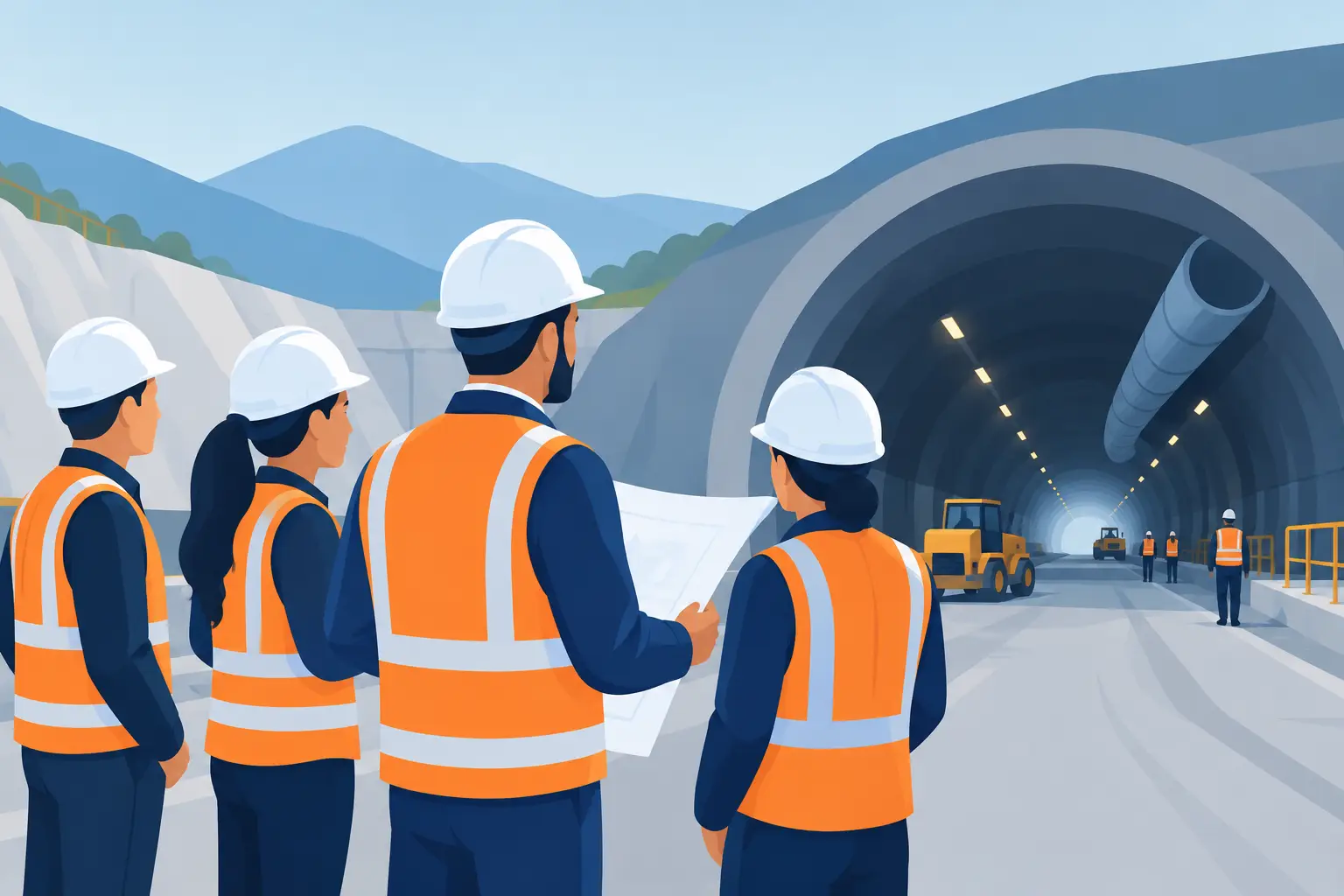
Maintenance, operations, engineering and project delivery personnel should all contribute to the assessment. Maintenance teams understand recurring failure modes; operators can identify performance constraints and access problems; engineers can confirm design suitability; and project managers can assess programme and outage impacts.
For complex installations, an independent site inspection and scope review can clarify whether the issue is component wear, installation quality, design capacity or operational practice. The resulting plan should define the required work, parts, labour, isolations, testing requirements and contingency measures before the shutdown begins.
HP Rural supports conveyor maintenance, repairs, upgrades, installation and commissioning in demanding infrastructure environments, with qualified personnel available for planned works and rapid-response breakdown support. For critical conveyors, the value lies in completing the right scope safely and returning the system to dependable service.
The practical decision is not whether refurbishment is cheaper than replacement on paper. It is which option gives the operation a safe, supportable conveyor with the reliability needed to keep the project moving.