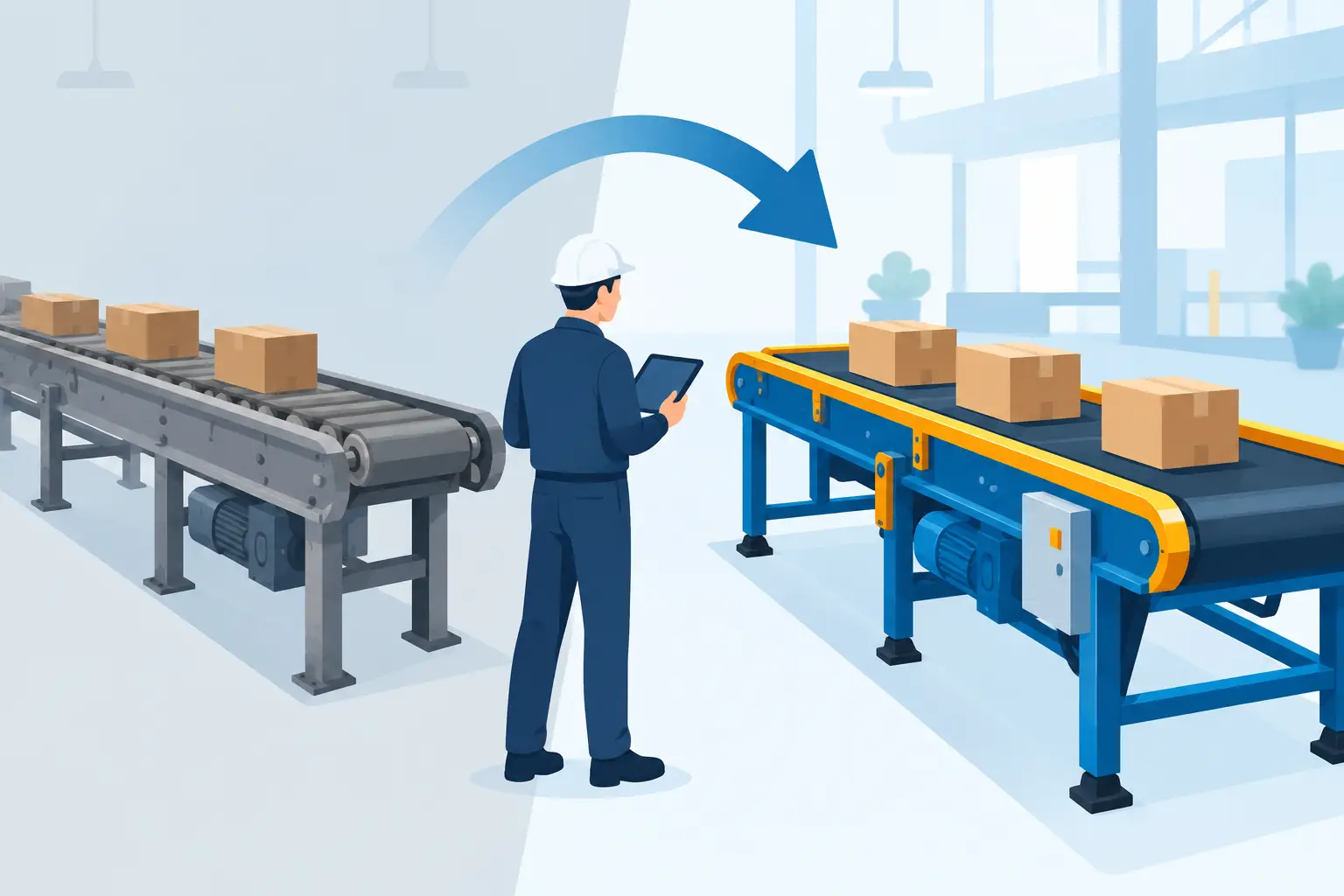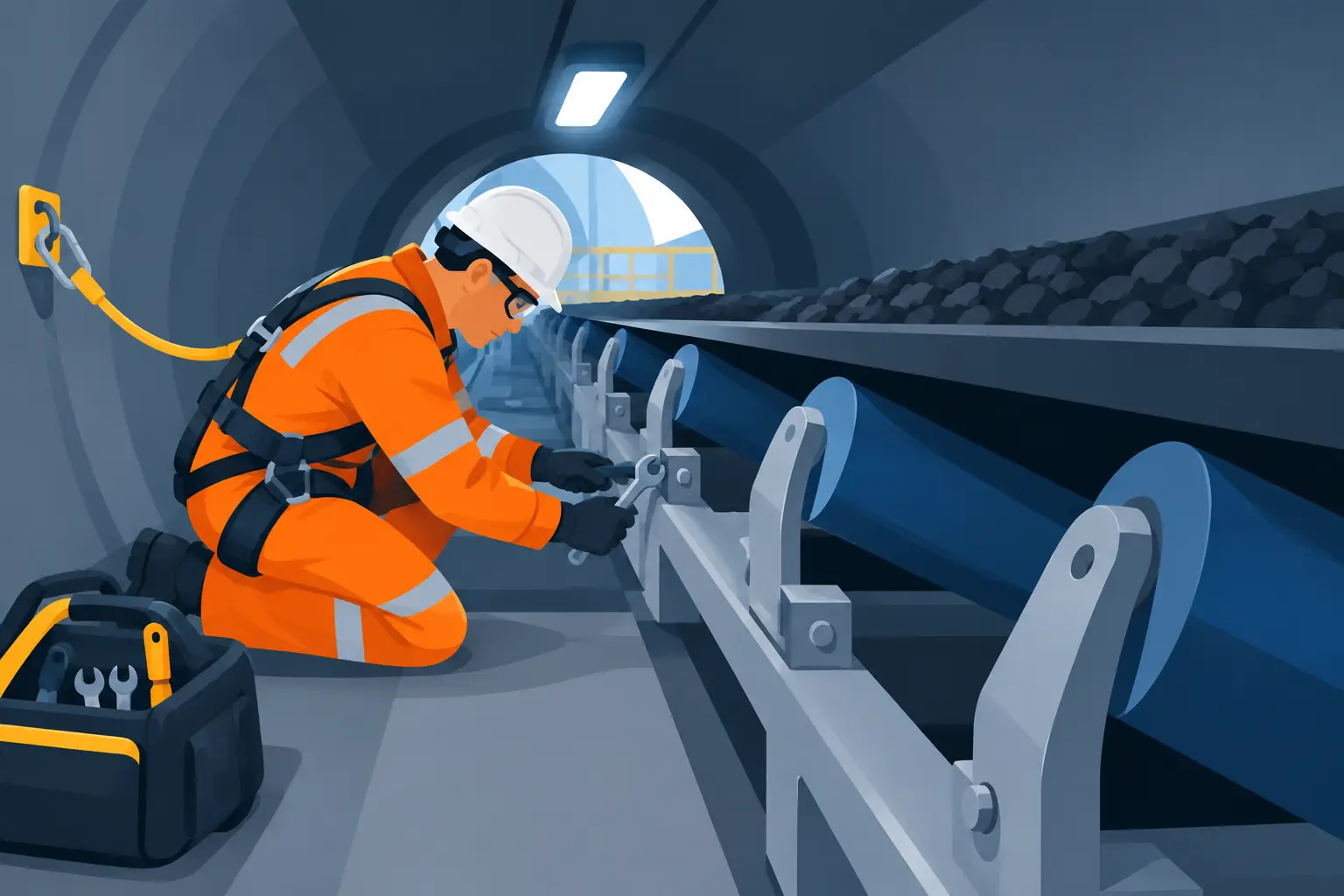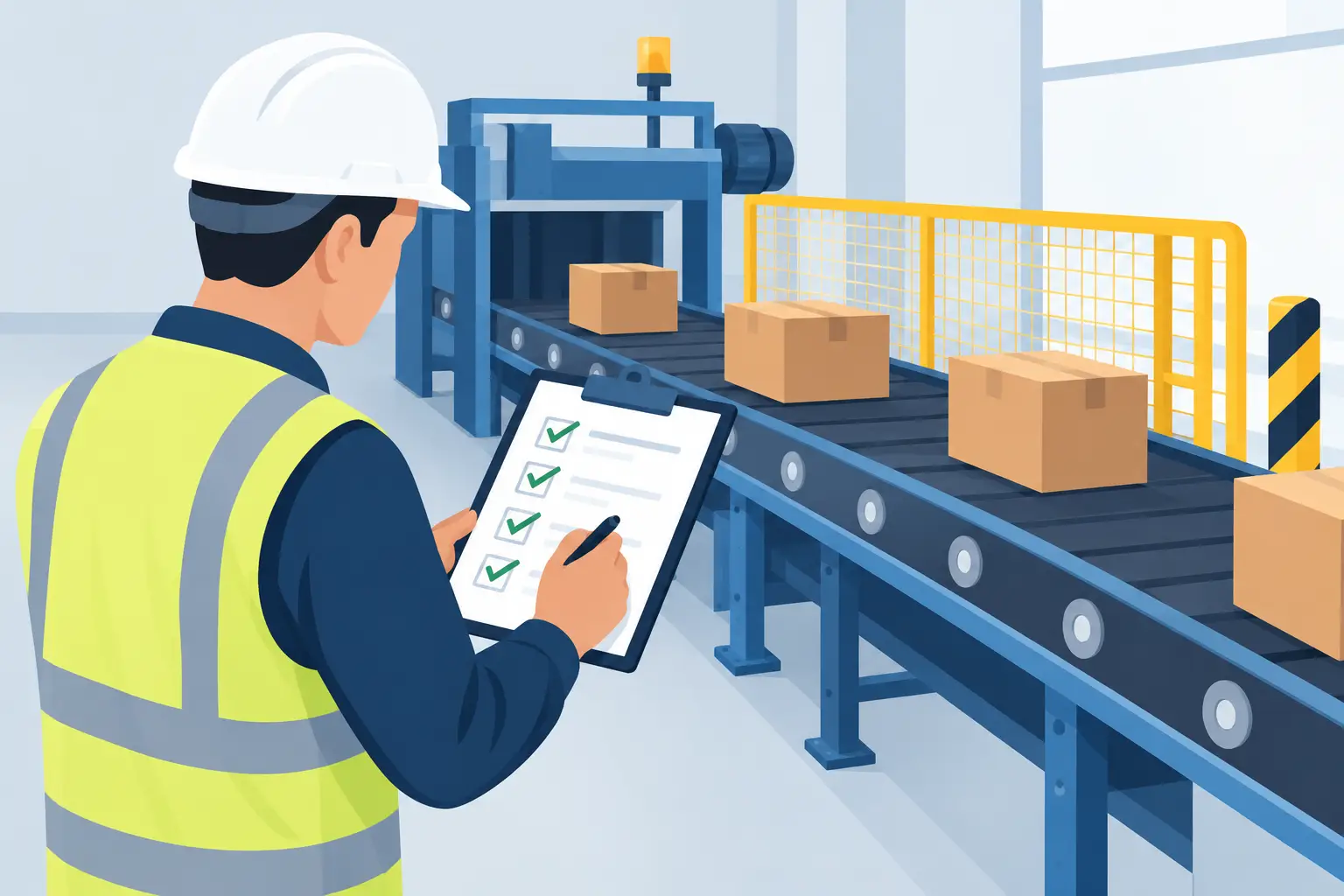
A conveyor can appear to be running normally while conditions around it are steadily becoming less safe. A missing fastener on a guard, a worn pull-wire switch, poor belt tracking or spillage below a transfer point can turn a routine shift into an injury, shutdown or costly recovery job. This conveyor safety audit checklist gives site teams a practical way to inspect the system, assign actions and deal with risks before production pressure takes over.
For tunnelling, civil infrastructure, mining and other high-demand operations, the audit needs to reflect actual site conditions. That means considering confined work areas, changing conveyor routes, wet or dusty environments, shift handovers, interaction with mobile plant and the need to keep material moving without accepting unsafe shortcuts.
Start the audit with the operating context
An effective audit is not a walk-around completed from a generic form. Before inspecting equipment, confirm which conveyor sections are operating, under maintenance, isolated or awaiting commissioning. Review recent breakdowns, belt damage, nuisance trips, clean-up issues, near misses and operator reports. Repeated problems often point to a control failure that needs more than another repair.
The auditor should understand the conveyor’s intended duty, material type, loading rate, transfer arrangements and nearby work activities. A belt carrying abrasive spoil from a tunnel heading presents different hazards from a fixed plant conveyor moving packaged product. The same applies to access arrangements: a system with regular inspection platforms can be assessed differently from a temporary or frequently extended conveyor line.
Confirm that drawings, operating procedures, isolation information and emergency arrangements reflect the installed system. Modifications made under programme pressure can leave labels, guarding layouts and documentation out of step with the plant in front of the crew.
Conveyor safety audit checklist: critical inspection areas
Isolation, lockout and stored energy
Verify that workers can isolate every relevant energy source before maintenance, cleaning or fault finding begins. This includes electrical supply, hydraulic and pneumatic systems, gravity take-ups, counterweights and any stored mechanical energy. Isolation points should be identifiable, accessible and suitable for personal locks or site-approved lockout arrangements.
Check that the procedure requires testing for dead before work starts, not simply operating a local stop button. Emergency stops are not isolation devices. On complex conveyor systems, confirm the isolation boundary is clear between upstream and downstream equipment, particularly where interlocks can start connected plant automatically.
Look for practical weaknesses as well as paperwork gaps. A lockout procedure may be technically sound but ineffective if the isolator is difficult to reach, labels are faded, hasps are unavailable or crews do not have enough personal locks. These are audit findings that require prompt correction.
Guarding and nip-point protection
Inspect fixed and removable guards at head, tail and bend pulleys, drive units, couplings, chains, sprockets and return rollers where access is possible. Guards must prevent contact with moving parts while allowing safe inspection and maintenance when removed under isolation.
Pay close attention to areas that have been opened repeatedly for tracking adjustments or cleaning. Missing sections, loose mesh, oversized openings and guards held on with temporary fixings are common warning signs. Guarding should not create a new hazard by leaving sharp edges, unstable panels or awkward manual handling requirements.
Where an interlocked guard is fitted, test whether opening it stops the relevant equipment and prevents restart until the system is safely reset. The required test method will depend on site rules and the plant design, but an interlock that has been bypassed or defeated must be treated as a serious finding.
Emergency stopping and warning systems
Walk the accessible length of the conveyor and inspect emergency-stop devices, pull wires, lanyards, push buttons and local stop stations. They need to be visible, reachable and free from obstruction. Pull wires should have appropriate tension, clear indication of operation and no damage from corrosion, impact or material build-up.
Test devices under a controlled arrangement approved by site operations. Record whether each device stops the correct conveyor section, whether alarms operate as intended and whether restart requires a deliberate reset. Audible and visual pre-start warnings are especially important where people may be working near the belt, transfer stations or underground conveyor drives.
An emergency-stop test should also examine the restart process. The system must not restart unexpectedly after power restoration, a trip reset or a remote command. Workers need to know who holds authority to return the conveyor to service.
Belt condition, tracking and mechanical integrity
Inspect the belt for tears, damaged edges, exposed carcass, worn covers, failed splices and material carryback. Review tracking along the full route, not only at the drive pulley. A belt running against structure can quickly damage the belt, rollers and guarding while increasing fire and entanglement risk.
Check idlers, rollers, pulleys, scrapers, skirting, take-up equipment and transfer chutes for wear, seizure, misalignment and build-up. Failed rollers can create heat, belt damage and unplanned downtime. At transfer points, assess whether loading is centred and controlled or whether impact and off-centre loading are driving recurrent tracking problems.
Structural checks should cover gantries, stringers, support frames, walkways, brackets, fasteners and corrosion. In tunnelling environments, vibration, moisture and limited clearance can accelerate deterioration. Any damaged support or compromised access platform should be assessed for immediate controls before the conveyor continues operating.
Access, housekeeping and working at height
Inspect access routes to drives, take-ups, transfer stations and inspection points. Walkways, stairs, handrails, platforms and ladders should be secure, adequately lit and kept clear of spillage, tools and hoses. Site teams should not need to climb conveyor structure or step over moving belts to complete routine checks.
Housekeeping is a direct safety issue, not a presentation issue. Spillage can conceal trip hazards, restrict access to pull wires and create dust or fire risks. Identify the source of recurring spillage rather than relying on labour-intensive clean-up alone. It may be caused by poor chute design, damaged skirting, belt tracking, loading conditions or insufficient collection capacity.
Where work at height is required, confirm the task can be completed using suitable access equipment and site-approved fall-prevention controls. The best outcome is often to redesign an inspection or maintenance point so workers do not need to work at height as often.
Electrical systems, controls and automation
Examine electrical enclosures, cable routes, glands, earthing connections, local control stations and control panels for damage, water ingress, dust build-up and unauthorised alterations. Enclosures in harsh operating areas need to remain appropriately protected, particularly where wash-down, slurry or conductive dust is present.
Confirm that control labels are accurate and that operators can identify local, remote and maintenance modes. Automated sequences, variable speed drives and programmable controls can improve production, but they also make start-up logic more complex. Audit the interfaces between conveyors, crushers, hoppers, pumps and other plant so a fault or restart condition does not expose people to unexpected movement.
Only qualified electrical personnel should test or modify electrical equipment. The audit should identify the condition and control requirements, then ensure rectification work is assigned to competent people.
People, procedures and shift discipline
A conveyor safety audit should include conversations with operators, maintainers and supervisors. Ask how they deal with belt drift, blockages, carryback and repeated trips. Their answers may reveal workarounds that are absent from procedures but common on shift.
Check that pre-start inspections are being completed meaningfully, defects are reported and critical faults are escalated. Review competency records for personnel expected to operate, isolate, inspect or maintain the conveyor. Where contractors and labour-hire personnel are used, site induction alone may not demonstrate task-specific competence.
Shift handover deserves particular attention on continuous operations. Outstanding isolations, inhibited safety devices, temporary guards, belt repairs and abnormal operating conditions must be clearly communicated. A good handover prevents the next crew from inheriting a hazard without knowing it exists.
Turn findings into controlled work
The value of an audit is determined by what happens after the inspection. Classify each finding according to risk and operational consequence. Conditions that expose workers to moving parts, prevent effective isolation or compromise emergency stopping may require the conveyor to be removed from service until controls are restored.
Other issues may be managed through a planned repair, increased inspection frequency or a controlled operational limit. That decision depends on the condition, duty cycle, available redundancy and site risk assessment. Every action should have an owner, due date, required parts or labour, and a verification step confirming the work was completed correctly.
Photographs, clear location references and concise defect descriptions make the audit useful to maintenance planners and incoming crews. Instead of recording “guard damaged”, identify the conveyor section, component, extent of damage, immediate control and rectification requirement.
For major projects, recurring audit results should be reviewed for patterns. A repeated problem at one transfer point may justify an engineering modification. HP Rural supports this type of practical follow-through with qualified personnel for inspection, maintenance, repairs, modifications and rapid-response work where conveyor availability is critical.
A checklist does not replace competent judgement, site procedures or statutory obligations. Used consistently, however, it gives supervisors and maintenance teams a disciplined opportunity to identify the small defects that become serious events when a conveyor is expected to run continuously. The most useful audit is the one that results in safer access, clearer control and fewer avoidable callouts on the next shift.