A tunnel advance can only move as consistently as its spoil removal system allows. Tunnel conveyor systems carry a continuous production load in confined, abrasive and tightly controlled environments, where a belt stoppage can quickly affect TBM output, workforce utilisation, access planning and the overall construction programme.
For project teams, the conveyor is not a secondary item of plant. It is a critical production asset connecting the excavation face to surface handling, stockpiling or transport. Getting the system right requires more than supplying belts, idlers and drives. It requires engineering discipline, practical installation capability, competent personnel and a maintenance plan that reflects the real operating conditions underground.
What Tunnel Conveyor Systems Must Deliver
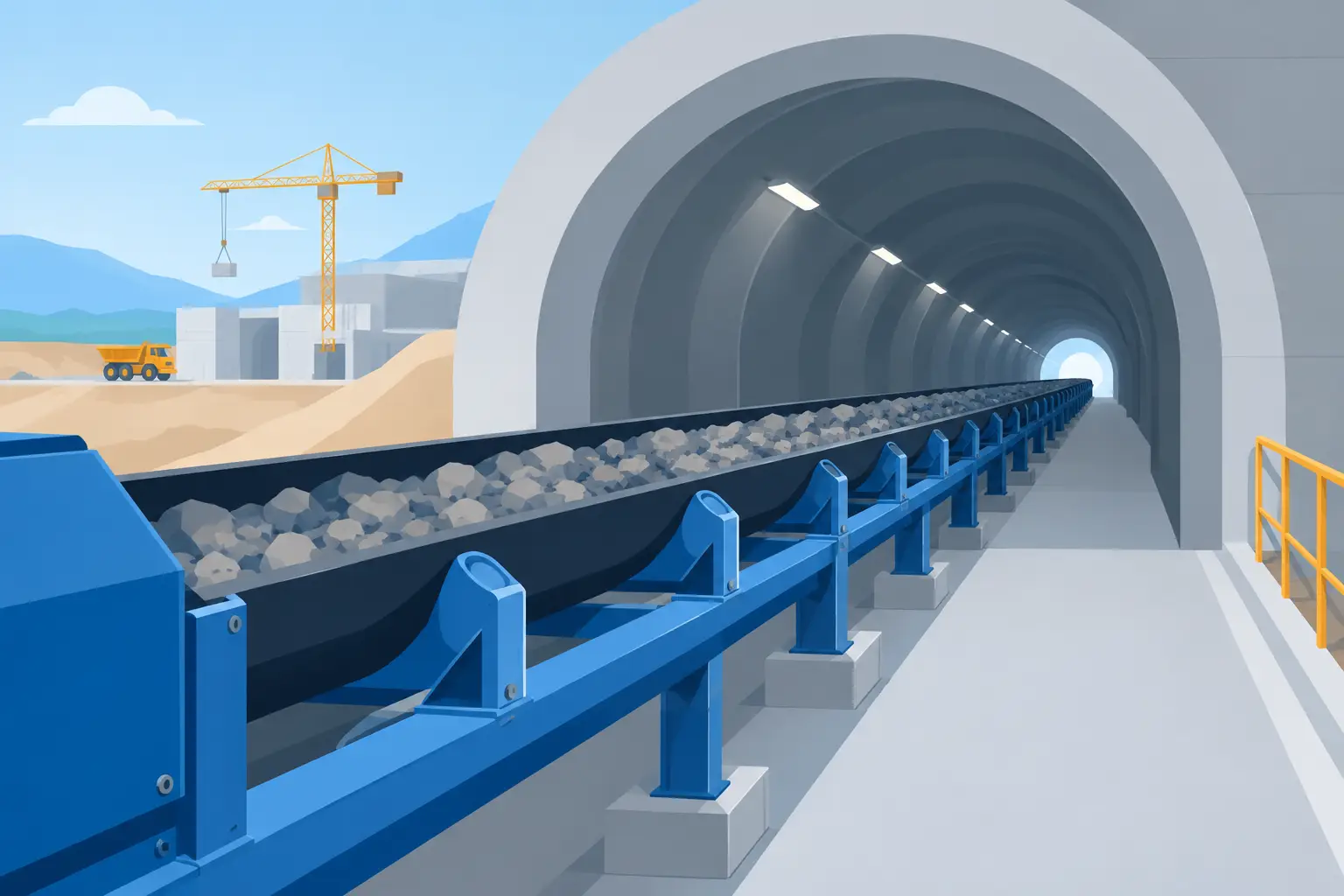
A tunnel conveyor system is designed to remove excavated material from the tunnel face safely and continuously. Depending on the project method, it may work behind a tunnel boring machine, roadheader or other excavation plant, transferring spoil through a series of conveyors to the tunnel portal or a surface processing point.
The basic operating principle is straightforward. The working environment is not. Conveyor equipment underground is exposed to dust, moisture, water ingress, belt loading variation, misalignment, restricted access and long operating hours. On major infrastructure works, it must also integrate with tunnel logistics, ventilation, electrical distribution, communications and emergency arrangements.
A system must be selected and configured around the actual material and production requirements. Belt width, speed, capacity, incline, transfer design, drive power and take-up arrangement all affect whether it can handle the required tonnes per hour without creating avoidable wear or spillage. A conveyor sized only for nominal output may struggle when material characteristics change, loading becomes uneven or the excavation rate increases.
Reliability also depends on maintainability. Components need to be accessible enough for safe inspection and replacement, even where tunnel space is limited. A theoretically efficient layout can become costly if routine adjustments require extended isolations, difficult manual handling or repeated interference with other trades.
Design Decisions That Affect Uptime
The most effective conveyor systems are planned with construction operations in mind, not only with a layout drawing in hand. Early decisions have a direct effect on maintenance exposure, safety performance and long-term availability.
Material behaviour and transfer points
Spoil is rarely uniform across an entire drive. Moisture content, particle size, clay content and rock fragmentation can change as ground conditions change. These variations influence belt loading, carryback, chute wear and the risk of blockages at transfer points.
Transfer points deserve particular attention because they concentrate impact, dust and wear. Poor chute geometry can cause off-centre loading, accelerate belt edge damage and create recurring clean-up work. Properly designed impact zones, skirting, liners and dust-control measures help keep material centred and reduce the burden on downstream components.
Drives, take-ups and belt tracking
Drive systems need sufficient capacity for expected operating loads, start-up conditions and gradients, with controls matched to the operating sequence. Where the conveyor interfaces with a TBM or another continuous process, drive and control arrangements must support predictable material flow rather than creating bottlenecks.
Belt tracking is equally significant. Misalignment can damage belt edges, idlers and structure, and it can lead to spillage in areas where housekeeping is already difficult. Tracking should be addressed at the source through correct installation, square pulley alignment, centred loading and sound belt condition. Tracking devices can assist, but they are not a substitute for fixing an underlying structural or loading issue.
Safety and access in confined areas
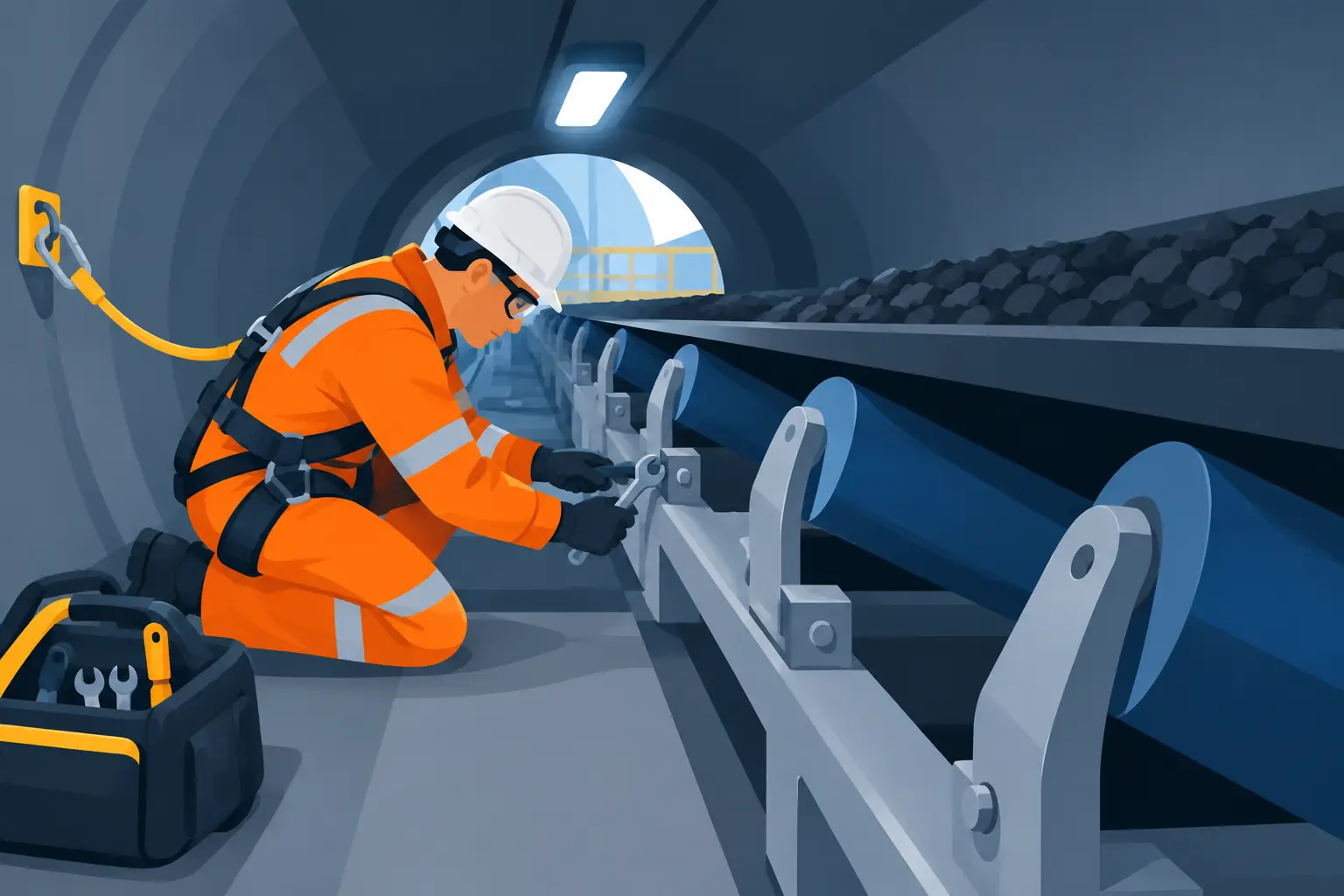
Underground conveyors require guarded nip points, accessible emergency pull-wire systems, clear isolation procedures and practical access for inspection. The standard of installation matters as much as the equipment selected. Guards that are difficult to remove safely, poorly positioned walkways or inadequate lighting can turn routine servicing into a high-risk task.
Projects should also allow for the realities of installation and extension work. As the tunnel advances, conveyor infrastructure may need to be extended, reconfigured or integrated with changing site arrangements. These activities require coordination with production, electrical, lifting and tunnel logistics teams so that work can be completed without compromising safety or delaying critical operations.
Installation and Commissioning Set the Baseline
Many conveyor reliability issues can be traced to installation tolerances that were never properly corrected. Structure out of line, inconsistent idler levels, incorrect pulley alignment and poorly arranged transitions may not cause an immediate failure, but they impose extra stress on the belt and rotating equipment from the first operating shift.
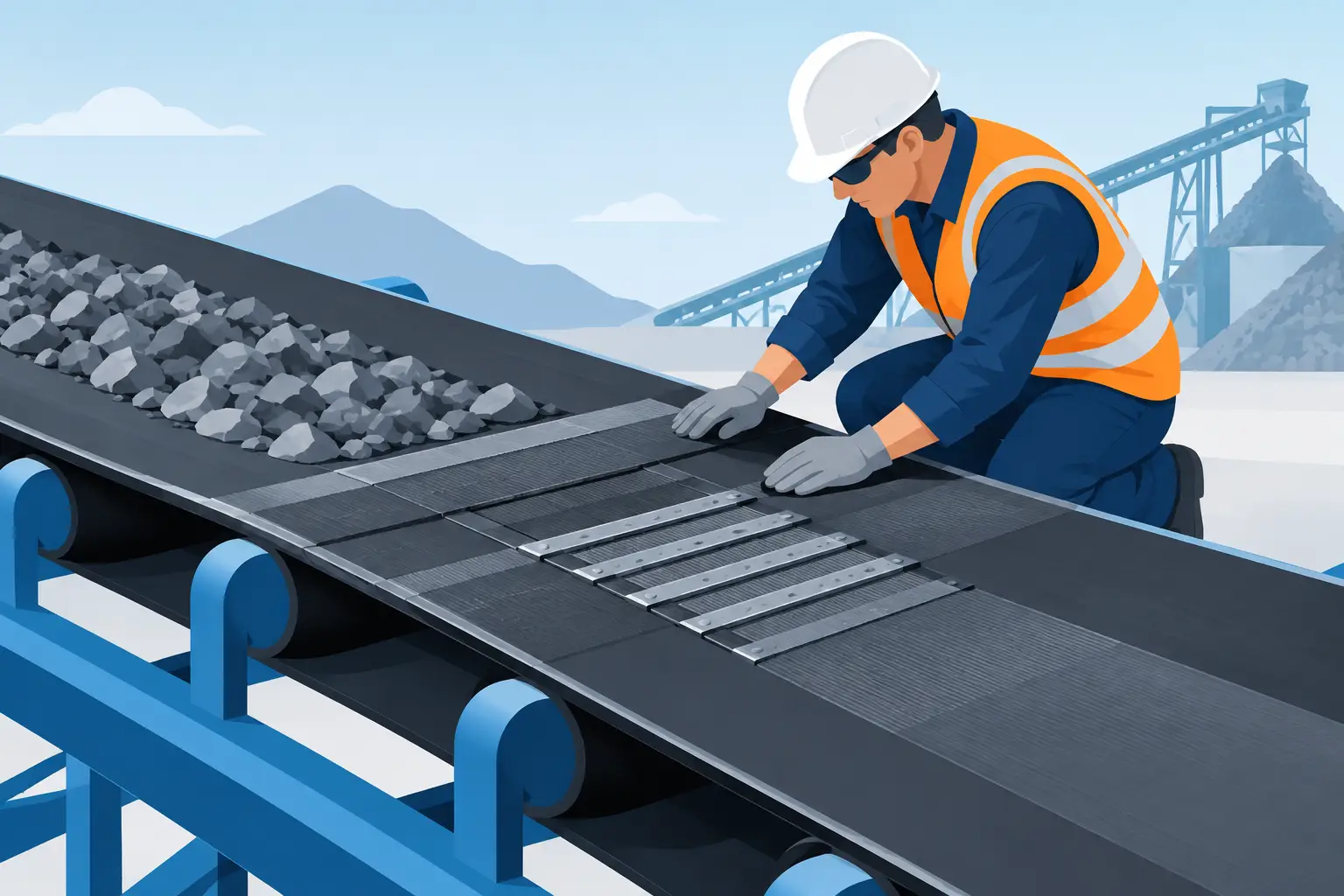
A disciplined installation process includes verification of conveyor alignment, fastener integrity, guarding, electrical connections, emergency stops, pull-wire operation and control logic. Belt splicing and tensioning must be completed to the relevant specifications and checked under operating conditions. Once material is introduced, the system should be observed across its normal duty cycle, including start-up, loading, transfer and stopping.
Commissioning is the point at which the project establishes its operational baseline. Technicians should record belt tracking behaviour, drive loads, vibration, temperatures, spillage points and any adjustment made during testing. This information provides a useful reference when future inspections identify a developing change in system behaviour.
Maintenance for Continuous Tunnelling Operations
Preventive maintenance is not simply a scheduled inspection sheet. For tunnel conveyor systems, it is a programme built around the equipment’s criticality, operating hours, known wear points and the consequences of a stoppage.
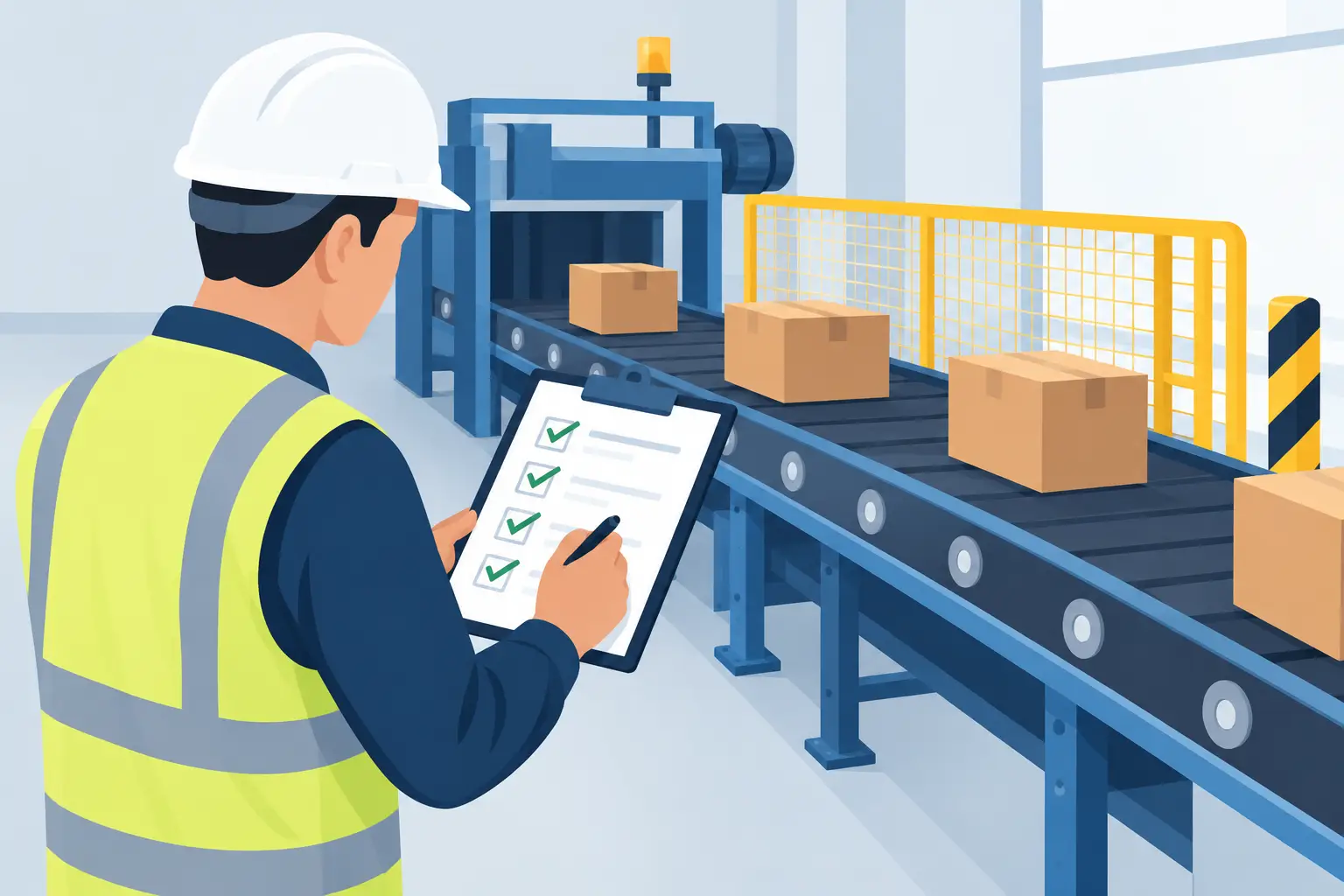
Daily operator checks can identify material build-up, belt drift, unusual noise, damaged guards, leaking gearboxes or excessive spillage before they become major defects. Planned mechanical and electrical inspections then provide the opportunity to check idlers, pulleys, scrapers, skirting, belt condition, bearings, reducers, motors, sensors and control equipment in greater detail.
The correct frequency depends on the duty. A high-throughput conveyor operating continuously behind a TBM needs closer attention than a lightly loaded system used intermittently. Wet and abrasive spoil may shorten the service life of components, while an extended conveyor route increases the number of idlers, structures and transfer locations requiring inspection.
Condition monitoring can help maintenance teams focus their effort. Trending motor current, drive temperature, vibration and belt condition can reveal deterioration before a component fails. However, monitoring only adds value when findings are reviewed, defects are prioritised and corrective work is properly planned.
Spare-parts strategy is another practical part of uptime management. Holding critical items such as idlers, pulleys, belt repair materials, scrapers, bearings, gearboxes, motors and electrical components can reduce the duration of an unplanned shutdown. The appropriate stockholding level depends on lead times, component commonality, site access and the production impact of each item failing.
Responding When a Conveyor Fails
Even well-maintained equipment can suffer damage from an abnormal load, foreign object, electrical fault, belt tear or component failure. The first priority is always to make the area safe: stop the system, isolate energy sources, assess the condition of the equipment and confirm that access arrangements are controlled.
The next task is accurate fault finding. A belt tracking issue, for example, may be caused by an out-of-square pulley, a damaged roller, built-up material, an uneven feed point or structural movement. Resetting the belt without identifying the cause may restore production briefly, but it does not resolve the failure mechanism.
Rapid-response support is most effective when technicians arrive with the skills, information and parts needed to make a sound repair. Fitters, mechanics, welders, electricians, PLC personnel, riggers and supervisors all have a role depending on the fault and repair scope. In a tunnel environment, the repair also needs to fit the available isolation window, lifting plan, ventilation requirements and wider workfront schedule.
Workforce Capability Is Part of the System
Conveyor availability is shaped by the people maintaining and operating it. Experienced tradespeople understand how to inspect for early signs of failure, complete adjustments safely and communicate defects before they affect production. Supervisors and leading hands are equally important in coordinating shutdown work, verifying permits and ensuring repairs meet the required standard.
On major tunnel projects, specialist capability may extend beyond conveyor trades. Plant operators, TBM personnel, electrical technicians, engineers, crane crews and general site support personnel need to work as one operational team. This is particularly relevant during conveyor installation, extension works, major belt repairs and recovery from breakdown events.
HP Rural supports this full operating lifecycle with conveyor component supply, installation, commissioning, maintenance, repairs, modifications and responsive breakdown assistance. The focus is practical: keeping critical material movement equipment safe, serviceable and ready for the next shift.
A conveyor system earns its value when it keeps material moving without creating additional risk or drawing labour away from the tunnel advance. Treat it as a production-critical asset from design through to daily maintenance, and the project is better placed to protect both progress and people.