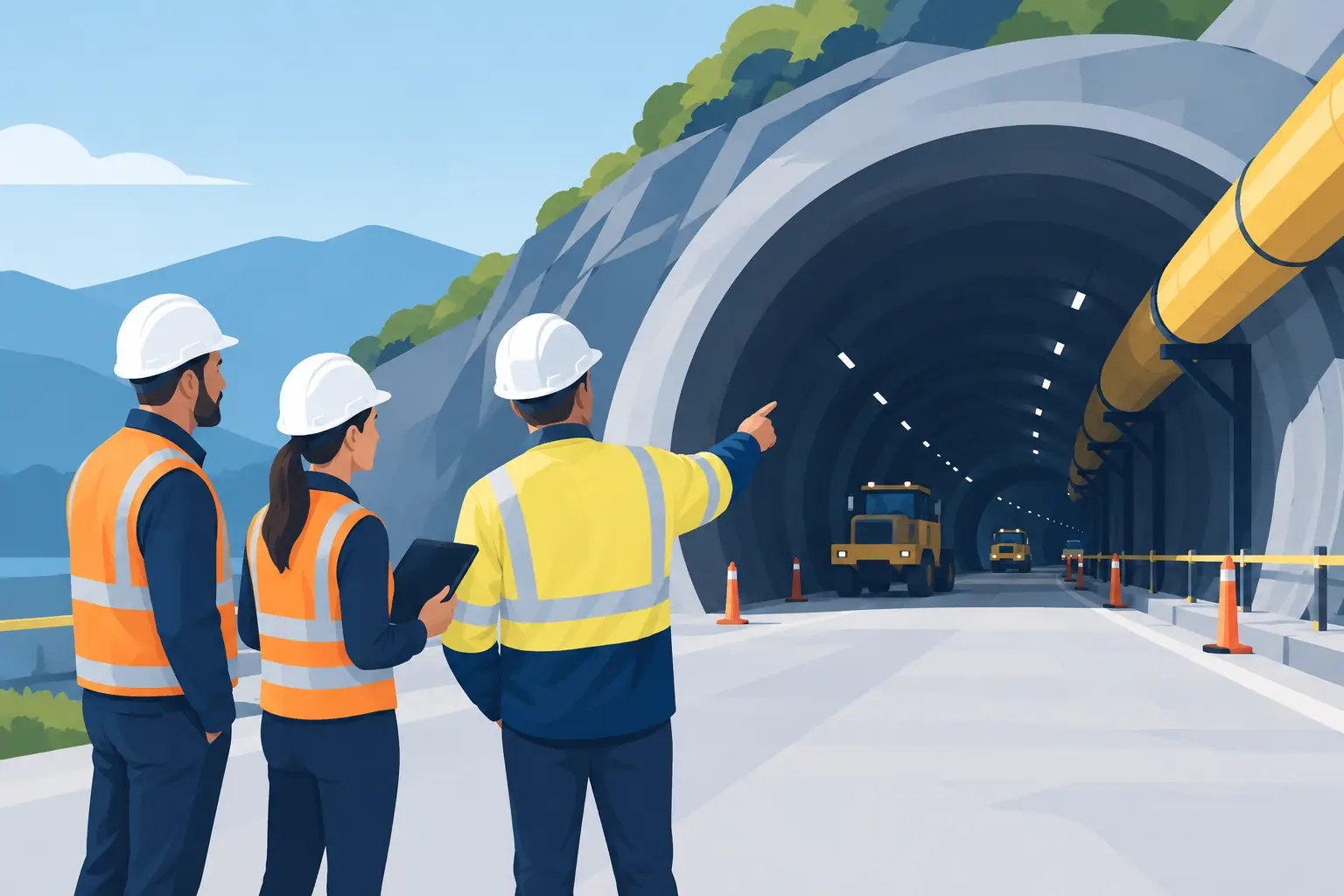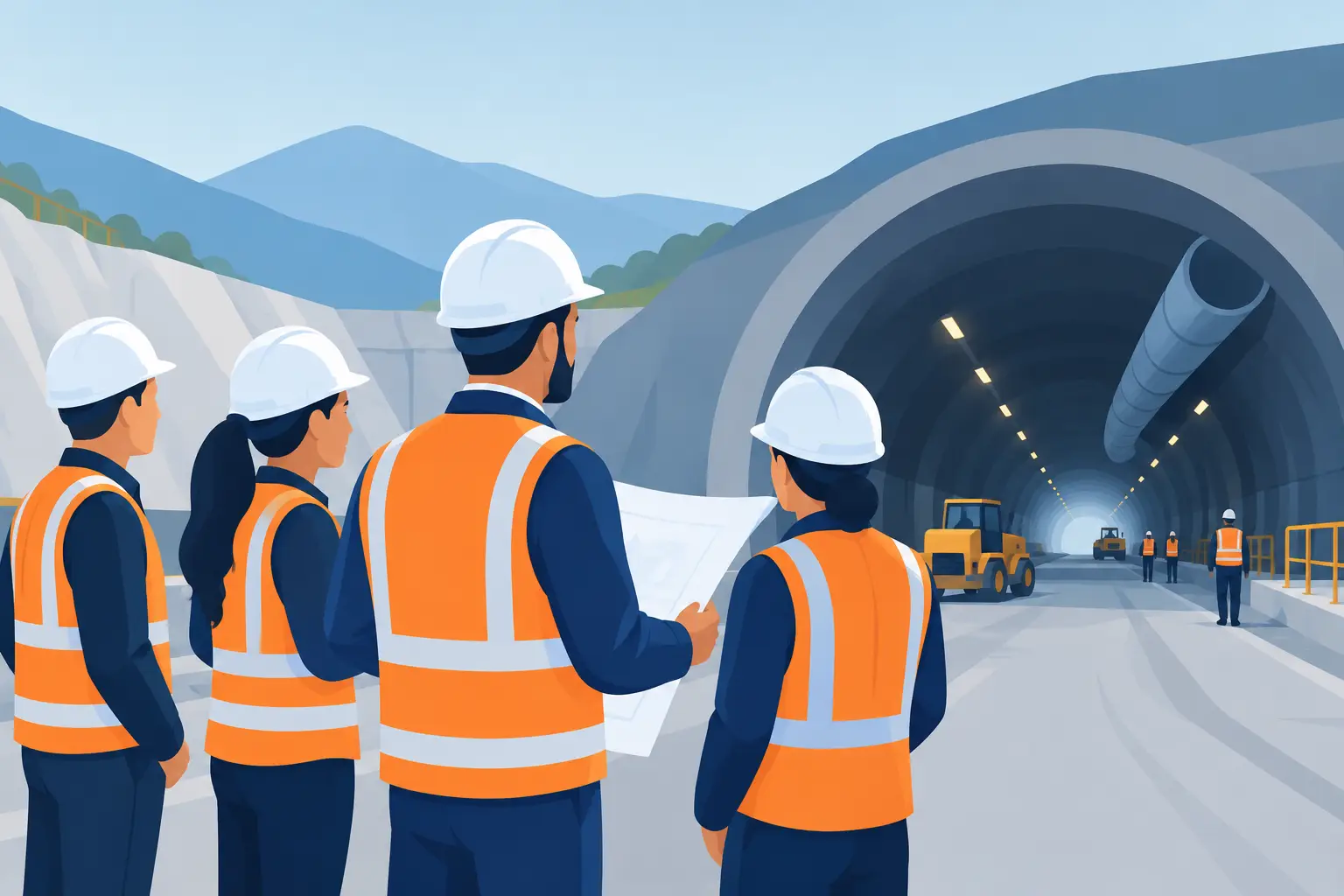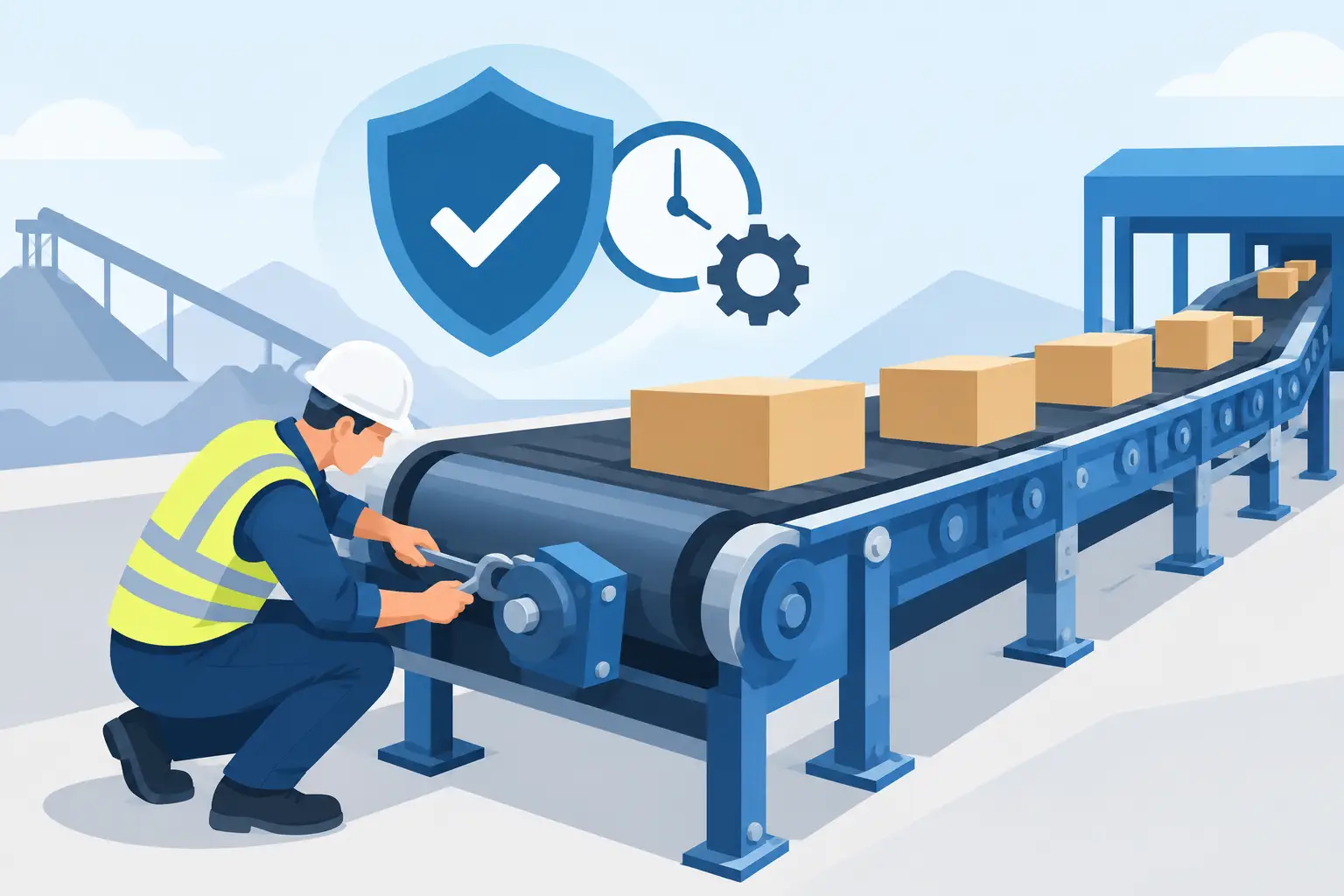
A stopped conveyor can quickly become a stopped heading, a delayed pour, a constrained production line or a growing safety risk. In tunnelling and other high-demand material-handling environments, conveyor services are not simply a maintenance requirement. They are a critical part of keeping people, plant and project programmes moving.
The right service partner understands more than belts, rollers and drives. They understand the operating conditions around them: restricted access, shift handovers, high loads, dust, water ingress, live interfaces and the cost of losing material movement at the wrong time. Effective support must combine sound engineering, qualified people, practical planning and the ability to respond when conditions change.
What Conveyor Services Should Cover
A conveyor system has a lifecycle, and support should extend across that lifecycle rather than begin only after a breakdown. For major infrastructure works, the quality of installation and commissioning has a direct effect on future availability, maintenance effort and safety performance.
Conveyor services commonly begin with component supply, installation and mechanical or electrical integration. This includes arranging structures, pulleys, idlers, belt systems, drives, guarding, control interfaces and transfer points to suit the site layout and material being handled. In underground works, the task also involves coordinating access, lifting, ventilation, isolation requirements and other active work fronts.
Commissioning and testing are equally important. A conveyor may run during an initial test but still have alignment, tracking, loading or control issues that will become significant under continuous operating conditions. Proper commissioning checks that safety systems operate as intended, emergency stops are accessible, guarding is complete, belt tracking is stable, drives respond correctly and material transfers without unnecessary carryback or spillage.
Once operational, the focus shifts to preventive maintenance, repairs, component replacement, upgrades and modifications. The required level of support depends on duty cycle, environmental conditions, system age and the consequences of downtime. A tunnel conveyor operating around the clock requires a different maintenance approach to an intermittent surface conveyor, even where the equipment appears similar.
Why Preventive Conveyor Services Matter
Most conveyor failures show warning signs before they stop production. Excessive vibration, belt drift, damaged idlers, abnormal bearing temperatures, worn lagging, material build-up and recurring nuisance trips are all opportunities to intervene before a failure becomes an urgent callout.
A planned maintenance programme gives supervisors visibility over system condition and helps prioritise work around production requirements. It should include routine inspections, lubrication where applicable, alignment checks, belt and splice inspections, pulley and roller condition assessments, fastener checks, drive inspections, electrical testing and housekeeping around transfer points. Findings need to be recorded clearly so defects can be tracked from identification through to rectification.
The objective is not to replace parts simply because they are on a schedule. It is to identify deterioration early enough to plan labour, parts, access and isolation without disrupting critical operations. Condition-based decisions can reduce unnecessary work, but only when inspections are consistent and technicians understand what normal operation looks like on that specific system.
For project managers, the value is greater schedule certainty. For maintenance teams, it means fewer high-pressure repairs undertaken in difficult conditions. For operators, it means safer equipment with fewer ad hoc interventions around moving plant.
Common Issues That Require Early Attention
Belt tracking problems are often treated as minor until they damage belt edges, structures or pulleys. The cause may be poor loading, seized or misaligned idlers, inconsistent belt tension, pulley alignment or a damaged belt splice. Correcting the source is more reliable than repeatedly adjusting tracking devices.
Transfer points also deserve close attention. Poor chute geometry, inadequate sealing or inconsistent material flow can create spillage, dust, belt wear and clean-up demands. In continuous tunnelling operations, these issues can compound quickly because every interruption affects downstream activities.
Drive and control faults require both mechanical and electrical capability. A mechanical issue may present as a motor overload, while an electrical trip may be caused by a condition elsewhere on the conveyor. Effective fault-finding considers the whole system rather than replacing the first component that appears affected.
Installing and Modifying Systems for Real Site Conditions
Conveyor installation is rarely a simple assembly exercise. The system must suit the material, throughput, gradient, access restrictions, discharge arrangement, available power and planned project sequence. A design that works at a fixed surface location may need modification when installed through changing tunnel geometry or alongside other mobile and fixed plant.
Installation planning should account for lifting plans, component handling, work-at-height controls, exclusion zones, isolation procedures and interfaces with civil, mechanical and electrical crews. The quality of this coordination affects both safety and progress. It also reduces the risk of incomplete guarding, inaccessible maintenance points or components installed without suitable allowance for future adjustment.
Modifications may be needed as production rates change, drives are upgraded, conveyor lengths increase or material characteristics vary. These works need to be assessed carefully. A seemingly minor change to a chute, belt speed or drive arrangement can alter loading patterns, stopping distance, power demand and maintenance requirements.
HP Rural supports conveyor systems from installation through to ongoing operation, with technicians experienced in demanding underground and infrastructure environments. The aim is practical: provide work that fits the site, complies with controls and supports reliable production.
Rapid Repairs Without Compromising Safety
Emergency response is essential where conveyor downtime has an immediate effect on programme delivery. However, speed alone is not a measure of good service. A rushed repair that does not address the root cause can create repeated failures, expose workers to risk and make the next shutdown more difficult.
A disciplined breakdown response starts with making the area safe. This includes isolation, lock-out procedures, verification of stored energy controls and clear communication with affected work groups. Technicians can then inspect the fault, determine whether a temporary repair is appropriate and identify the parts, labour and access equipment needed for permanent rectification.
The best response model combines rapid attendance with a clear repair pathway. Critical spares should be available or readily sourced. The service team should be able to provide fitters, mechanics, boilermakers, welders, electricians and supervisors as the scope requires. For larger interventions, crane crews, riggers, dogmen, engineers and additional site support personnel may also be needed.
This flexibility matters on complex projects. A damaged pulley, failed drive or belt issue can involve mechanical repair, electrical testing, lifting operations and production coordination. Treating these as separate problems can add time and introduce handover risk.
Selecting a Conveyor Service Partner
Procurement teams should assess a conveyor contractor on more than labour availability or component pricing. Relevant experience in comparable operating conditions is a useful indicator, particularly where confined spaces, continuous shifts and strict project controls apply.
Ask how the provider manages preventive maintenance records, defect reporting, spare-parts planning and emergency callouts. Confirm the trade and supervisory capability available for mechanical and electrical work, and whether the team can scale to suit planned shutdowns or urgent repairs. It is also worth understanding how they manage isolations, permits, lifting activities and coordination with the principal contractor.
The right approach will vary. A new system may need intensive commissioning support followed by a structured maintenance programme. An ageing conveyor may need a condition review, targeted upgrades and improved spare-parts coverage before it can be maintained efficiently. A project approaching a critical excavation phase may need dedicated technicians on site rather than a callout-only arrangement.
Clear service scope, response expectations and reporting requirements help turn a contractor relationship into operational support. When material movement is central to the workfront, conveyor performance should be planned with the same discipline applied to other critical plant.
Reliable conveyors are built through consistent attention, not last-minute intervention. Put the right people, inspection routines and repair capability around the system before a small defect has the chance to become a project delay.