A stopped conveyor in a tunnel, quarry, processing plant or logistics facility is rarely just a maintenance issue. Material can build up quickly, upstream equipment may continue feeding, access can be restricted, and pressure to restore production can lead to poor decisions. This industrial conveyor emergency response guide sets out a practical framework for controlling the immediate risk, diagnosing the fault and returning the system to service without creating a second incident.
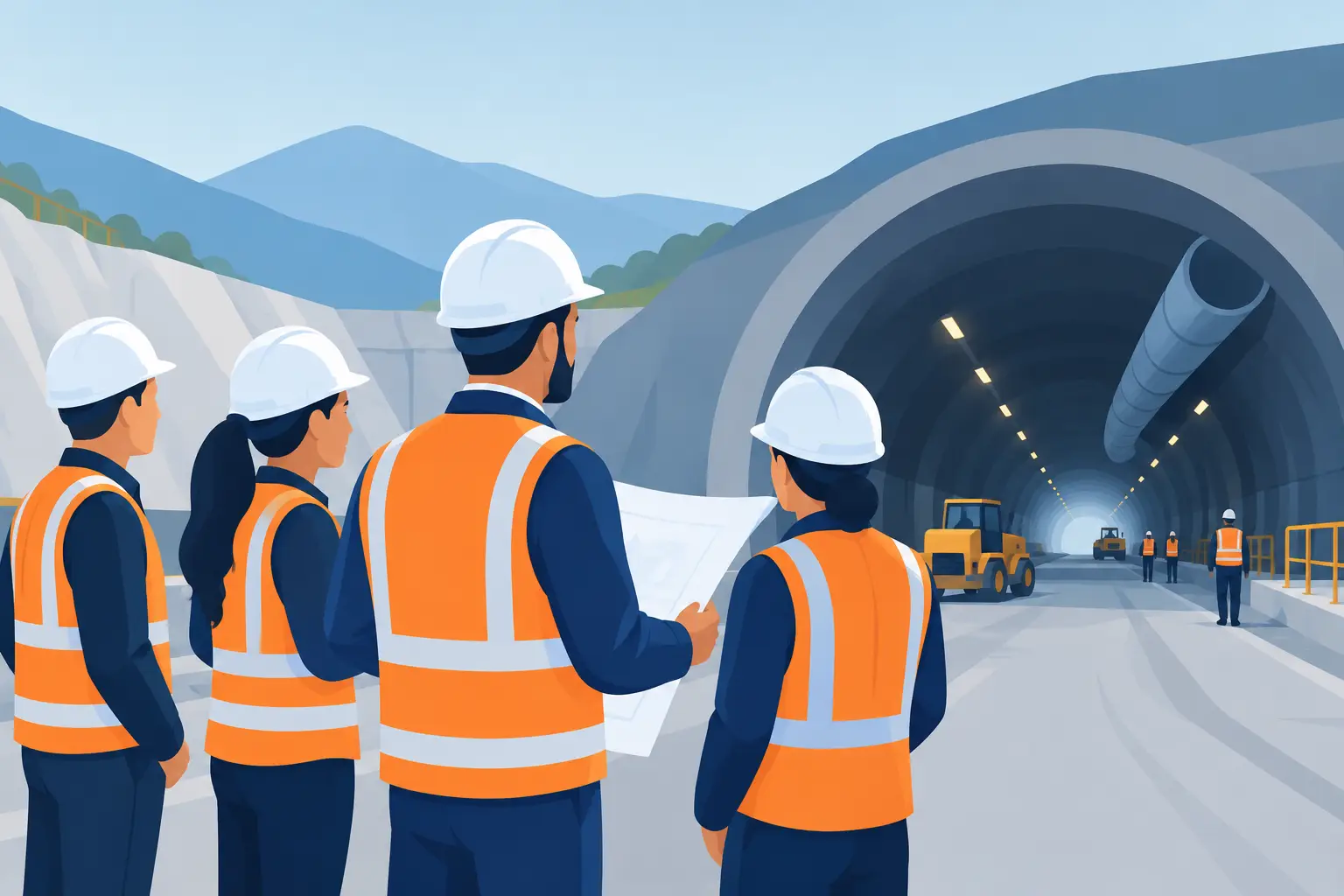
The response must match the site, conveyor design and operating environment. A damaged belt in an accessible surface transfer station is different from a belt tear near a tunnel heading, where ventilation, communications, restricted egress and interaction with tunnelling plant all affect the work plan. The common requirement is disciplined control of energy, competent supervision and clear communication.
First actions when a conveyor fails
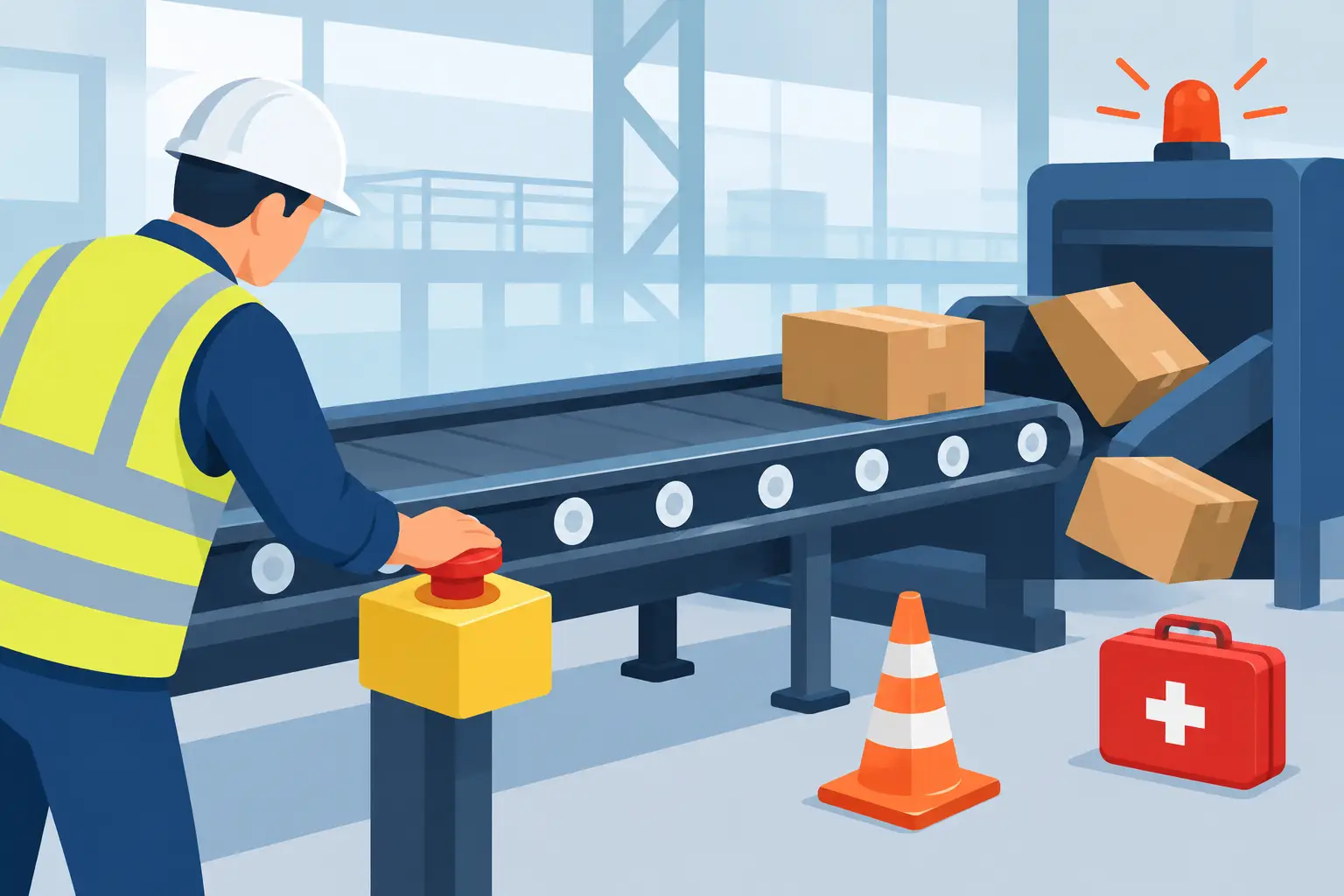
The first priority is people, not production. Anyone who identifies an abnormal condition – belt drift, smoke, overheating, unusual noise, a jammed chute, failed pulley, spillage or a damaged guard – should stop the conveyor using the approved emergency stop arrangement and immediately notify the control point or supervisor.
Do not assume a stopped belt is safe. Conveyor systems can retain energy in counterweights, stored material, hydraulic systems, electrical circuits and elevated components. A drive may also restart automatically if controls are not properly isolated. Establish an exclusion zone around the affected area, particularly where there is a risk of falling material, belt movement, pinch points or fire.
The supervisor should confirm the extent of the event before personnel begin any inspection. That includes whether the conveyor has fully stopped, what equipment is upstream and downstream, whether people are accounted for, and whether the incident has affected ventilation, access routes or other critical operations. In underground works, the control room and relevant shift supervisors need timely, factual information so they can manage broader site impacts.
If there is a fire, injury, entrapment, structural instability or uncontrolled material release, activate the site emergency procedure rather than treating the event as a routine breakdown. Emergency response arrangements, rescue capability and incident escalation requirements must always take precedence over repair activity.
Isolate, lock out and prove de-energised
Isolation is the point where an orderly response either begins or breaks down. The conveyor must be isolated under the site’s approved lock-out, tag-out and verification procedure. This should cover all relevant energy sources, not only the main electrical drive.
Depending on the system, isolation may include electrical incomers and local isolators, variable speed drives, hydraulic power packs, pneumatic supplies, gravity take-up systems, counterweights, stored material and connected equipment that could feed material or cause movement. Interlocked conveyors require particular care. Isolating one section does not necessarily prevent movement or material flow from another section.
A qualified person should verify the isolation and prove the equipment cannot start before work begins. Control-room confirmation alone is not enough. Local testing must be carried out in line with the site procedure, with personnel clear of danger zones. Locks and tags must identify the people working on the equipment, and no lock is to be removed except under the authorised site process.
For a belt tracking issue or blocked chute, the temptation is often to make a quick adjustment with the system operating. That approach exposes workers to nip points and moving components. The safer and more reliable approach is to isolate, inspect, correct the underlying issue and test under controlled conditions.
Assess the fault before committing to repairs
Once the area is safe and the conveyor is isolated, a competent technician can inspect the system. The goal is to identify the primary failure, any consequential damage and the conditions that caused it. Restoring a belt to motion without finding the cause can turn a short stoppage into a repeat breakdown.
Start with the evidence. Review alarms, drive trips, belt scale trends where available, operator observations and the sequence of events. Inspect the belt, splices, idlers, pulleys, cleaners, skirting, chutes, guards, drives, take-up arrangement and structural supports. Check for material ingress, seized rollers, mistracking, pulley lagging damage, misalignment, inadequate belt tension, failed bearings, overheating and abnormal wear.
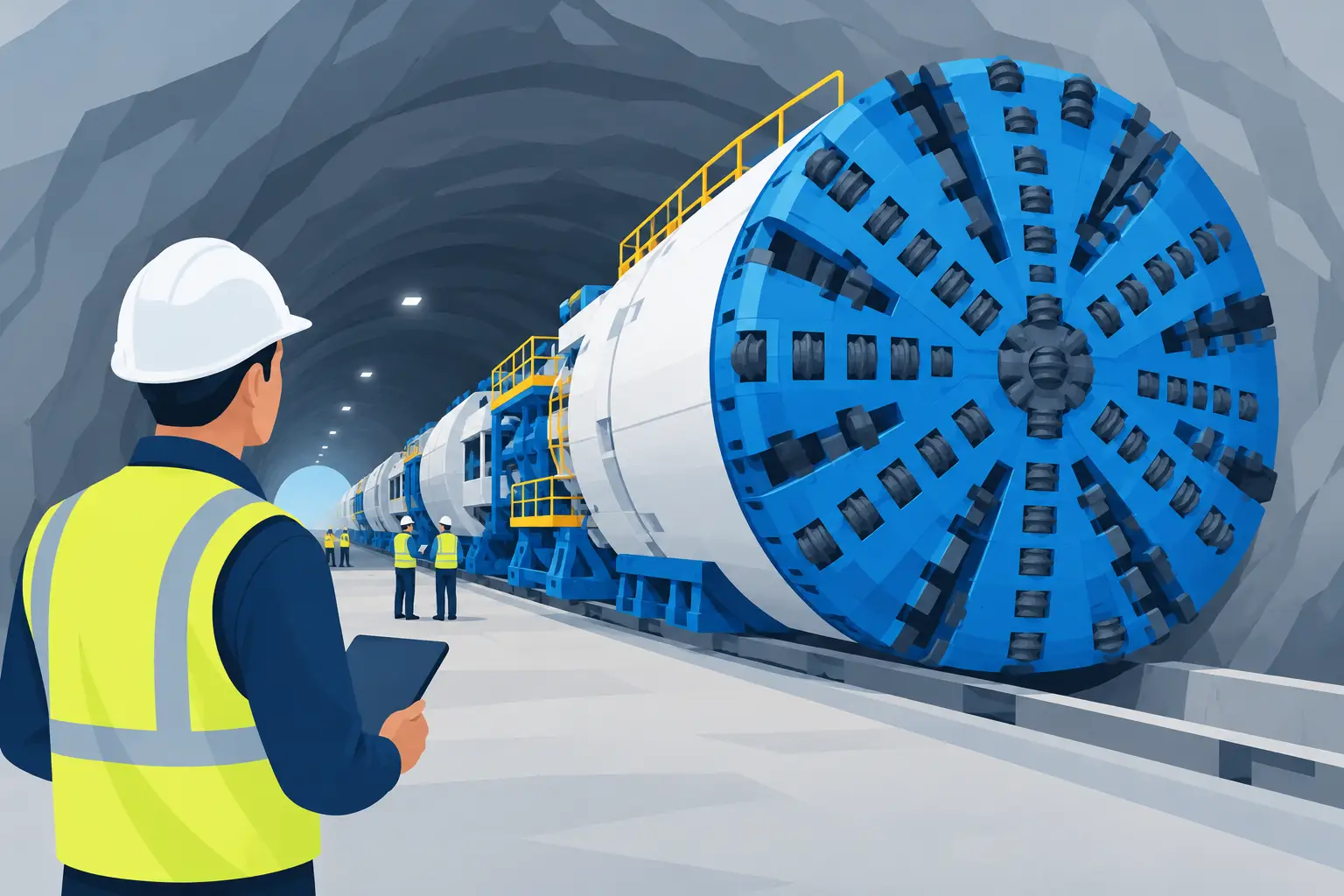
In tunnelling environments, also assess whether the failure is related to changing ground conditions, wet or abrasive spoil, uneven loading from the transfer point, confined-space access, or interaction with TBM and roadheader production. The operating context matters. A component that performs adequately in a surface application may require a different inspection interval, sealing arrangement or spare-holding strategy underground.
The repair decision should be based on risk and operating duty. A minor cleaner adjustment may be completed during a controlled stoppage. A damaged belt carcass, compromised pulley, defective emergency pull-wire, failed brake or structural issue may require a longer shutdown, specialist labour, engineering review or replacement components. Production urgency does not reduce the acceptance standard.
Industrial conveyor emergency response guide: repair planning
A repair plan should be brief, specific and understood by every person involved. It needs to define the job scope, isolation boundaries, hazards, controls, work sequence, lifting requirements, exclusion zones, required permits and the person responsible for release back to service.
For more complex work, such as belt replacement, splice repair, drive change-out or pulley removal, plan logistics before mobilising people and equipment. Confirm access, lifting capacity, crane or hoist arrangements, certified lifting gear, component weights, transport routes, lighting, communications and availability of critical spares. Underground projects also need to account for limited laydown space, travel time and coordination with rail, ventilation and tunnelling activities.
A capable response team may need mechanical fitters, electricians, boilermakers, riggers, dogmen, operators and supervisory personnel. The exact mix depends on the failure. Sending an undersized crew can increase downtime if the team cannot safely complete lifting, alignment, electrical testing or fabrication work within the planned window.
Documentation should support the task rather than slow it down. The team needs current drawings where relevant, the approved risk assessment, isolation records, inspection findings and manufacturer requirements for the affected equipment. If site conditions differ from the plan, stop and reassess. Changes in access, weather, water ingress, material build-up or adjacent operations can alter the risk profile quickly.
Return the conveyor to service in stages
Restart is a controlled commissioning activity, not the final switch in a repair job. Before energising, inspect the work area for tools, lifting gear, temporary supports, loose material and personnel. Refit guards and confirm all protective devices, emergency stops, pull-wires, interlocks and alarms are functional. Any bypass used for testing must be controlled, documented and removed before normal operation.
The system should be tested progressively. Where practical, start with a no-load run to observe belt tracking, pulley rotation, noise, vibration, drive performance and safety device operation. Then introduce material at a controlled rate while monitoring transfer points, belt loading, spillage, motor current and take-up performance.
The person authorising restart should receive a clear handover: what failed, what was repaired, what was tested, any temporary controls in place and any follow-up work required. Record the fault and repair history accurately. This information is essential for identifying recurring failures and improving preventive maintenance planning.
Build readiness before the next breakdown
Emergency response is faster when the groundwork is already in place. Critical conveyors should have current isolation diagrams, clear equipment identification, accessible emergency stops, maintained communications and agreed escalation contacts. Teams should know who can make operational decisions after hours and which specialist support is available.
Spare-parts planning deserves the same attention as the response procedure. Holding the right bearings, idlers, belt repair materials, cleaners, switches, lagging and drive components can prevent a minor defect becoming a multi-shift outage. The appropriate stock level depends on lead times, duty cycle, component criticality and the consequences of lost production.
Preventive inspections are equally valuable. Tracking trends in bearing temperature, belt condition, vibration, drive current, carryback and recurring spillage gives maintenance teams an opportunity to intervene before failure. For high-demand infrastructure works, planned maintenance must reflect actual operating conditions rather than a generic calendar interval.
HP Rural supports conveyor installation, maintenance, repairs, component supply and emergency breakdown response for demanding material-handling operations. The practical value of specialist support is not only rapid attendance. It is having qualified personnel who can assess the fault, work within site controls and return equipment to service with the right repair standard.
A well-managed response protects people first, then protects the programme by making sure the conveyor comes back online for the right reason: the fault has been properly understood, the repair has been verified, and the system is ready to carry its operating load safely.