A seized idler, drifting belt or overheating drive can become a major stoppage well before the conveyor stops moving. In a tunnel, where muck removal must keep pace with excavation, that delay can affect the TBM, shift crews, production targets and the wider construction program. Conveyor condition monitoring gives maintenance teams the evidence to act before a developing defect becomes an uncontrolled failure.
For conveyor-dependent operations, the objective is not to collect more data for its own sake. It is to identify deterioration early, understand its likely consequence, and organise safe, practical work during the next available maintenance window. The right approach protects people, reduces emergency callouts and makes better use of labour, spares and planned shutdown time.
What conveyor condition monitoring should achieve
Condition monitoring is the regular assessment of equipment health through inspection, measurement and operating data. On a conveyor, it focuses on components and conditions that influence safety, belt tracking, material flow and drive performance.
A useful program answers four practical questions. What is changing? How quickly is it changing? What happens if it fails? And what work is required before that point is reached? If monitoring cannot support those decisions, it may be producing reports without reducing operational risk.
The criticality of each conveyor determines the depth of monitoring required. A short transfer conveyor with a standby arrangement may be managed through routine inspections. A long underground conveyor running continuously behind a TBM requires tighter controls, clearer escalation criteria and rapid access to qualified technicians and essential spares.
The faults that deserve close attention
Conveyors are simple in principle, but their failure modes are connected. An idler bearing that begins to fail can create heat, belt damage, increased drag and a potential fire risk. Poor belt tracking can damage skirting, structures and the belt edge while allowing material to spill into walkways and moving components. A drive issue can place excessive load on motors, gearboxes and pulleys before a protection device trips.
The monitoring scope should reflect site conditions, duty cycle and consequence of failure. In high-demand tunnelling and infrastructure environments, attention commonly centres on belt alignment and condition, idlers and pulleys, drive assemblies, take-up systems, chutes, transfer points and guarding.
Belt, splice and tracking condition
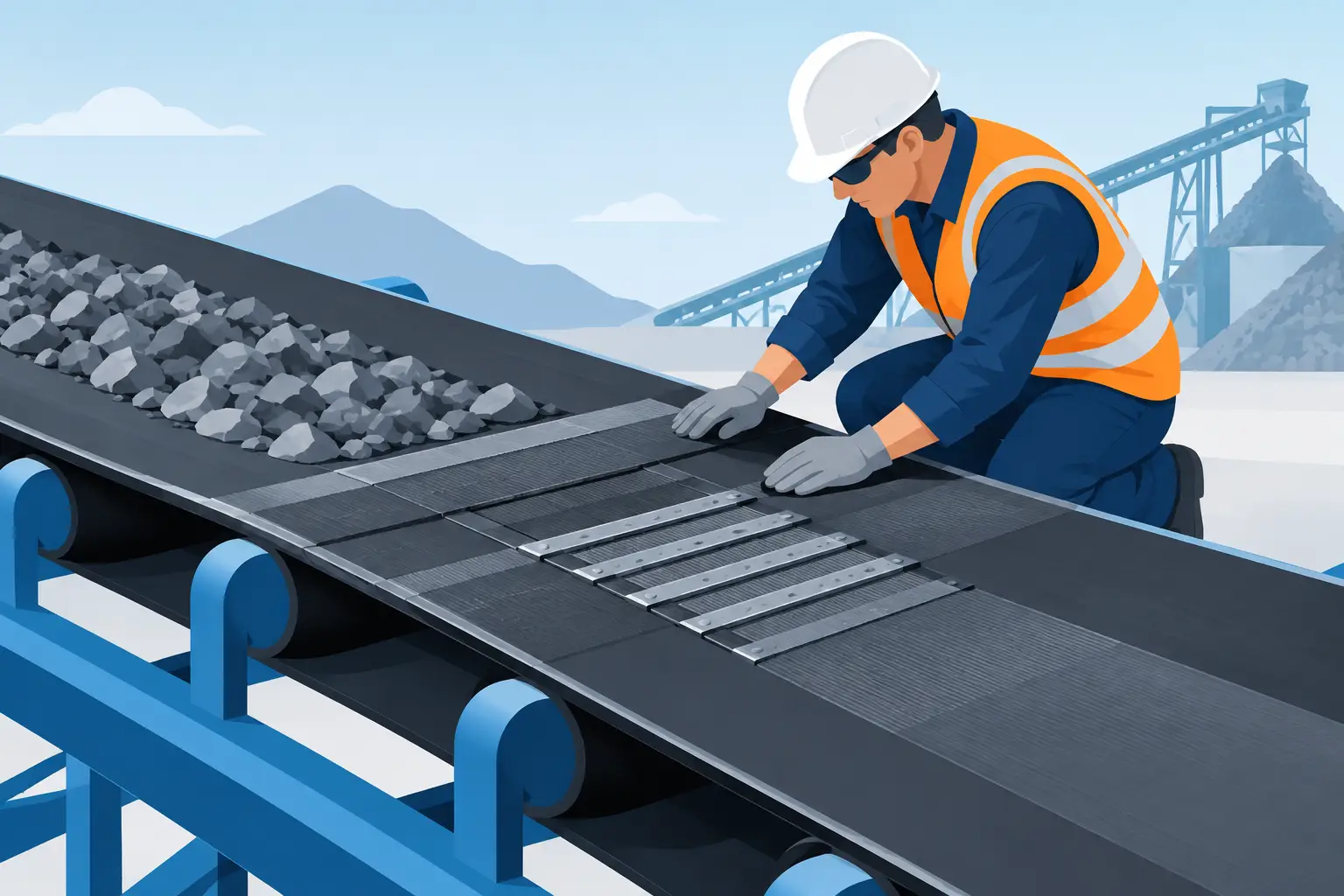
The belt is often the most visible part of the system, yet early warning signs can be missed during rushed inspections. Technicians should look for edge damage, cover wear, cracking, torn sections, material build-up and signs of mistracking. Splices need particular scrutiny because their condition directly affects belt integrity and can dictate whether a planned repair remains minor or develops into a lengthy recovery task.
Tracking should be checked under normal load, not only when the conveyor is empty. A belt that runs centrally without material may move significantly once loading changes. The cause may be inconsistent loading, damaged idlers, frame misalignment, pulley lagging wear or contamination at transfer points. Adjusting a tracking device without finding the underlying cause can simply move the problem further along the conveyor.
Idlers, pulleys and bearings
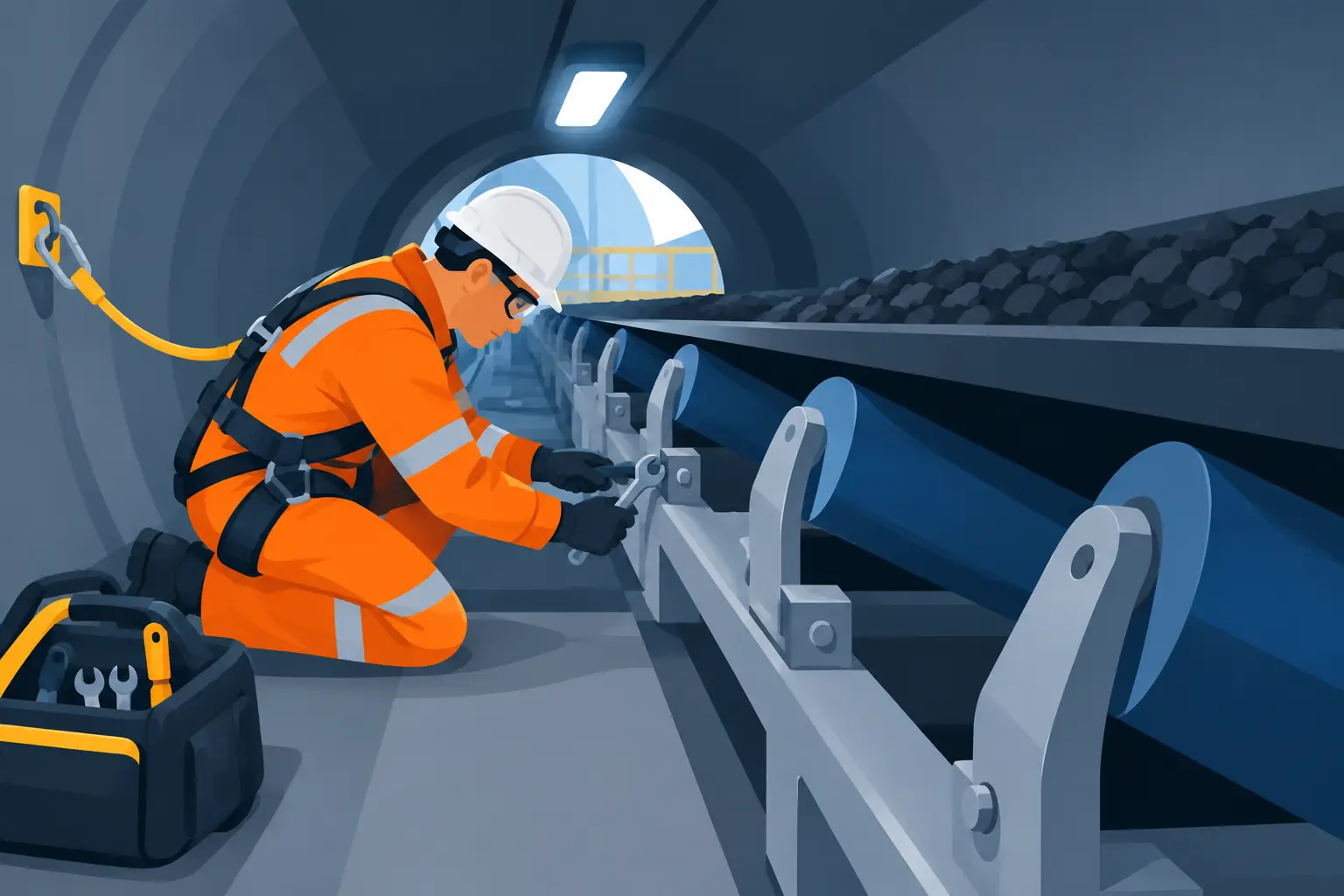
Idlers operate in large numbers and are exposed to dust, water, vibration and material impact. Audible changes, excessive heat, drag, damaged shells and seized rollers are all reasons for intervention. Thermal inspections can help locate abnormal temperatures, particularly where access is limited, but they should be confirmed by a competent physical inspection where safe to do so.
Pulleys require careful examination for lagging wear, shell damage, bearing condition and material accumulation. A deteriorating pulley can affect traction and tracking across the whole system. For critical head, tail and bend pulleys, planned inspections should consider the remaining life of bearings and lagging rather than waiting for visible failure.
Drives, take-ups and electrical controls
Motor current, gearbox temperature, vibration, oil condition and abnormal noise can indicate developing drive problems. Trend data is particularly valuable here. A single reading may not identify an issue, while a steady increase in temperature or vibration across several inspections can justify intervention before a gearbox or motor fails under load.
Take-up systems also need regular verification. Incorrect tension can contribute to slip, poor tracking, splice stress and reduced drive performance. For gravity and winch take-ups, inspection should include travel, wire rope condition where applicable, guards, limit devices and the general condition of the supporting structure.
Electrical monitoring has to be coordinated with mechanical inspection. Repeated overload trips, variable speed drive alarms, belt drift switch activations or emergency-stop faults are not merely electrical events. They may point to material flow, alignment or mechanical resistance problems that require a combined investigation.
Building a practical inspection routine
Effective conveyor condition monitoring combines operator observations with planned maintenance inspections. Operators and crew members often notice the first change in sound, vibration, belt behaviour or spillage. They need a clear process for recording and escalating those observations rather than relying on informal handovers.
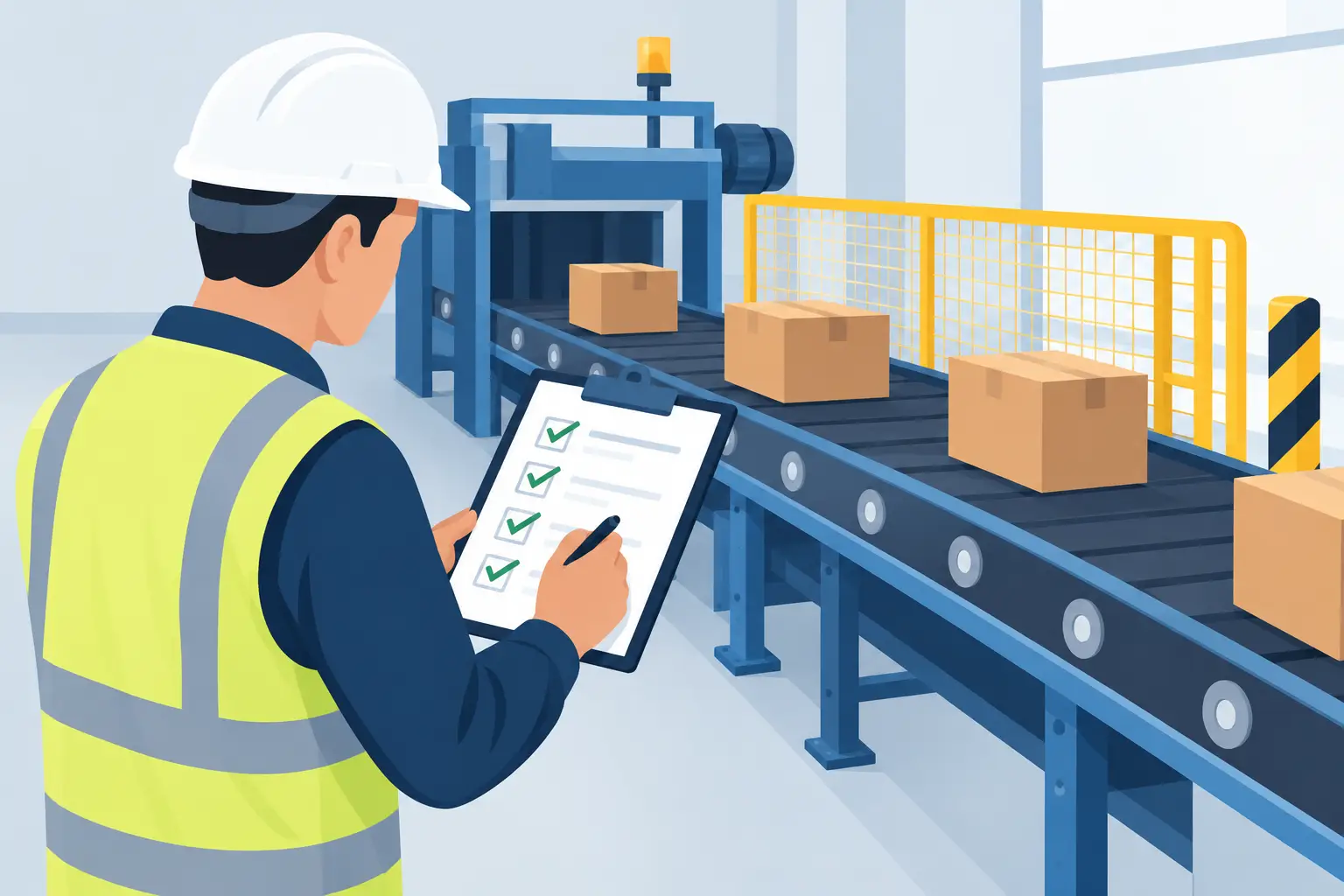
Planned inspections should be risk-based. Daily checks can focus on running condition, guarding, emergency devices, spillages, abnormal noise and visible belt damage. More detailed weekly or monthly inspections can examine drive components, idler condition, pulleys, structural integrity, lubrication requirements and wear at chutes and transfer points. The appropriate frequency depends on operating hours, environment, equipment age, material characteristics and the consequence of downtime.
A consistent inspection form helps establish trends, provided it is not treated as a tick-and-flick exercise. Reports should identify the component location, defect type, severity, recommended action and required timeframe. Photographs, temperature readings and vibration results are useful when they support a clear maintenance decision.
Defects are generally easier to manage when classified by urgency. An immediate safety issue, such as damaged guarding or a hot seized idler, requires the conveyor to be made safe and repaired under the site’s isolation procedures. A defect with a credible near-term failure risk should be planned into the earliest suitable outage. Lower-risk wear can be monitored and bundled into scheduled maintenance, provided its condition is reassessed at each interval.
Monitoring technology is useful, but not a substitute for inspection
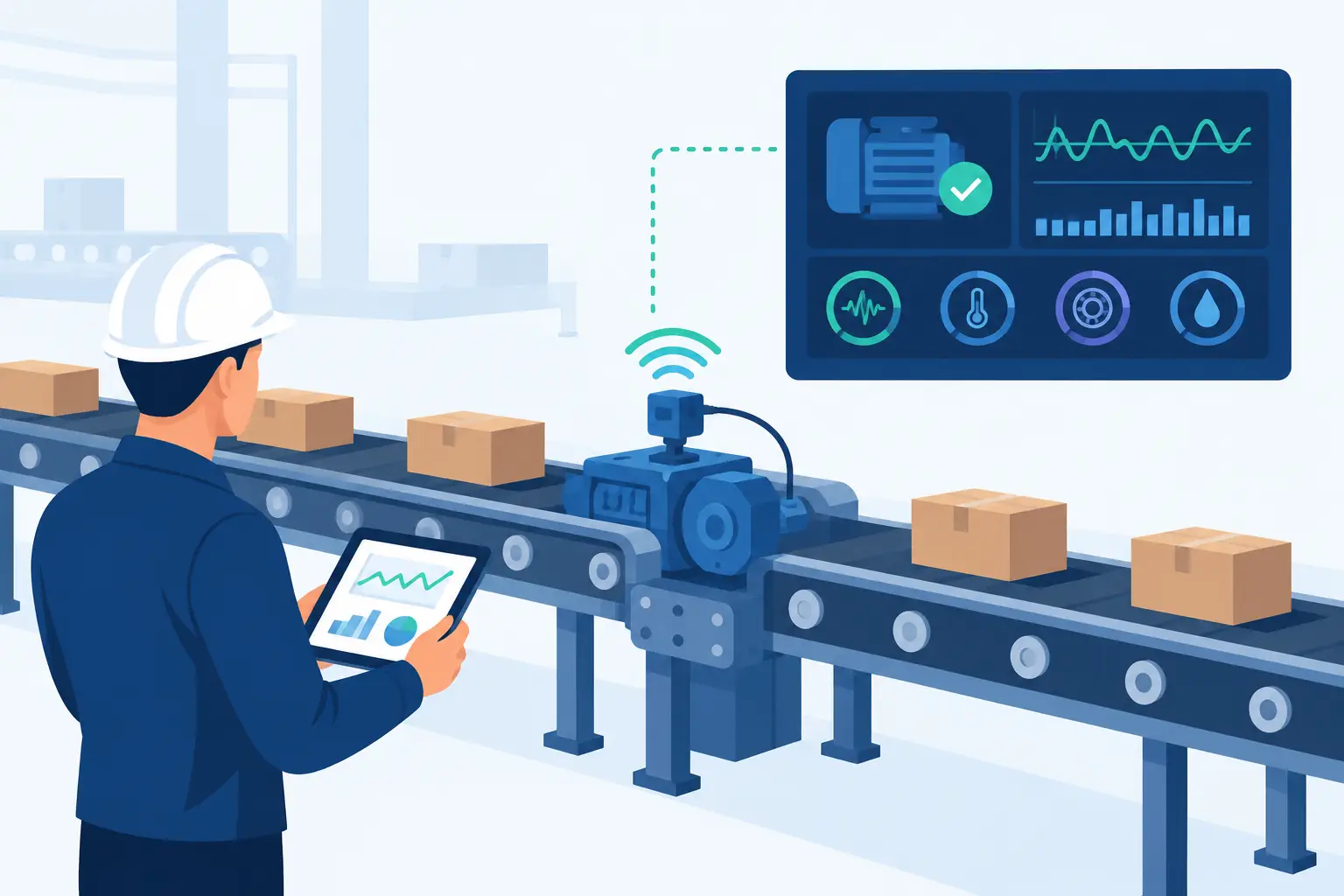
Thermal cameras, vibration analysis, belt drift sensors, rip detection, speed monitoring and motor condition data can substantially improve fault detection. These tools are especially valuable on long conveyors, inaccessible sections and systems operating for extended hours.
However, technology needs suitable installation, alarm settings and response procedures. A sensor that generates frequent nuisance alarms may be bypassed or ignored. Conversely, a system that identifies an issue without a defined response path does little to reduce downtime. The value comes from linking the alert to an accountable action: inspect, isolate, repair, order a spare or adjust the maintenance plan.
There is also a trade-off between coverage and complexity. A fully instrumented conveyor can provide detailed condition data, but it requires capital investment, calibration, maintenance and competent interpretation. For some systems, disciplined physical inspections and reliable reporting deliver the best return. For critical underground conveyors, a blended model is often more effective: permanent monitoring for high-consequence faults, supported by hands-on mechanical and electrical inspections.
Turning findings into reliable maintenance work
Monitoring only delivers results when defects are converted into controlled work. This means confirming the scope, checking spare-part availability, arranging access and lifting requirements, and ensuring isolations and permits are understood before the shutdown starts.
For example, identifying worn pulley lagging is useful only if the team can plan the repair before traction loss causes belt slip. The work may require a replacement pulley, lifting equipment, fitters, electrical isolation, belt restraints and sufficient outage time. Early identification gives project teams options. Late identification usually leaves them with an urgent breakdown and limited choices.
Maintenance planning should also consider the cause of repeat defects. Replacing multiple idlers in the same zone may resolve immediate failures, but recurring damage can indicate poor loading, misalignment, unsuitable roller selection, contamination or inadequate access for cleaning. The corrective action may involve a conveyor modification rather than another like-for-like repair.
HP Rural supports critical conveyor operations with qualified mechanical, electrical and specialist personnel who can inspect, repair and improve systems while working within demanding site safety and production requirements.
The measure that matters: fewer unplanned stops
A condition monitoring program should be reviewed against operational outcomes, not the number of inspection sheets completed. Useful measures include unplanned conveyor stoppages, repeat failures, response time to critical defects, planned versus reactive maintenance hours, and the availability of high-criticality conveyors.
Patterns in these measures help maintenance supervisors direct effort where it will have the greatest effect. If breakdowns continue despite regular inspections, the problem may be inspection quality, incomplete repairs, spare-part delays, inadequate shutdown windows or an underlying design issue. Reviewing the full chain is more productive than asking crews simply to inspect more often.
The best time to address a conveyor defect is when the system is still operating safely, the required people and parts can be organised, and the work can be completed under a planned isolation. That is the practical value of condition monitoring: turning uncertainty into controlled maintenance before downtime dictates the terms.