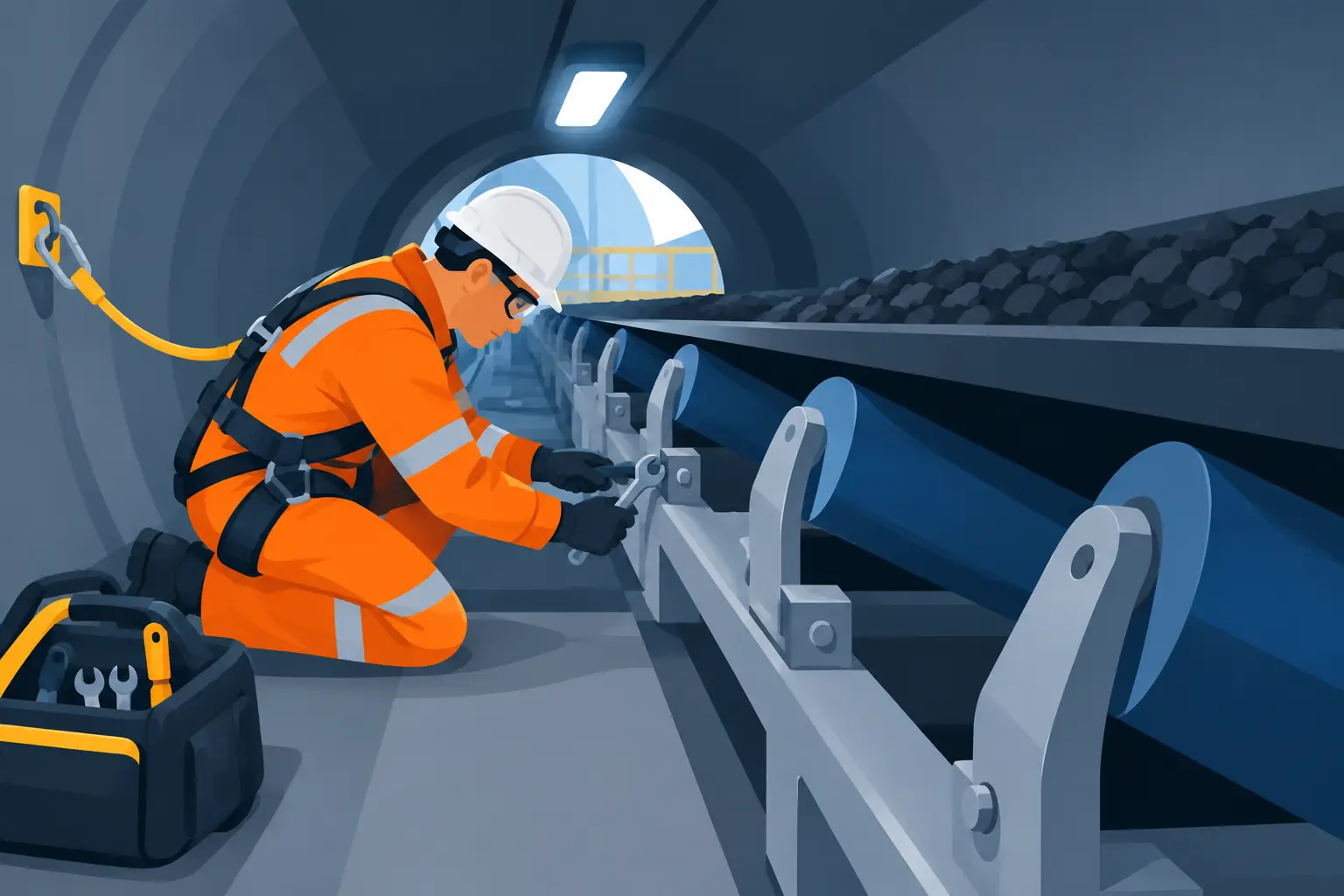
A failed belt splice can stop far more than a conveyor. In a tunnelling or high-volume material-handling operation, it can interrupt spoil removal, constrain production, create access issues and place the programme under immediate pressure. Effective conveyor belt splice repair is therefore not simply a matter of joining damaged belt ends. It is a controlled maintenance activity that must restore strength, tracking performance and safe operation under the actual loads, tensions and site conditions the system will face.
For project and maintenance teams, the priority is clear: make the conveyor safe, establish why the splice failed, select a repair method that suits the belt and duty, then return the system to service without creating a repeat failure further down the line.
What causes a conveyor belt splice to fail?
A splice usually gives warning before it opens completely. Cover lifting, exposed carcass, edge fraying, cracking through the splice area, abnormal noise at pulleys or material tracking to one side all warrant attention. The earlier these signs are identified, the more likely the work can be planned during a controlled shutdown rather than completed as an urgent breakdown repair.
The visible damage is not always the root cause. A splice may fail because it was incorrectly prepared or cured, but it can also be the result of excessive belt tension, poor pulley alignment, seized or damaged rollers, material build-up, inadequate take-up travel or repeated belt mistracking. In underground operations, moisture, abrasive spoil, restricted access and continuous running hours add further pressure to both belt covers and splice integrity.
A repair that addresses only the opened section, while leaving the underlying fault in place, may provide a short return to service but not a dependable outcome. The splice must be assessed alongside the full conveyor condition.
Assess the belt before selecting a repair method
The first decision is whether the belt can be safely repaired in position or whether a replacement section, new belt or a complete re-splice is the more appropriate option. This depends on the belt construction, the extent of carcass damage, available slack, operating tension, pulley configuration and the criticality of the conveyor.
A proper assessment considers the belt type and condition. Fabric belts, steel-cord belts and specialist high-tension belts have different repair requirements. Technicians should identify the carcass construction, belt rating, cover thickness, existing splice type and length, as well as damage extending beyond the visible opening. A splice that appears to have lifted at one edge may have moisture ingress or separation across a much larger area.
Operating history matters as well. If the conveyor has been starting under heavy load, handling oversized material, running off-centre or experiencing frequent emergency stops, these factors need to be addressed before commissioning the repair. Reviewing recent inspections and operator reports can quickly distinguish an isolated splice defect from a system-level reliability issue.
Where belt tension or condition is uncertain, conservative decision-making is warranted. Returning a marginal splice to a critical conveyor can create a more complex failure, including belt damage around drive pulleys or uncontrolled material discharge. The cost of a longer planned repair can be lower than the cost of a second outage.
Conveyor belt splice repair options
The correct method is determined by the belt, service duty and time available. There is no single repair approach that suits every conveyor.
Mechanical fasteners
Mechanical fasteners can provide a rapid, practical solution where an emergency return to service is required, where vulcanising equipment cannot be deployed, or where the conveyor design requires regular belt removal. They can also be suitable for lower-tension and less abrasive duties when correctly selected and installed.
Their trade-off is that they introduce a mechanical joint that can be more vulnerable to wear, material carry-back and impact damage. Fasteners may also be unsuitable for certain pulley diameters, high-speed systems, high-tension belts or applications where they could damage belt cleaners and other components. The joint must be compatible with the manufacturer’s operating limits and the conveyor’s safety requirements.
Cold vulcanised repairs
Cold vulcanising uses specified adhesives and prepared rubber components to repair belt covers, damaged edges and some splice configurations. It can be effective where heat vulcanising is impractical and where conditions allow proper surface preparation, adhesive handling and cure time.
The quality of the result relies heavily on cleanliness, temperature, humidity control and precise preparation. Dust, moisture and poor buffing can compromise adhesion before the conveyor has even restarted. In confined or wet environments, containment and work-area preparation are as important as the adhesive system itself.
Hot vulcanised splices
For many demanding conveyor applications, hot vulcanised splices offer the strongest long-term outcome when designed and executed correctly. The belt ends are stepped or fingered to suit the carcass, prepared to the required dimensions and cured using a controlled vulcanising press. This produces a joint intended to behave as part of the belt rather than as an attached connection.
Hot vulcanising requires suitable equipment, qualified personnel, stable power, adequate access and enough time for preparation, curing and cooling. It is not automatically the right answer during every breakdown, particularly where access constraints or operational urgency make safe execution impossible. However, for high-duty conveyors carrying spoil, aggregate, ore or bulk material over extended shifts, it is often the preferred permanent repair method.
Safe execution starts with isolation and access
Splice work carries significant risk. Conveyors contain stored energy in take-up systems, moving components, suspended belt sections and pinch points. In tunnelling environments, teams must also account for restricted egress, mobile plant interaction, ventilation, lighting and coordination with other work fronts.
Before work begins, the conveyor must be isolated, locked out and proven de-energised under the site’s approved isolation process. The belt must be restrained and supported where necessary, particularly around gravity take-ups or inclined sections. The work area needs controlled access, appropriate lighting and a clear lifting plan for presses, belt sections and tooling.
A competent repair crew does more than install the splice. It verifies the condition of pulleys, idlers, cleaners, skirting and tracking equipment that may have contributed to the failure. It also manages the practical controls that make quality work possible: clean preparation surfaces, weather protection where required, calibrated equipment and documented cure parameters.
Commissioning the repaired conveyor
A repaired splice should not be placed immediately into full production without checks. The initial start-up should confirm that the belt tracks correctly, the splice passes through pulleys and cleaners without interference, and take-up movement remains within an acceptable operating range.
Where site procedures permit, running the conveyor unloaded first provides an opportunity to observe the splice through critical transition zones. The conveyor can then be introduced to load progressively while technicians monitor noise, tracking, material containment and any indication of abnormal belt movement. A repair may be structurally sound but still expose an alignment or loading issue that needs correction.
The maintenance record should capture the repair location, splice method, materials used, belt condition, findings from the inspection and follow-up actions. This information is useful when planning belt replacement, managing critical spares and identifying recurring failure patterns across a project.
Preventing the next splice failure
The most effective splice repair strategy is supported by routine inspection and planned intervention. Splice condition should form part of regular conveyor checks, particularly after major belt tracking events, heavy impact incidents, extended shutdowns or changes in material characteristics.
Focus on the conditions that shorten splice life: poor loading at transfer points, off-centre material flow, worn impact beds, seized rollers, pulley lagging damage, ineffective belt cleaning and take-up settings outside their intended range. These are often manageable maintenance issues, but left unattended they transfer load and abrasion directly into the belt and splice.
Critical operations should also maintain a realistic spares and response plan. That may include repair materials, compatible mechanical fasteners, rubber, adhesive systems, pulley lagging, idlers and access to suitably qualified fitters, belt technicians, electrical personnel and lifting crews. The required resources depend on the conveyor arrangement, but waiting for basic components during a breakdown can turn a contained repair into a prolonged outage.
For high-pressure infrastructure works, HP Rural approaches splice repairs as part of the conveyor’s operating system, not as an isolated belt task. The best repair is one that restores service safely while giving the maintenance team a clear path to prevent recurrence. When a splice shows early distress, treating it as a planned reliability issue is usually the most effective way to protect uptime, people and programme commitments.