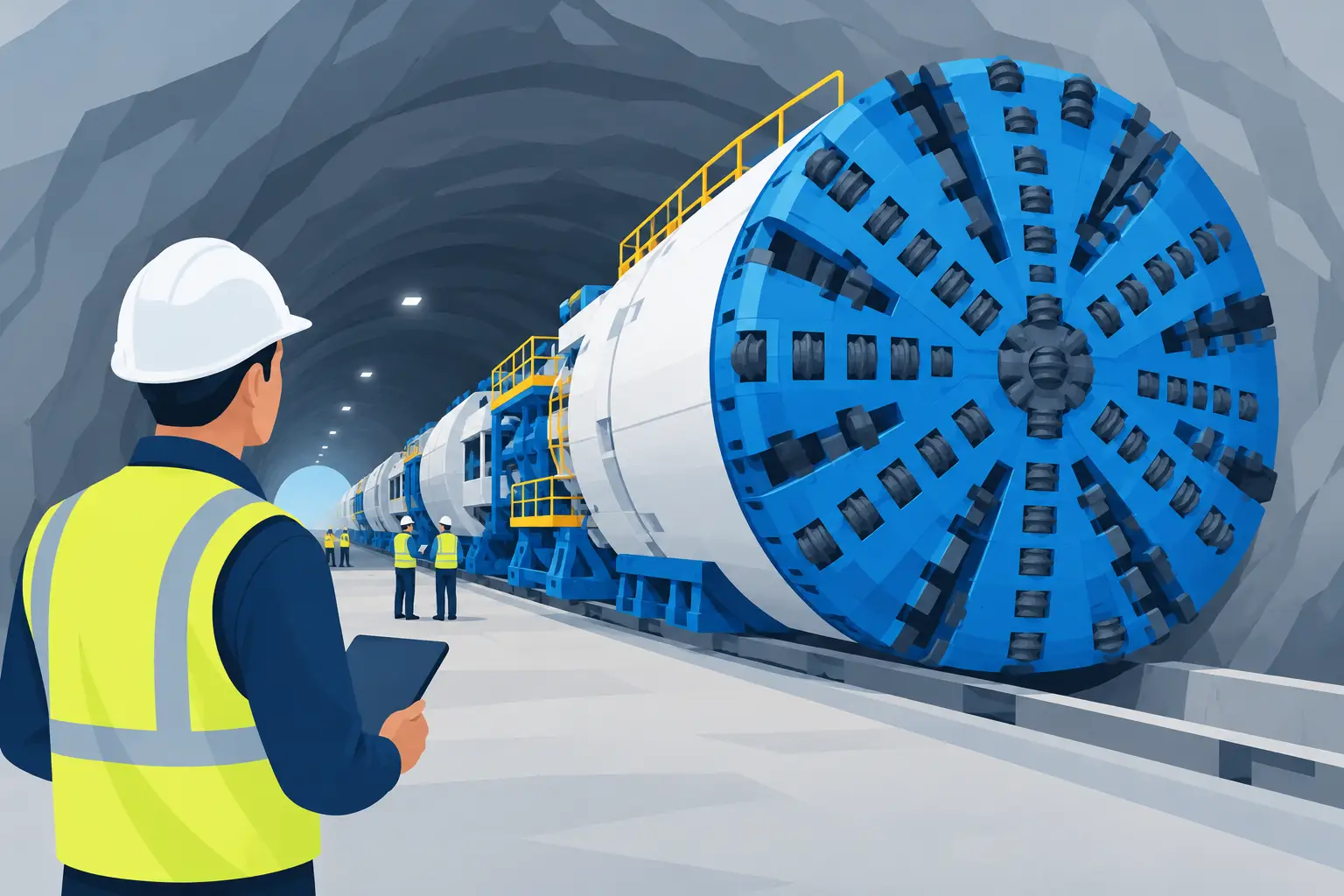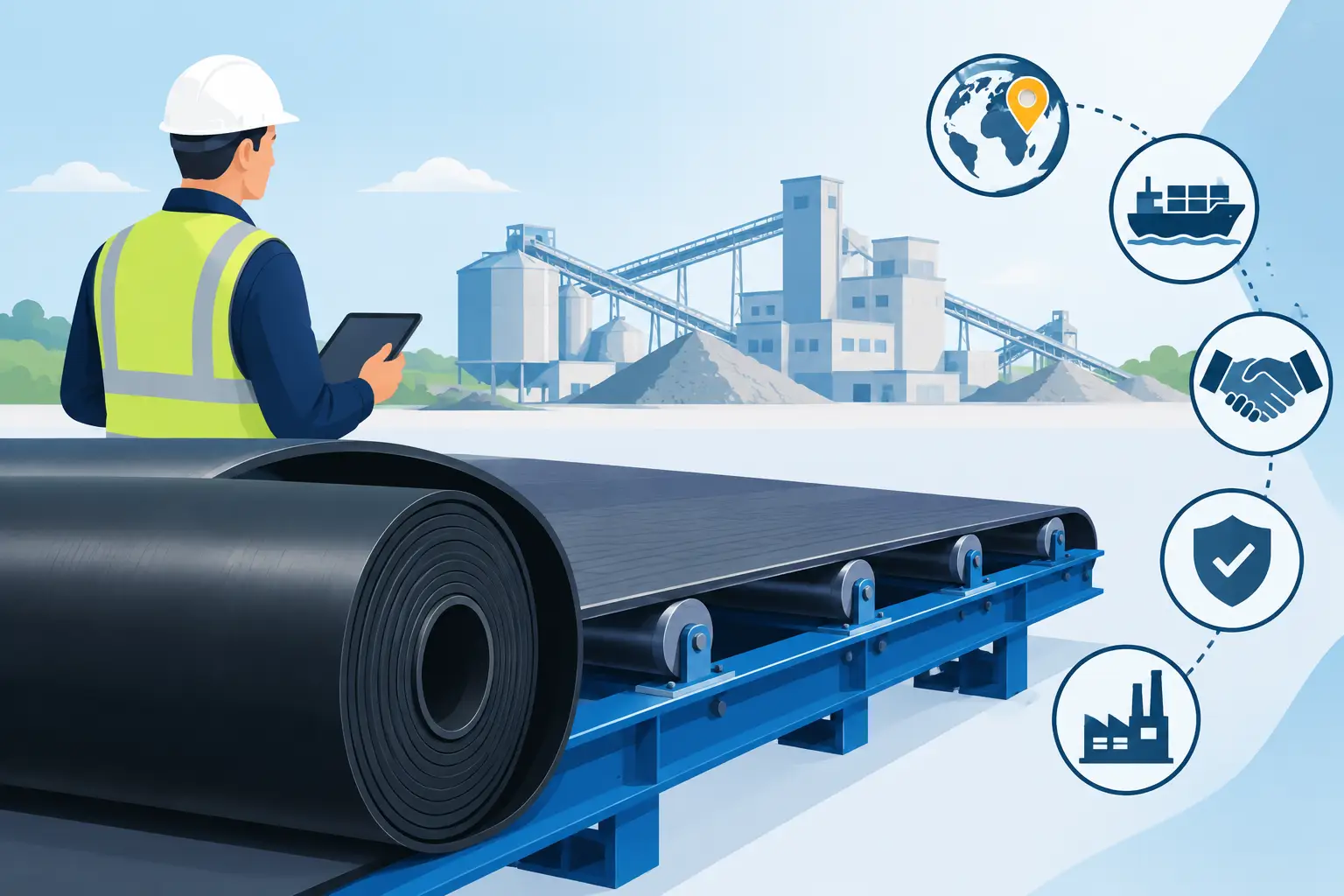
A conveyor belt can look like a straightforward line item until it fails beneath a TBM, at a transfer point or during a production-critical shift. Knowing how to source conveyor belts starts with treating the belt as part of a complete operating system, not a commodity purchase. The right belt must carry the required load, suit the material, work with the installed equipment and arrive with the support needed to keep the operation moving.
For tunnelling, civil infrastructure, mining, manufacturing and logistics operations, an incorrect belt specification can create tracking problems, premature cover wear, splice failures and avoidable downtime. A disciplined sourcing process reduces those risks before the order is placed.
Start with the actual conveyor duty
The existing belt is a useful reference, but it should not be copied automatically. Operating conditions may have changed since the conveyor was commissioned. Increased throughput, different excavated material, altered transfer arrangements or extended operating hours can all change the duty requirement.
Build the specification around the conveyor’s real operating conditions. Confirm belt width, centre-to-centre conveyor length, lift, belt speed, required tonnes per hour, loading profile and material characteristics. Material size, bulk density, abrasiveness, moisture content, temperature and stickiness all influence belt construction and cover selection.
In a tunnel spoil conveyor, for example, wet and abrasive muck can damage a light-duty cover quickly, particularly where loading is poorly centred or a chute creates high impact. In a grain or packaging application, the priority may instead be clean handling, flexibility and resistance to oils or other contaminants. The belt must suit the application rather than simply match a catalogue description.
Also assess the conveyor itself. Pulley diameters, idler spacing, trough angle, take-up travel, belt cleaners, skirt systems and transfer chutes affect the belt choice. A belt with higher tensile strength or a thicker carcass may require larger minimum pulley diameters. Selecting it without checking the installed geometry can create bending fatigue and shorten service life.
Specify construction, strength and covers clearly
A complete belt specification gives suppliers a defined basis for quotation and avoids comparing unlike products. At minimum, it should identify the belt width, construction, rated tensile strength, number of plies where applicable, top and bottom cover thickness, cover grade, edge configuration and required roll lengths.
Fabric belts are commonly selected for many general and heavy-duty applications because they offer practical flexibility and can be installed and spliced efficiently. Steel cord belts are generally considered where long centres, high tensions or demanding high-capacity duties require greater strength and lower elongation. The correct option depends on design tension, take-up capacity, installation constraints and the consequences of failure.
Cover selection deserves particular attention. Abrasion-resistant covers are appropriate where sharp, hard material is being handled. Cut and gouge resistance may be more relevant where large rock or demolition material lands heavily at a transfer point. Heat-resistant, oil-resistant, flame-resistant or antistatic properties may be necessary for specific process environments.
For underground work, do not assume that a product described as fire resistant meets the project requirement. Check the applicable project specification, statutory requirements and test certification, including the precise belt construction and cover grade being supplied. Certification should be current, traceable and relevant to the intended service conditions.
Source against lifecycle cost, not the lowest metre rate
A low purchase price can become expensive when the belt needs early replacement, creates repeated tracking issues or cannot be spliced within the available shutdown window. Procurement teams should compare total operating value: expected wear life, splice method, lead time, technical support, spare availability and the supplier’s ability to respond if conditions change on site.
Ask each supplier to explain why their proposed belt suits the duty. A capable supplier should be able to discuss tension rating, cover compound, pulley compatibility, installation approach and likely wear points. If the response is limited to a price and a generic datasheet, there may be insufficient understanding of the application.
The same approach applies to belt thickness. A thicker cover may improve wear life, but it can increase belt weight, affect troughability and require changes to cleaners, skirting or tracking arrangements. More material is not always a better solution. The best selection is the one that balances service life with the limits of the installed conveyor.
Check the supplier’s practical capability
Conveyor belt supply should include more than arranging a delivery to the gate. Before placing an order, establish whether the supplier can verify measurements, inspect the conveyor, manage belt storage, provide appropriate splicing equipment and support commissioning after installation.
This is particularly relevant on constrained infrastructure sites. Access routes, shaft dimensions, lifting plans, work-front availability and permitted shutdown periods can dictate whether a belt can be installed safely and efficiently. A roll that is correct on paper may be impractical to transport underground or manoeuvre into position without a planned handling method.
Confirm who is responsible for key tasks: removing the old belt, pulling in the new belt, preparing and completing splices, setting tracking, inspecting guards and testing the conveyor under load. Those responsibilities should be clear before mobilisation, especially where multiple contractors are working around a live production schedule.
Qualified mechanical and electrical personnel may also be required to isolate the system, adjust take-up arrangements, inspect drives or rectify controls issues identified during recommissioning. Coordinated site support prevents a belt replacement from becoming a longer outage than planned.
Plan the splice and installation before ordering
The splice is often the most critical part of a belt replacement. Mechanical fasteners can be useful where rapid installation or temporary repair is required, but they may not be suitable for every application, belt construction or pulley arrangement. Vulcanised splices can provide a smoother, durable result when correctly designed and completed under controlled conditions, although they require equipment, preparation time and competent technicians.
The belt order needs to allow for the selected splice method. This includes sufficient length for the splice, safe positioning of the splice during installation and access for technicians to work. Ordering a nominal conveyor length without accounting for take-up position, routing and splice allowance is a common and costly error.
Review the condition of associated components at the same time. Worn lagging, seized idlers, damaged pulleys, ineffective scrapers and distorted frames can destroy a new belt quickly. If the old belt showed edge damage, wandering or recurring splice failures, investigate the root cause rather than expecting the replacement belt to solve it.
Build a spare-belt and critical-parts strategy
Not every operation needs a full spare belt in storage. For short, accessible conveyors with predictable lead times, holding repair materials and critical components may be sufficient. For long overland conveyors, remote operations or continuous tunnelling systems, the cost of extended downtime can justify holding a spare belt or staged replacement lengths.
The decision should account for supplier lead time, transport constraints, storage capacity, production consequences and the likelihood of damage. Store spare belt rolls clean, dry and protected from direct sunlight, chemicals and physical damage. Keep them supported correctly and labelled with their full specification, purchase date and intended conveyor.
Critical spares should also include items that can cause or worsen belt damage: idlers, cleaners, skirt rubber, pulley lagging materials, fasteners where approved, and components for the belt tracking and take-up systems. The aim is not to overstock. It is to remove known sources of delay when a fault occurs.
Use commissioning to validate the purchase
A belt replacement is not complete when the splice is finished. Commissioning should include guards and safety devices, alignment, tracking, scraper contact, skirt clearances, take-up performance and observations at transfer points. Run the conveyor empty first where practical, then introduce material gradually while checking for carryback, mistracking, excessive vibration and abnormal temperature or noise around rotating equipment.
Record the final belt specification, roll number, splice details, installation date and commissioning findings in the maintenance system. These records make future sourcing faster and more accurate, particularly when a conveyor is modified or a replacement needs to be mobilised at short notice.
HP Rural supports conveyor component supply, installation, commissioning, maintenance and breakdown response in demanding material-handling environments. For project teams, the practical value is having the belt specification, site conditions and follow-up support considered together rather than managed as separate tasks.
A well-sourced conveyor belt should give the maintenance team confidence, not another item to watch. Get the duty confirmed, verify the supplier’s technical and site capability, and use installation findings to improve the next procurement decision.