A conveyor rarely fails without giving the operation some warning. The top conveyor failure warning signs are often visible, audible or measurable well before a belt stops, a drive trips or material spills into a work area. On tunnel, civil, mining and high-throughput industrial sites, recognising those changes early gives supervisors time to plan safe corrective work rather than manage an urgent breakdown under production pressure.
The practical challenge is separating normal operating variation from a developing fault. Load profiles change, wet or abrasive material behaves differently, and underground conditions place added stress on belts, rollers, drives and structures. The key is to investigate changes from the system’s established operating condition, particularly when several symptoms appear together.
Top conveyor failure warning signs crews should not ignore
Belt mistracking and edge damage
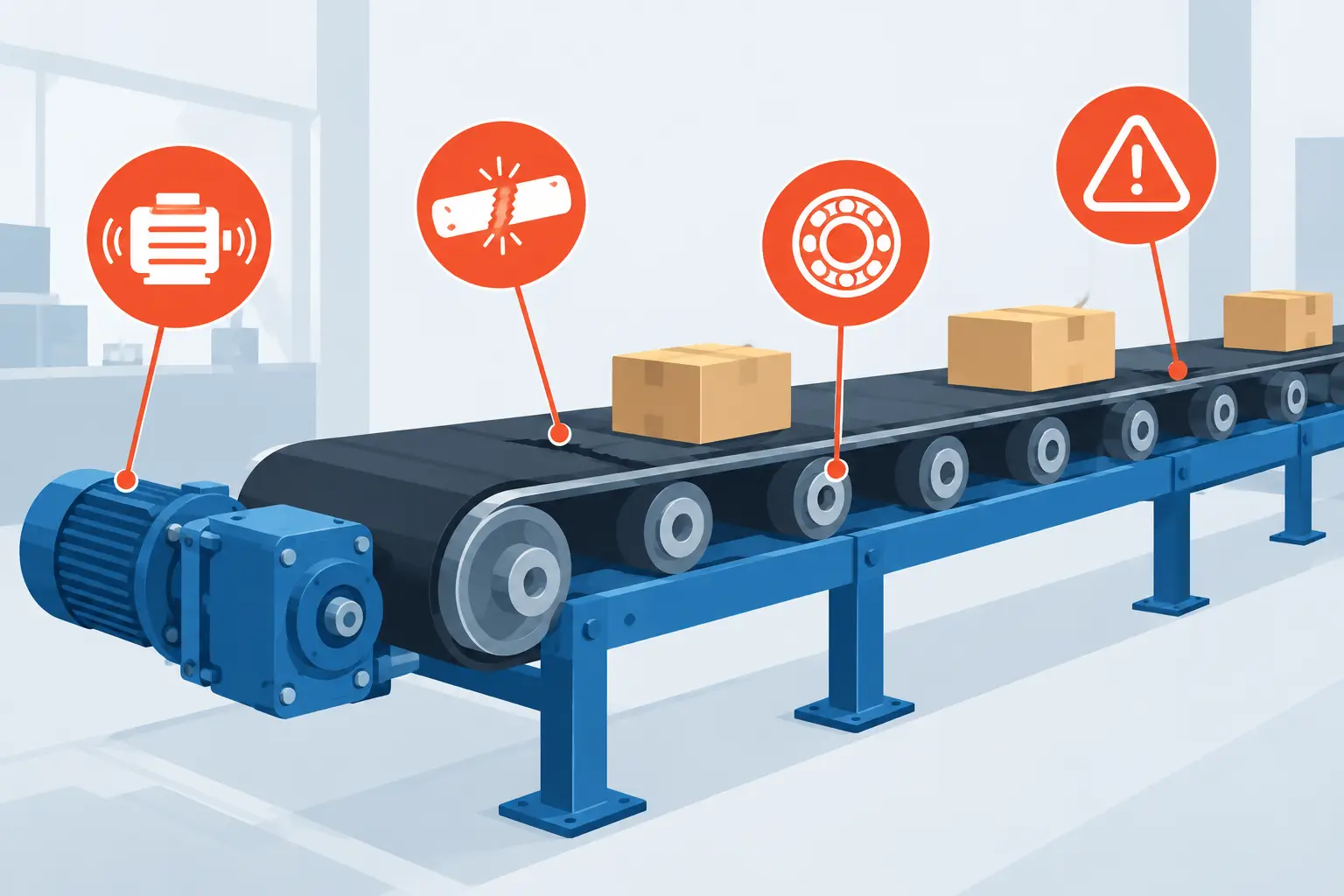
A belt that consistently runs to one side is not simply an alignment nuisance. Mistracking can damage belt edges, wear skirt rubber, foul guards and structures, and eventually cause a belt tear or splice failure. Look for fresh rub marks on frames and idlers, frayed edges, displaced material at transfer points, or a belt that needs repeated manual correction.
The cause may be an out-of-square pulley, seized or incorrectly positioned rollers, uneven loading, poor transfer-point design, build-up on pulleys, or a damaged belt section. Correcting the visible belt position without finding the underlying cause usually means the fault returns. In confined tunnelling conveyor arrangements, where access can be limited and recovery time matters, repeated mistracking should be treated as a maintenance priority.
Unusual noise, vibration or heat
Squealing, grinding, rumbling and regular knocking are useful diagnostic information. A change in sound around a head pulley, take-up, drive, gearbox or idler set can point to bearing deterioration, loose components, misalignment or contact between moving and fixed parts. Vibration may indicate similar problems, but it can also signal an unbalanced pulley, worn coupling or structural looseness.
Heat is another warning that needs prompt assessment. Hot bearing housings, rollers or drive components can precede seizure and, in some environments, create a more serious safety risk. Temperature checks should be compared with the equipment’s normal readings and carried out under the site’s approved inspection and isolation procedures. A single warm component may be manageable in the short term; a rising trend across shifts is a different matter.
Damaged, seized or missing rollers
Rollers are numerous, but they are not minor components. A seized roller can rapidly wear the underside of a belt, create drag, increase power demand and generate heat. A missing roller allows belt sag, which can worsen spillage and place abnormal loading on adjacent components.
Walk-by inspections should look for rollers that are not turning, carry material build-up, sit at an unusual angle or show damaged shells and brackets. The risk is often highest around loading zones, return runs exposed to carryback, and areas where water, fines or grout contamination can reach bearings. Replacing isolated failed rollers is necessary, but a cluster of failures calls for a closer review of sealing, cleaning, material containment and roller selection.
Carryback, spillage and blocked transfer points
Material on the return belt is more than a housekeeping issue. Carryback accumulates under pulleys and along return runs, can force the belt off line, accelerates roller wear and increases the chance of slips, trips and manual clean-up exposure. At transfer points, persistent spillage may indicate a belt speed or loading issue, ineffective skirting, worn sealing, misaligned chutes or poor material flow.
Operators sometimes accept a growing clean-up requirement because the conveyor is still running. That is a costly threshold to accept. More labour is diverted to clean-up, access routes become less reliable, and the equipment is operating in conditions that promote the next failure. The appropriate remedy depends on the source of the material, not just the location where it lands.
Increasing drive load or repeated electrical trips
A motor that draws more current than its established operating range is working harder than it should. The reason may be excessive belt tension, seized rollers, pulley build-up, overloading, chute blockage, mechanical drag or an issue in the drive train. Repeated overload trips, variable-speed drive faults or nuisance stops should be investigated rather than reset as routine events.
Electrical symptoms can also originate in mechanical faults, which is why effective diagnosis requires mechanical and electrical capability working together. Check operating data against throughput, belt speed and recent changes to the conveyor arrangement. A higher load during a known increase in material volume may be expected. The same load with no change in production is a warning sign.
Worn or damaged pulleys, lagging and belt splices
Pulley lagging that is worn smooth, broken or contaminated reduces traction. The first signs may be belt slip at start-up, dust near the drive, a burning-rubber smell, or irregular belt movement. Continued slip can damage the belt and overload the drive, especially where frequent starts, steep inclines or wet material place greater demands on traction.
Splices deserve equally close attention. Look for lifting covers, opening edges, cracking, exposed fasteners where applicable, or a visible change in belt tracking as the splice passes through the system. A splice failure can produce significant downtime and difficult recovery work. It should be assessed by competent personnel as soon as deterioration is identified, with repair timing based on condition, duty and the consequences of an unplanned failure.
Changes in belt tension or take-up travel
Take-up systems compensate for belt stretch and help maintain correct tension. Excessive travel, erratic movement, inadequate tension or a take-up near the end of its available range can indicate belt elongation, incorrect settings, a mechanical obstruction or a problem with the take-up arrangement itself.
Too little tension can cause drive slip and mistracking. Too much can overload bearings, pulleys and the belt carcass. Tension is not a setting to adjust by feel, particularly on long or high-capacity systems. It should be reviewed against the conveyor design, belt condition and operating duty.
What to do when warning signs appear
The correct response is based on risk, location and the fault’s likely rate of progression. A damaged belt near a critical transfer point may require an immediate controlled stop, while minor carryback may be managed through planned corrective work if controls remain effective. Production pressure must not override isolation requirements, guarding standards or the need to keep people clear of moving equipment.
A disciplined response generally involves four actions:
- record the symptom, location, operating conditions and any trend from previous inspections;
- inspect the affected area using approved access and isolation controls;
- identify the root cause before selecting a repair; and
- schedule or execute corrective work with the right people, spares, tools and verification checks.
This approach prevents the common cycle of replacing the damaged component while leaving the source of misalignment, contamination, overload or poor transfer performance untouched. It also makes inspection findings useful for maintenance planning rather than isolated shift notes.
Build warning signs into preventive maintenance
The best inspection frequency depends on conveyor duty, material characteristics, environment and the consequence of failure. A continuously operating tunnel conveyor handling abrasive spoil needs a different regime from an intermittently used plant conveyor. High-risk areas such as drives, take-ups, transfer points, belt cleaners and sections with known water or contamination exposure warrant closer attention.
Condition monitoring should combine routine visual inspections with practical operating data. Trend roller failures, belt repairs, current draw, temperature readings, spillage events and unplanned stoppages. Patterns often reveal an emerging system issue before any single defect appears severe. Clear inspection standards also help operators, maintainers and supervisors describe faults consistently and escalate them at the right point.
For major projects, maintenance planning must account for access windows, critical spares and competent labour availability. A repair delayed by an unavailable roller, pulley, fitter or electrical technician can turn a modest defect into a schedule-impacting event. HP Rural supports conveyor maintenance and breakdown work with qualified personnel and practical experience in demanding material-handling environments.
The most useful warning sign is the one acted on early. When crews report changes promptly and maintenance teams investigate the cause rather than the symptom alone, conveyors remain safer to operate, easier to maintain and far less likely to dictate the project schedule.