A tunnel conveyor is rarely commissioned under ideal conditions. Access is restricted, services are still being completed, production pressure is building and a small fault at the discharge end can stop an entire mucking cycle. Knowing how to commission tunnel conveyors means controlling those interfaces before the system is asked to run continuously.
Commissioning is not simply proving that motors turn and belts move. It is a planned process that confirms the installed conveyor matches the approved design, safety systems function as intended, controls communicate correctly and the operating team can run and maintain the plant safely. A disciplined approach reduces early-life failures, belt damage, nuisance trips and avoidable downtime once tunnelling advances.
Start commissioning before energisation
Successful commissioning begins with a structured review of the installation. Mechanical, electrical and control works should be complete enough to support safe testing, with outstanding items clearly recorded and assessed. Trying to energise a conveyor while guards, cable supports, access ways or transfer chutes remain incomplete creates unnecessary risk and makes fault-finding harder.
The commissioning lead should work from the approved drawings, conveyor data, OEM documentation, electrical schematics, control philosophy and site-specific risk controls. This establishes the intended operating sequence and gives the team a clear basis for checking what has been installed.
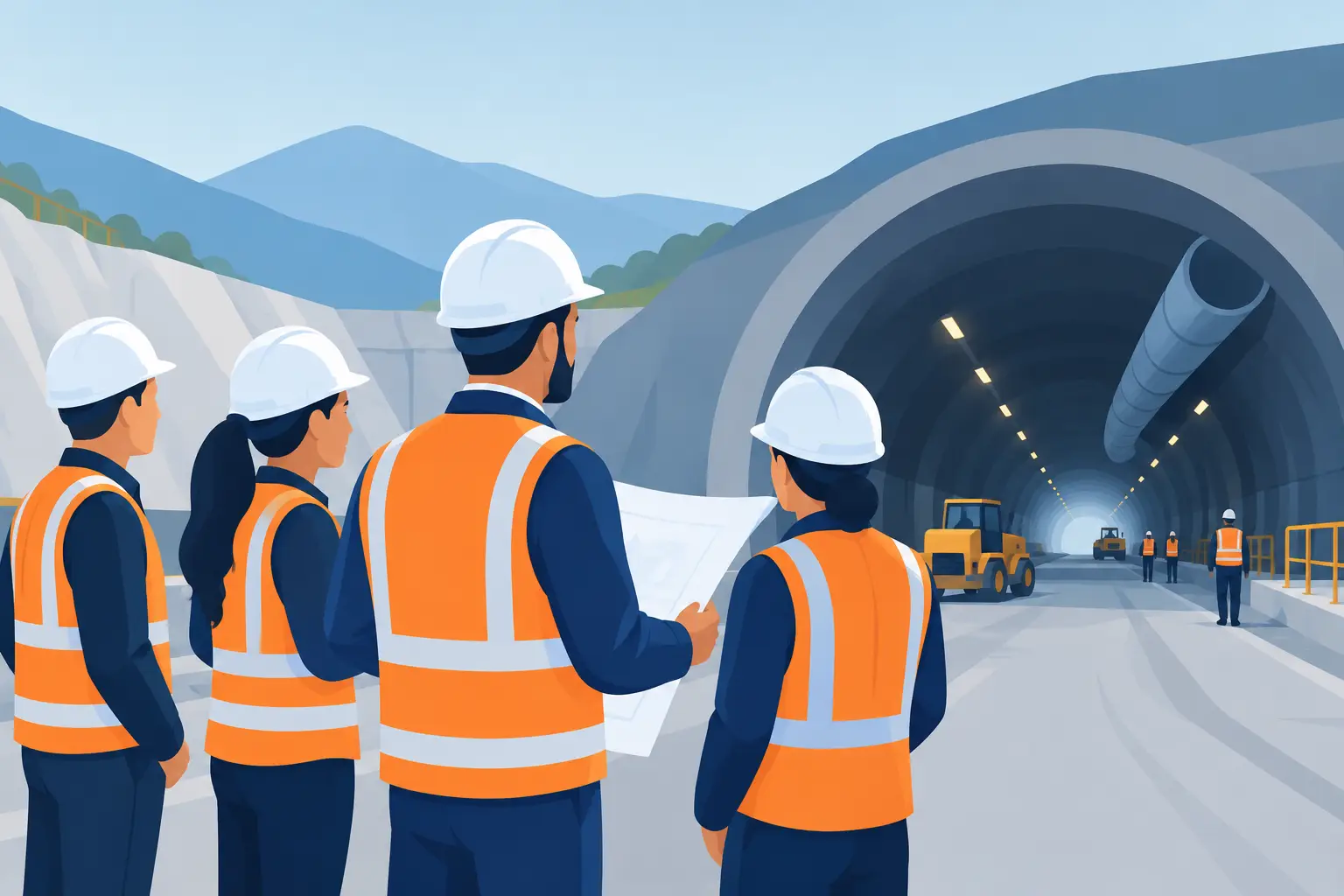
Before any run test, confirm that the conveyor route is accessible and that people working on adjacent tunnel activities understand the test boundaries. In underground works, communication between the drive station, belt route, transfer points, control room and tunnel face is essential. Radios, agreed call signs and a clear authority to stop work are practical controls, not administrative extras.
Verify the mechanical installation
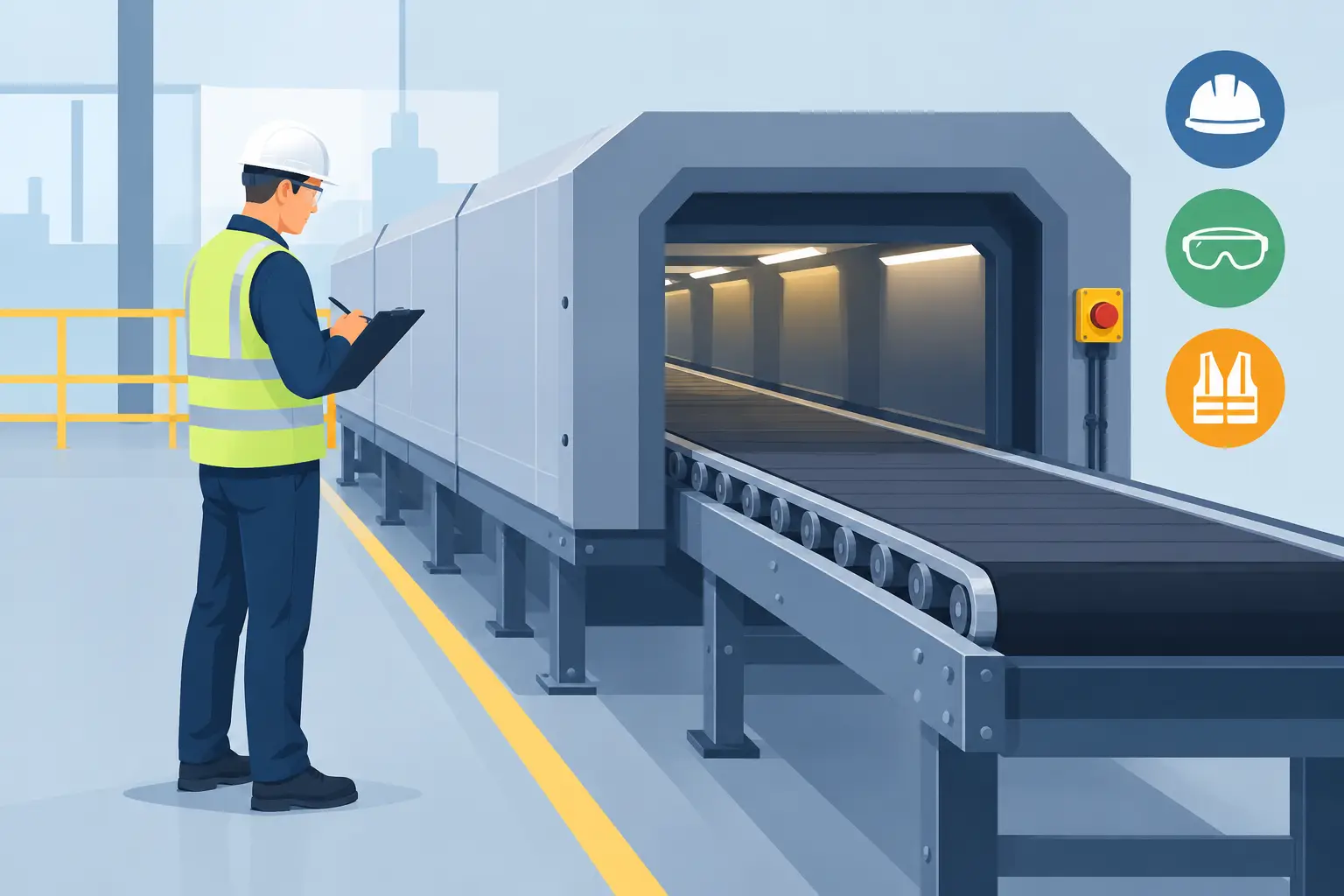
A detailed mechanical inspection should confirm that the system is complete, secure and ready to move. This includes drive assemblies, pulleys, idlers, belt cleaners, take-up equipment, skirting, chutes, guards and access platforms. Check that structural supports are correctly fixed, rollers rotate freely and there is no debris or installation material in the conveyor path.
Belt condition and alignment deserve particular attention. A belt that is damaged, incorrectly joined or already running hard against structure will not improve under load. Inspect splice quality, belt tracking, pulley lagging, scraper contact and take-up travel. The take-up must have sufficient available movement for the expected operating conditions, rather than being set at the end of its range on day one.
Transfer points should be checked for material flow, containment and safe access. Poor chute geometry or excessive drop height can cause carryback, belt wear, blocked chutes and dust issues that only become apparent when production begins. Where possible, address obvious material-flow concerns before loaded testing rather than accepting recurring clean-up and maintenance work as normal operation.
Prove electrical and safety systems first
Electrical commissioning must be completed by qualified personnel in accordance with project requirements, approved procedures and applicable standards. Insulation resistance testing, earthing verification, cable identification, motor connections and protection settings should be recorded before operational testing proceeds.
Control and safety circuits require a deliberate functional test. The system should not rely on assumptions that an emergency stop or permissive is correctly wired because it appears on a drawing. Test each device from the field through to the control system and confirm the expected response.
Key functions to verify include:
- emergency-stop devices, pull-wire switches and local stop stations;
- belt drift, blocked-chute, zero-speed, belt-slip and temperature protection where fitted;
- audible and visual pre-start warnings;
- interlocks between upstream and downstream conveyors;
- controlled start-up and shutdown sequences, including run-on timers; and
- reset requirements following a trip or emergency stop.
The required response will depend on the control philosophy. Some faults must stop a single conveyor, while others must stop connected equipment in a defined sequence to prevent material build-up. A blocked discharge conveyor, for example, should not allow upstream belts to continue feeding material into an already congested transfer point.
For variable-speed drives and PLC-controlled systems, confirm motor rotation, speed references, communications, fault reporting and local/remote control selection. Settings should be documented, protected from unauthorised change and reviewed against the mechanical design limits. Increasing speed to chase production without confirming capacity, belt tension and transfer performance can create a larger problem than the delay it was meant to solve.
Run no-load tests in a controlled sequence
No-load testing is the first opportunity to observe how the conveyor behaves as a complete system. Establish an exclusion zone, confirm all personnel are clear of moving parts and ensure the test team knows who has authority to start, stop and isolate the plant.
Start individual conveyor sections in the correct sequence, normally downstream to upstream. Observe belt tracking at head, tail and bend pulleys, and watch for vibration, abnormal noise, roller seizure, belt flap or contact with guards and structure. Check the drive for smooth acceleration and confirm that the take-up responds as expected.
Do not treat a successful short run as proof of readiness. Allow sufficient operating time to identify heat build-up in bearings, drive components and brakes, as well as intermittent electrical or control faults. Recheck belt tracking after each adjustment. Tracking should be corrected through proper alignment and installation checks, not by forcing the belt with improvised guides that introduce new wear points.
Nuisance trips also need investigation. Bypassing a safety device to keep testing moving may conceal an installation or configuration issue that will later stop production. If a sensor is triggering unexpectedly, determine whether the cause is device placement, wiring, control logic, mechanical alignment or a genuine process condition.
Introduce material gradually
Loaded testing confirms whether the conveyor can manage its intended duty. Start with controlled material feed and increase toward normal operating conditions while monitoring belt tracking, material trajectory, chute performance, motor load, drive temperatures and spillage.
Tunnelling spoil can vary significantly in moisture, particle size and cohesiveness. A conveyor that handles dry, uniform material may behave differently with wet clay, mixed rock or slurry-contaminated spoil. Commissioning should account for the material likely to be encountered, not only the most favourable test condition.
At each loading stage, inspect transfer points and discharge areas. Look for belt overloading, off-centre loading, carryback, excessive dust, blocked chutes and material falling from the belt line. Confirm that scrapers and skirting are performing without causing excessive belt wear. If adjustments are needed, isolate the conveyor correctly before any work begins.
Where the system includes a crusher, screening plant, stockpile conveyor or vertical conveyor, test the full process sequence. The real duty is the combined operation of these assets, not the isolated performance of a single belt. Test trip propagation and restart controls under realistic conditions so operators understand what happens when a downstream item becomes unavailable.
Record defects, settings and acceptance results
Commissioning records make the difference between a system that is merely operating and one that is properly handed over. Record test results, protection checks, drive settings, belt tracking adjustments, splice details, punch-list items and any accepted operating limitations.
Outstanding defects should be categorised according to risk and operational impact. Safety-critical issues must be rectified before handover. Other items may be managed through an agreed close-out plan, provided their status, owner and completion date are clear. Informal assurances are not enough when multiple contractors and shifts are involved.
The handover package should include current drawings, operating procedures, isolation points, maintenance requirements, recommended inspection intervals, spare-parts lists and supplier documentation. It should also identify critical spares with long lead times, such as rollers, pulleys, belt repair materials, sensors, gearbox components and drive-related items. The right spare held on site can prevent a minor failure becoming a major programme disruption.
Train the people who will run the conveyor
Operators and maintainers need practical familiarisation before the conveyor enters routine production. They should understand start-up and shutdown sequences, warning devices, emergency-stop locations, common alarm responses, inspection points and the site isolation process. Training is most effective when it is delivered at the equipment, using the actual controls and access routes people will use on shift.
Maintenance teams should receive baseline information from commissioning. Initial belt condition, tracking position, drive temperatures and observed wear points provide a reference for preventive maintenance. Early inspections should be more frequent than normal until the system has settled into service and the operating conditions are understood.
For continuous tunnelling operations, commissioning should also establish the escalation path for faults. Clear contact points, competent response personnel and access to mechanical, electrical and control capability reduce the time between a fault occurring and a safe return to service. HP Rural supports this transition with commissioning, maintenance and rapid-response capability suited to demanding conveyor environments.
A well-commissioned tunnel conveyor gives the project team more than a signed test sheet. It provides a known operating baseline, a safer work environment and a practical foundation for reliable material movement as the tunnel advances.