Emergency Conveyor Breakdown Repair That Restores Uptime

Emergency Conveyor Breakdown Repair That Restores Uptime

By -Published On: September 12, 2026-Categories: Business-
Emergency Conveyor Breakdown Repair That Restores Uptime

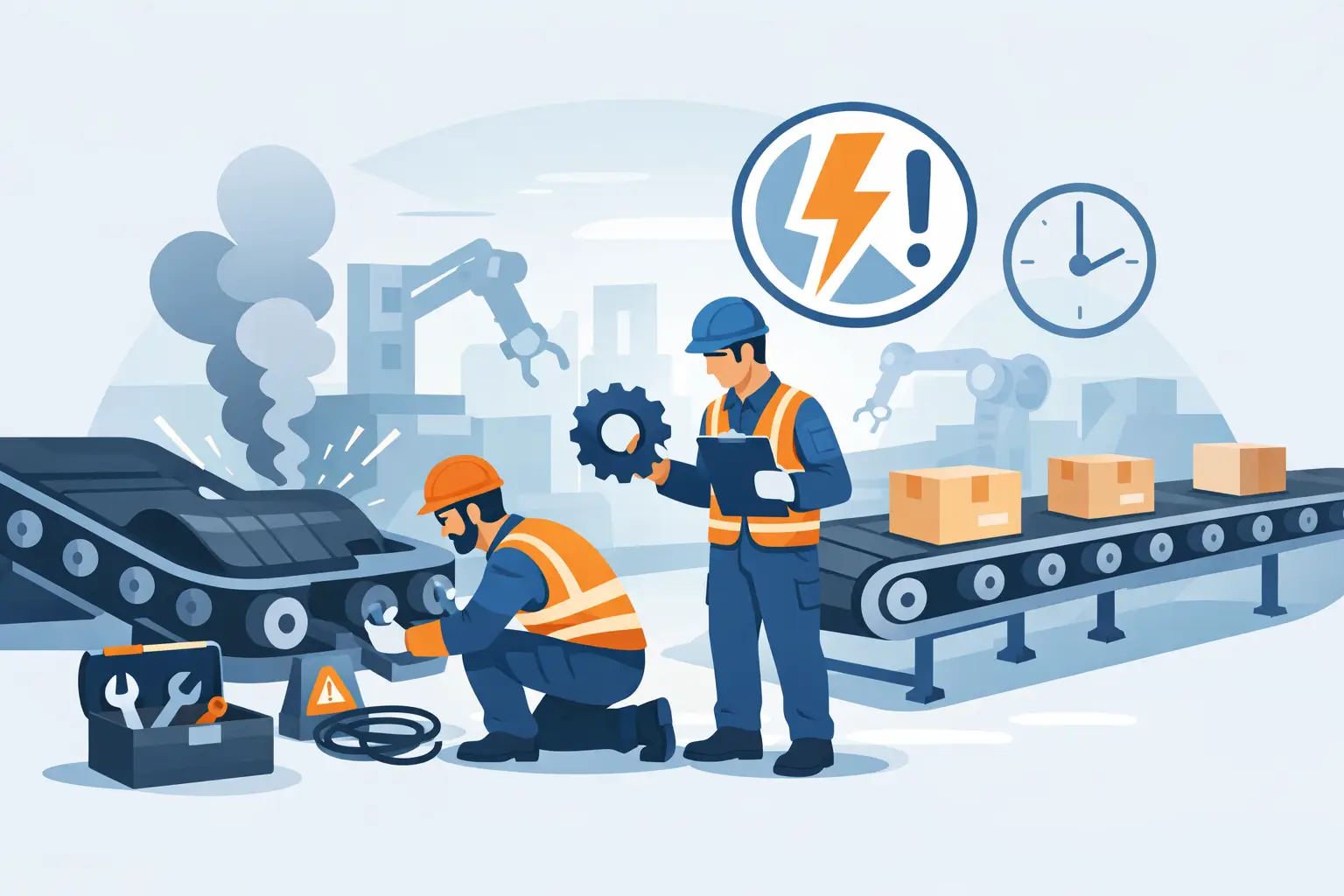
A stopped conveyor is rarely an isolated equipment issue. In a tunnel, it can halt spoil removal, constrain the work face and place pressure on every downstream activity. In a quarry, processing plant or logistics operation, the same failure can rapidly become lost production, missed deliveries and unplanned labour costs. Emergency conveyor breakdown repair must therefore do more than replace a failed component. It must restore safe, controlled operation while identifying the conditions that caused the failure.

For project teams operating around the clock, response quality matters as much as response time. The right repair partner arrives prepared to assess the system, establish safe access, isolate energy sources, diagnose the fault and coordinate a practical return-to-service plan. The objective is not simply to get the belt moving. It is to get it moving safely and reliably enough to support the next stage of work.

What makes a conveyor failure an emergency

Not every conveyor defect warrants an immediate callout. A worn scraper blade, minor belt tracking drift or damaged guard can often be managed through planned maintenance, provided the risk assessment supports continued operation. An emergency arises when a fault compromises safety, prevents required production or creates a credible risk of further damage if the system continues to run.

Common emergency conditions include belt tears, mistracking severe enough to damage the belt edge or structure, failed idlers causing belt damage, pulley or bearing failure, seized drives, gearbox faults, damaged take-up equipment and electrical control issues. In high-demand tunnelling applications, material build-up, transfer-point blockages and structural damage can also stop the conveyor at the point where continuity is most critical.

The visible symptom is not always the root cause. A belt may have torn because of a trapped foreign object, a seized roller, poor transfer loading, inadequate skirt sealing or a misaligned pulley. Replacing the damaged section without addressing that cause can result in a second failure shortly after restart. This is why competent fault finding is central to emergency response.

Emergency conveyor breakdown repair starts with safe control

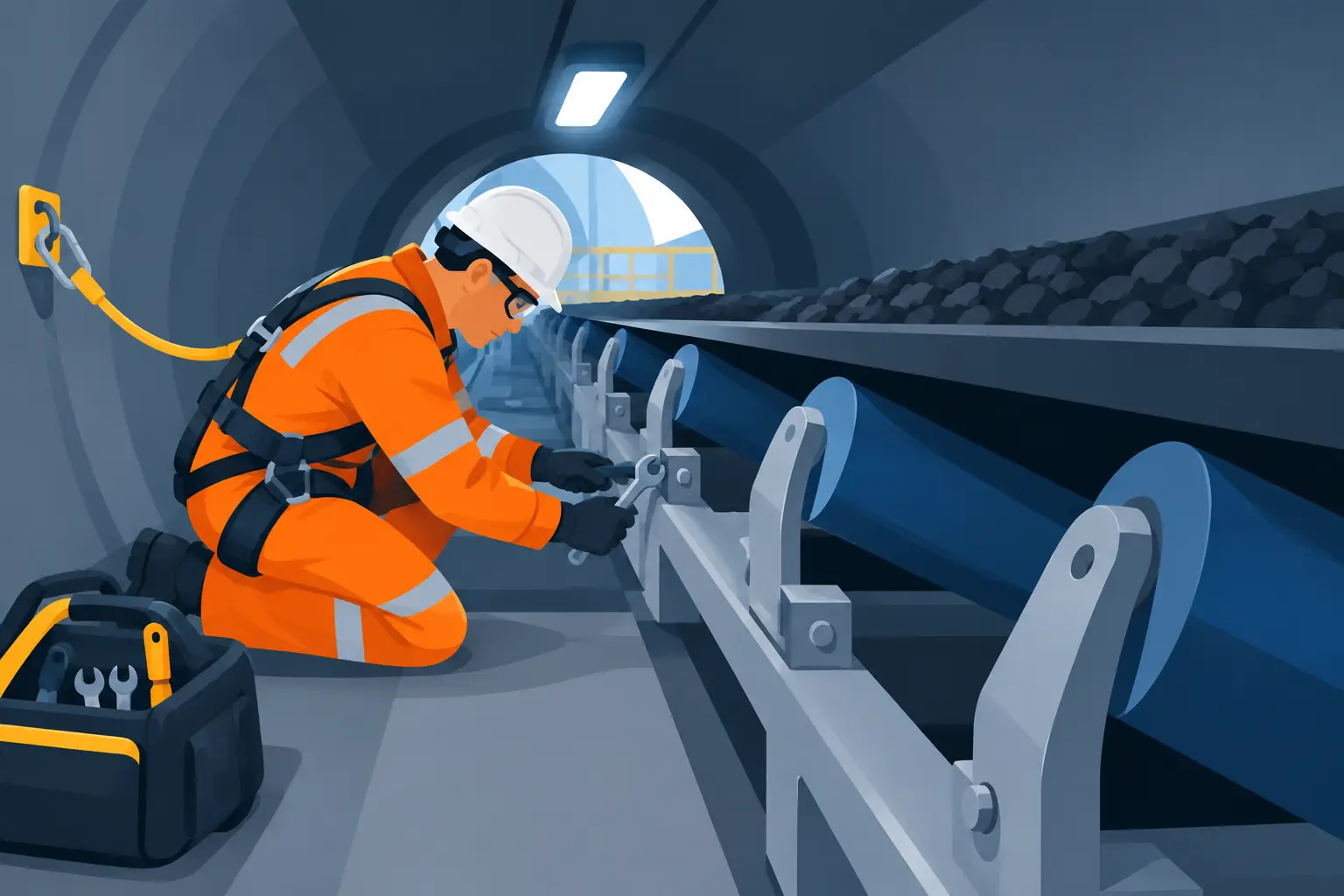
The first task at a breakdown is to make the area safe. That means confirming the conveyor is stopped, isolating all relevant energy sources, applying lock-out and tag-out controls, and verifying zero energy before work begins. Depending on the location, crews may also need to manage stored energy in gravity take-ups, hydraulic systems, counterweights and tensioned belt sections.

Underground and confined work environments introduce further considerations. Access routes may be restricted, visibility limited and communications affected by distance or noise. Nearby plant movements, ventilation arrangements, emergency egress and interaction with other trades all need to be considered before repairs commence. A rapid response should never bypass site controls, permit requirements or the engineering checks needed for the work scope.

Once the system is controlled, technicians can inspect the full fault area rather than focusing only on the first damaged component. This includes checking the belt, pulleys, idlers, frames, chutes, guards, drive assemblies, sensors and associated electrical equipment. The inspection establishes whether a local repair is appropriate or whether the repair must extend further along the conveyor.

Diagnosing the failure under operational pressure

Breakdown decisions often need to be made quickly, but speed should come from preparation and experience, not assumptions. A practical diagnosis considers what happened immediately before the stoppage, how the conveyor was loaded, whether alarms or unusual noises were reported, and whether the system has shown recurring symptoms.

For example, repeated belt tracking problems can point to inconsistent loading at a transfer point, damaged training idlers, material carryback or a pulley alignment issue. A hot bearing may be the result of contamination, poor lubrication, misalignment or excessive loading rather than a single defective bearing. A drive trip may involve a mechanical jam, belt slip, motor issue, variable speed drive fault or control circuit problem.

The repair method depends on the consequences of each option. A temporary belt repair may be suitable where it restores controlled operation and allows a permanent splice or belt change to be planned. In other cases, particularly where belt integrity, guarding or structural condition is compromised, a temporary repair introduces unacceptable risk. The right decision balances production urgency with the actual condition of the equipment and the site’s safety obligations.

Parts availability changes the recovery window

Emergency repairs are often delayed by a simple issue: the required part is not available when the fault is identified. Conveyor operations should hold critical spares based on their equipment configuration, operating hours, lead times and failure history. Typical holdings may include idlers, bearings, pulleys, belt repair materials, scrapers, skirting, fasteners, sensors, drive components and electrical spares.

There is no universal spare-parts list. A short mobile conveyor may need a different strategy from a long underground system with multiple drives and transfer stations. For critical infrastructure projects, the priority is to identify long-lead and high-consequence components before the breakdown occurs, then maintain a controlled inventory that can support the agreed recovery plan.

A capable service contractor can assist with this planning by reviewing component specifications, identifying interchangeability risks and ensuring replacement parts are fit for the duty. Substituting a part that appears similar but is not rated for the load, environment or alignment requirement can create another failure point.

Repair work that supports a reliable restart

Once the fault and repair scope are confirmed, the work should be planned around both immediate restoration and the system’s next operating period. A belt repair may require cutting out damaged material, preparing the belt ends, completing a mechanical or vulcanised splice, checking belt tracking and inspecting adjacent rollers and pulleys. A pulley or drive repair may require lifting plans, guarding removal, alignment checks and verification of coupling condition before reassembly.

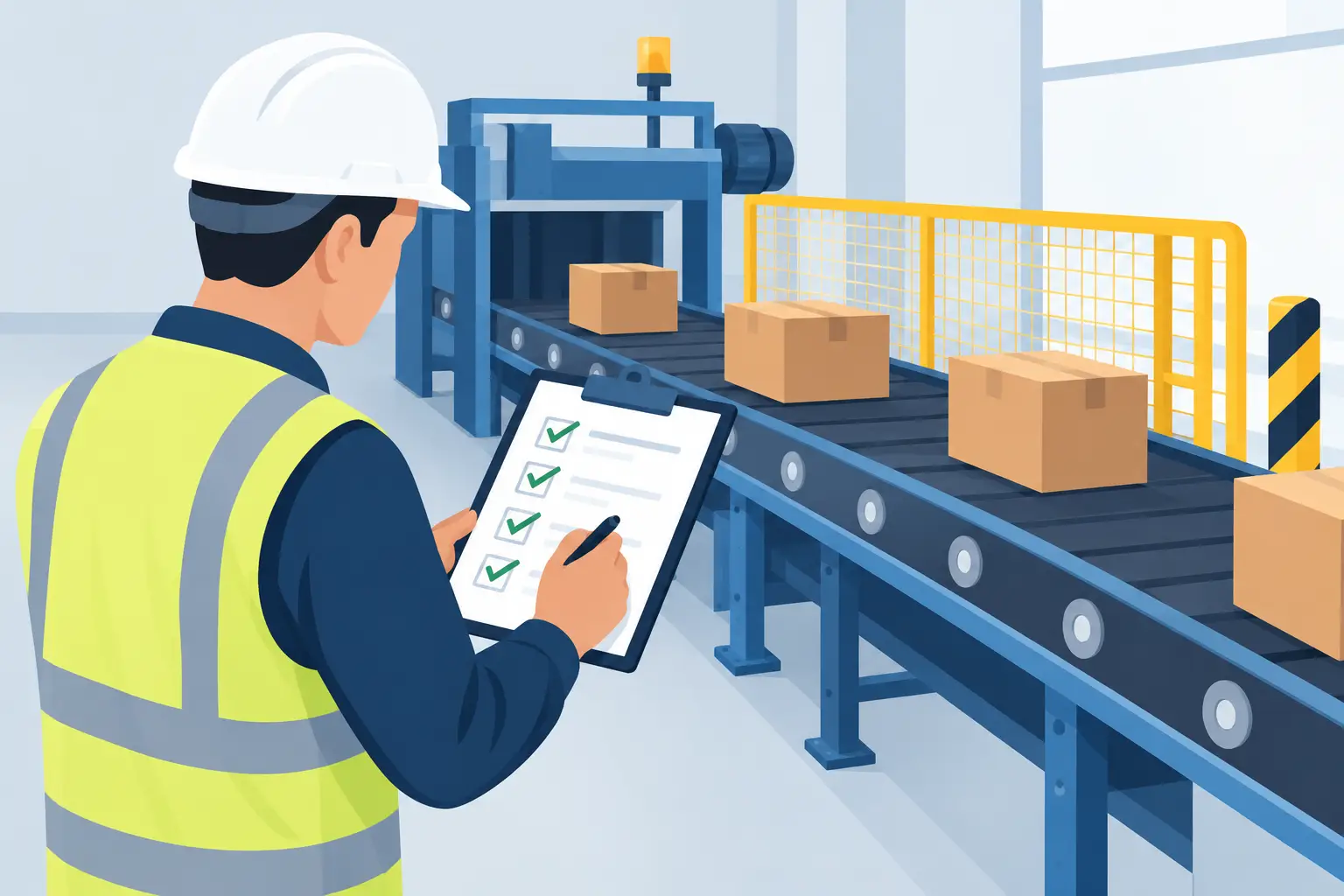
After repair, the conveyor should not simply be started at full load. A controlled commissioning sequence gives the team an opportunity to inspect rotation, belt travel, tracking, noise, vibration, scraper contact, transfer performance and control-system feedback. Starting unloaded may be appropriate where site conditions permit, followed by staged loading and observation at known problem areas.

The acceptance process should be documented. Record the fault, repair completed, parts used, observations during testing and any follow-up actions required. This provides operational teams with a clear handover and gives maintenance planners evidence for identifying recurring issues.

Turning emergency callouts into fewer stoppages

The most useful outcome from a breakdown is not only a returned conveyor. It is a better understanding of where the maintenance plan needs attention. Repeated emergency work commonly indicates an underlying gap in inspection frequency, lubrication practices, belt tracking control, condition monitoring, housekeeping or operator reporting.

Planned maintenance should focus on the failure modes most likely to affect each system. In abrasive tunnelling or quarry applications, that may mean close attention to idler condition, belt wear, chute liners, skirting and material carryback. In high-throughput industrial systems, drive temperatures, vibration, sensor performance and controls may require more frequent review. The interval should be based on duty and condition, not a generic calendar schedule.

Clear escalation criteria also help. Operators and supervisors need to know which signs can be monitored, which require a planned shutdown and which require immediate isolation. Unusual noise, burning odour, belt edge damage, repeated trips, smoke, severe mistracking and damaged guards should never be normalised as part of operating a hard-working conveyor.

Choosing an emergency response partner

For conveyor-dependent projects, an emergency provider should have more than general mechanical capability. The team needs practical experience with belts, drives, pulleys, idlers, transfer points, take-up systems and controls, together with the ability to work within the site’s safety and access requirements.

Response capacity also depends on preparation. Ask whether technicians can attend demanding locations, whether the provider can source or supply relevant components, and whether it can carry a repair through from diagnosis to testing and follow-up maintenance. For underground operations, proven familiarity with tunnelling constraints is particularly valuable because access, isolation and recovery logistics can be as challenging as the mechanical repair itself.

HP Rural supports critical conveyor systems across installation, maintenance, component supply, repairs and rapid-response callouts. That whole-of-lifecycle perspective helps ensure that an emergency repair is informed by how the system operates, what it has experienced and what is needed to keep it working.

A conveyor breakdown will always demand decisive action. The best response combines urgency with disciplined isolation, accurate diagnosis, fit-for-purpose repair work and a controlled restart. When those elements are in place, the repair team does more than recover lost time – it gives the operation a sounder basis for the next shift and the next production target.
Emergency Conveyor Breakdown Repair That Restores Uptime

A stopped conveyor is rarely an isolated equipment issue. In a tunnel, it can halt spoil removal, constrain the work face and place pressure on every downstream activity. In a quarry, processing plant or logistics operation, the same failure can rapidly become lost production, missed deliveries and unplanned labour costs. Emergency conveyor breakdown repair must therefore do more than replace a failed component. It must restore safe, controlled operation while identifying the conditions that caused the failure.

For project teams operating around the clock, response quality matters as much as response time. The right repair partner arrives prepared to assess the system, establish safe access, isolate energy sources, diagnose the fault and coordinate a practical return-to-service plan. The objective is not simply to get the belt moving. It is to get it moving safely and reliably enough to support the next stage of work.

What makes a conveyor failure an emergency

Not every conveyor defect warrants an immediate callout. A worn scraper blade, minor belt tracking drift or damaged guard can often be managed through planned maintenance, provided the risk assessment supports continued operation. An emergency arises when a fault compromises safety, prevents required production or creates a credible risk of further damage if the system continues to run.

Common emergency conditions include belt tears, mistracking severe enough to damage the belt edge or structure, failed idlers causing belt damage, pulley or bearing failure, seized drives, gearbox faults, damaged take-up equipment and electrical control issues. In high-demand tunnelling applications, material build-up, transfer-point blockages and structural damage can also stop the conveyor at the point where continuity is most critical.

The visible symptom is not always the root cause. A belt may have torn because of a trapped foreign object, a seized roller, poor transfer loading, inadequate skirt sealing or a misaligned pulley. Replacing the damaged section without addressing that cause can result in a second failure shortly after restart. This is why competent fault finding is central to emergency response.

Emergency conveyor breakdown repair starts with safe control

The first task at a breakdown is to make the area safe. That means confirming the conveyor is stopped, isolating all relevant energy sources, applying lock-out and tag-out controls, and verifying zero energy before work begins. Depending on the location, crews may also need to manage stored energy in gravity take-ups, hydraulic systems, counterweights and tensioned belt sections.

Underground and confined work environments introduce further considerations. Access routes may be restricted, visibility limited and communications affected by distance or noise. Nearby plant movements, ventilation arrangements, emergency egress and interaction with other trades all need to be considered before repairs commence. A rapid response should never bypass site controls, permit requirements or the engineering checks needed for the work scope.

Once the system is controlled, technicians can inspect the full fault area rather than focusing only on the first damaged component. This includes checking the belt, pulleys, idlers, frames, chutes, guards, drive assemblies, sensors and associated electrical equipment. The inspection establishes whether a local repair is appropriate or whether the repair must extend further along the conveyor.

Diagnosing the failure under operational pressure

Breakdown decisions often need to be made quickly, but speed should come from preparation and experience, not assumptions. A practical diagnosis considers what happened immediately before the stoppage, how the conveyor was loaded, whether alarms or unusual noises were reported, and whether the system has shown recurring symptoms.

For example, repeated belt tracking problems can point to inconsistent loading at a transfer point, damaged training idlers, material carryback or a pulley alignment issue. A hot bearing may be the result of contamination, poor lubrication, misalignment or excessive loading rather than a single defective bearing. A drive trip may involve a mechanical jam, belt slip, motor issue, variable speed drive fault or control circuit problem.

The repair method depends on the consequences of each option. A temporary belt repair may be suitable where it restores controlled operation and allows a permanent splice or belt change to be planned. In other cases, particularly where belt integrity, guarding or structural condition is compromised, a temporary repair introduces unacceptable risk. The right decision balances production urgency with the actual condition of the equipment and the site’s safety obligations.

Parts availability changes the recovery window

Emergency repairs are often delayed by a simple issue: the required part is not available when the fault is identified. Conveyor operations should hold critical spares based on their equipment configuration, operating hours, lead times and failure history. Typical holdings may include idlers, bearings, pulleys, belt repair materials, scrapers, skirting, fasteners, sensors, drive components and electrical spares.

There is no universal spare-parts list. A short mobile conveyor may need a different strategy from a long underground system with multiple drives and transfer stations. For critical infrastructure projects, the priority is to identify long-lead and high-consequence components before the breakdown occurs, then maintain a controlled inventory that can support the agreed recovery plan.

A capable service contractor can assist with this planning by reviewing component specifications, identifying interchangeability risks and ensuring replacement parts are fit for the duty. Substituting a part that appears similar but is not rated for the load, environment or alignment requirement can create another failure point.

Repair work that supports a reliable restart

Once the fault and repair scope are confirmed, the work should be planned around both immediate restoration and the system’s next operating period. A belt repair may require cutting out damaged material, preparing the belt ends, completing a mechanical or vulcanised splice, checking belt tracking and inspecting adjacent rollers and pulleys. A pulley or drive repair may require lifting plans, guarding removal, alignment checks and verification of coupling condition before reassembly.

After repair, the conveyor should not simply be started at full load. A controlled commissioning sequence gives the team an opportunity to inspect rotation, belt travel, tracking, noise, vibration, scraper contact, transfer performance and control-system feedback. Starting unloaded may be appropriate where site conditions permit, followed by staged loading and observation at known problem areas.

The acceptance process should be documented. Record the fault, repair completed, parts used, observations during testing and any follow-up actions required. This provides operational teams with a clear handover and gives maintenance planners evidence for identifying recurring issues.

Turning emergency callouts into fewer stoppages

The most useful outcome from a breakdown is not only a returned conveyor. It is a better understanding of where the maintenance plan needs attention. Repeated emergency work commonly indicates an underlying gap in inspection frequency, lubrication practices, belt tracking control, condition monitoring, housekeeping or operator reporting.

Planned maintenance should focus on the failure modes most likely to affect each system. In abrasive tunnelling or quarry applications, that may mean close attention to idler condition, belt wear, chute liners, skirting and material carryback. In high-throughput industrial systems, drive temperatures, vibration, sensor performance and controls may require more frequent review. The interval should be based on duty and condition, not a generic calendar schedule.

Clear escalation criteria also help. Operators and supervisors need to know which signs can be monitored, which require a planned shutdown and which require immediate isolation. Unusual noise, burning odour, belt edge damage, repeated trips, smoke, severe mistracking and damaged guards should never be normalised as part of operating a hard-working conveyor.

Choosing an emergency response partner

For conveyor-dependent projects, an emergency provider should have more than general mechanical capability. The team needs practical experience with belts, drives, pulleys, idlers, transfer points, take-up systems and controls, together with the ability to work within the site’s safety and access requirements.

Response capacity also depends on preparation. Ask whether technicians can attend demanding locations, whether the provider can source or supply relevant components, and whether it can carry a repair through from diagnosis to testing and follow-up maintenance. For underground operations, proven familiarity with tunnelling constraints is particularly valuable because access, isolation and recovery logistics can be as challenging as the mechanical repair itself.

HP Rural supports critical conveyor systems across installation, maintenance, component supply, repairs and rapid-response callouts. That whole-of-lifecycle perspective helps ensure that an emergency repair is informed by how the system operates, what it has experienced and what is needed to keep it working.

A conveyor breakdown will always demand decisive action. The best response combines urgency with disciplined isolation, accurate diagnosis, fit-for-purpose repair work and a controlled restart. When those elements are in place, the repair team does more than recover lost time – it gives the operation a sounder basis for the next shift and the next production target.
Go to Top