A stopped conveyor in a tunnel is rarely an isolated mechanical issue. It can halt muck removal, constrain TBM advance, crowd working areas and place immediate pressure on the project programme. Underground conveyor maintenance contractors need more than general belt-handling experience – they need to understand the operating constraints, safety controls and response standards of live tunnelling work.
For project and maintenance leaders, the decision is not simply who can replace a roller or repair a belt. It is who can safely keep a critical material-handling system available while coordinating with tunnelling, electrical, mechanical and site safety teams. The right contractor brings qualified technicians, disciplined planning, fit-for-purpose parts and the capacity to respond when production cannot wait.
Why underground conveyor maintenance is specialised
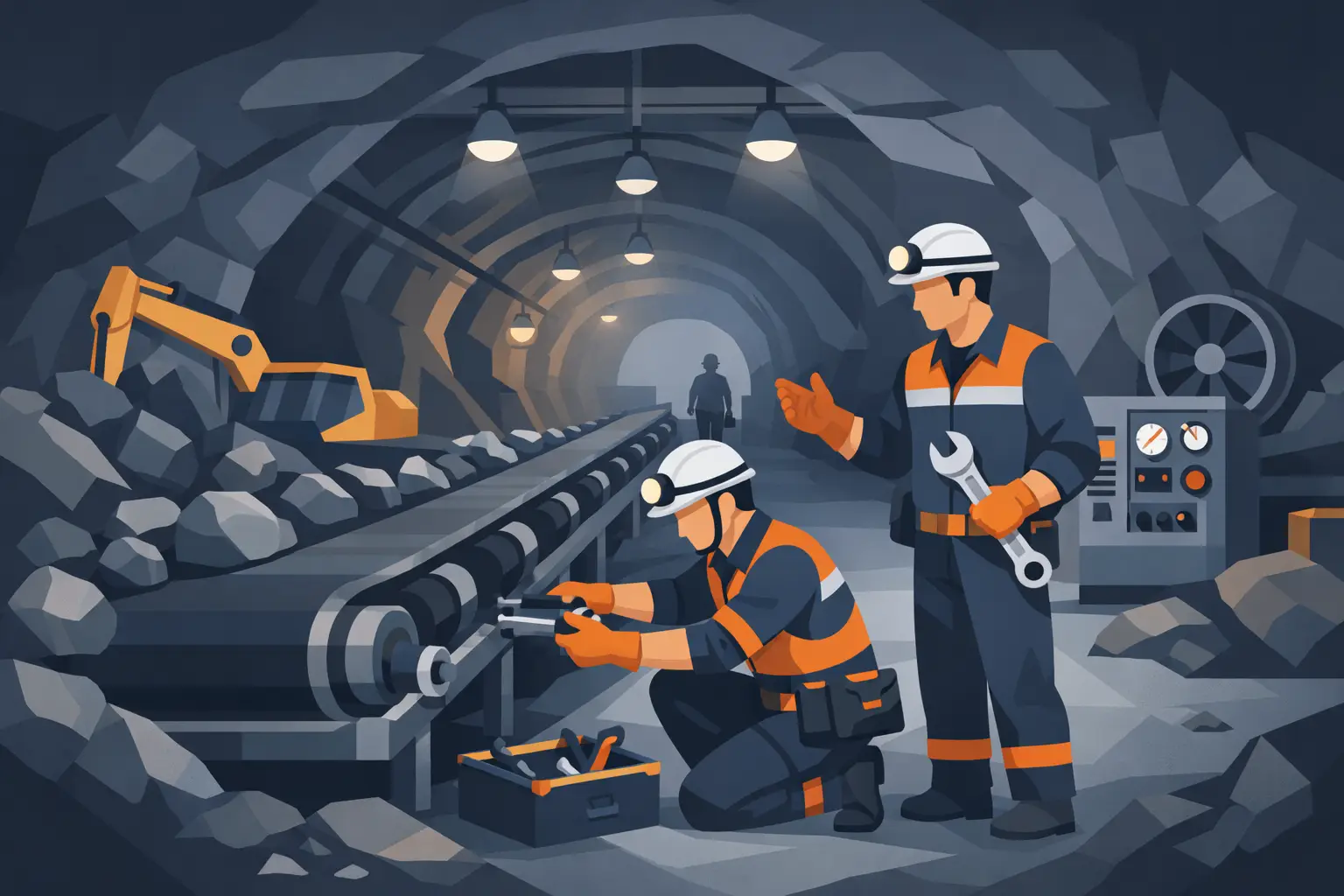
Underground conveyor systems operate in conditions that accelerate wear and make access difficult. Abrasive spoil, moisture, dust, belt loading, transfer-point impact and extended operating hours all affect component life. In a tunnel, these factors sit alongside confined spaces, restricted travel paths, ventilation requirements, communications constraints and tightly controlled work permits.
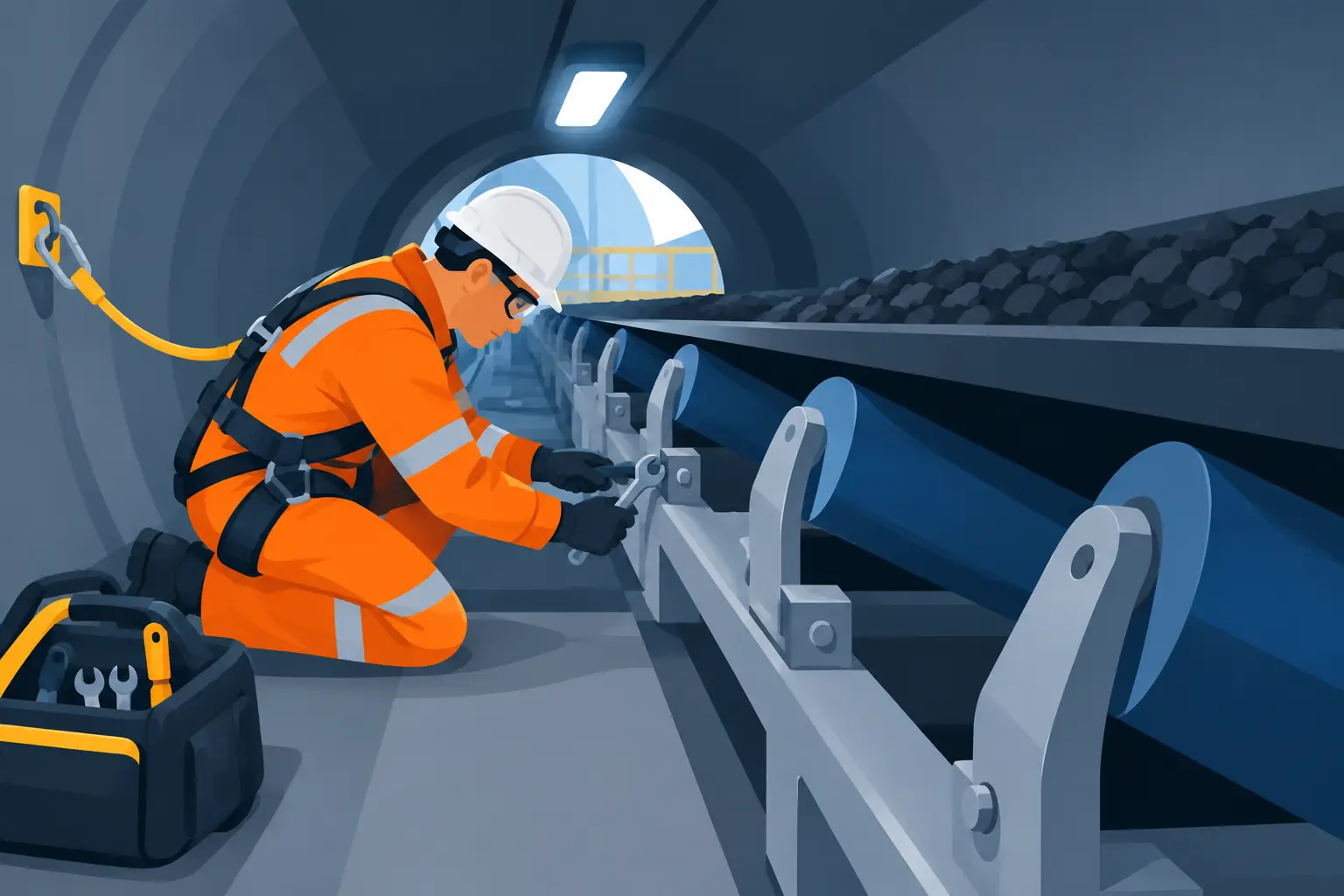
Maintenance work must therefore be planned around the whole operating environment. A straightforward pulley, idler or scraper change above ground can become a detailed intervention below ground, requiring isolation, stored-energy controls, lifting plans, access arrangements and coordination with the production schedule. Contractors must know how to complete the work without introducing risks to personnel or delaying other critical activities.
System configuration also changes as a tunnel advances. Conveyor lengths may be extended, drives adjusted, take-up arrangements modified and transfer points reconfigured. Maintenance support has to account for these changes rather than applying a static maintenance plan to a moving project.
What capable contractors should provide
A maintenance provider should support the conveyor lifecycle, not only attend failures. This starts with condition inspections and planned servicing, then extends to corrective repairs, component replacement, modifications, breakdown response and spare-parts support.
The practical scope will depend on the conveyor design and project stage, but it commonly includes belt tracking and alignment checks, idler and roller inspections, pulley condition, belt cleaner performance, skirt sealing, chute wear, drive and gearbox checks, take-up operation, guarding, structural integrity and emergency-stop systems. Electrical and mechanical interfaces need to be considered together. A belt issue may be caused by loading, tracking, drive behaviour, a seized component or deteriorating structure, rather than the belt alone.
Preventive maintenance that targets downtime risk
Preventive maintenance is most effective when it is based on equipment condition and operating consequences. High-wear zones near loading and transfer points deserve closer attention than low-load sections. Drive stations, take-up areas and critical access locations should be inspected at frequencies that reflect their failure impact.
A useful maintenance programme records defects clearly, assigns priorities and identifies the work needed to remove repeat failure modes. For example, recurrent belt damage may indicate poor chute geometry, inadequate sealing, excessive impact or mistracking. Replacing the damaged section without addressing the source only defers the next stoppage.
Planned works should be scheduled to suit shutdown windows and project milestones. The contractor should provide a realistic labour, plant, parts and duration estimate before the work begins. This gives the project team a clear basis for planning isolations and managing production impacts.
Repairs and emergency response
Breakdowns still occur, even with a well-managed programme. What matters is how quickly the fault is assessed, made safe and rectified. Rapid attendance is valuable, but it is not the only measure of response capability. The contractor must arrive ready to diagnose the actual issue, work within site controls and access suitable parts or repair materials.
For underground systems, emergency work often demands careful judgement. A short-term repair may restore production, but a temporary measure should be documented and followed by a permanent rectification plan. Conversely, taking a little longer for a durable repair can be the better decision where repeated stoppages would create greater overall risk and cost.
Selecting underground conveyor maintenance contractors
Procurement teams should assess technical capability against the site’s operating reality. General conveyor experience is relevant, but direct exposure to underground tunnelling and high-demand material handling provides an important advantage. Contractors familiar with these environments understand that safety, availability and programme performance are connected.
Ask how the contractor manages planned maintenance, breakdown callouts and defect reporting. Their answer should be specific. It should explain who attends site, how work is supervised, what isolation and permit processes are followed, how parts are sourced and how findings are reported back to the asset owner or project team.
Experience with installation and commissioning is also valuable. Technicians who understand how a conveyor was assembled, aligned, loaded and tested are better placed to identify the causes of operating problems. They can recognise when a repair should be paired with an upgrade, adjustment or modification to improve long-term performance.
A capable contractor should be able to demonstrate:
- qualified personnel with conveyor, mechanical and underground site experience;
- work methods that meet project safety, engineering and quality requirements;
- access to commonly required conveyor components and repair materials;
- clear communication across shifts, shutdowns and emergency callouts; and
- reporting that converts inspection findings into prioritised maintenance actions.
Price remains a procurement consideration, but the lowest callout rate is not always the lowest project cost. A contractor without the right people, equipment or parts can turn a contained failure into an extended production interruption. Evaluation should consider mobilisation capability, response arrangements, technical depth and the ability to prevent recurrence.
Spare parts are part of the maintenance strategy
A maintenance contract is weakened if critical components are unavailable when they are needed. Projects should identify long-lead and high-consequence items early, then establish practical site holdings or supply arrangements. The appropriate stock level depends on the conveyor layout, duty cycle, component lead times, available storage and the consequences of a failure.
Common holdings can include idlers, rollers, bearings, belt-repair materials, cleaners, skirts, fasteners, sensors and selected drive components. However, stocking every possible item can tie up capital and create storage issues. The better approach is a risk-based spares plan that separates routinely consumed parts from components that would cause a major outage if unavailable.
The maintenance contractor can add value by reviewing usage trends and adjusting recommendations as the project progresses. This is particularly relevant where conveyor extensions, changing geology or increased production rates alter wear patterns.
Maintenance reporting that supports project decisions
Reports should do more than confirm that a technician attended site. They should identify what was inspected, what was repaired, what remains at risk and what action is recommended. Clear records help maintenance supervisors plan shutdown work, provide engineering teams with evidence for modifications and give project managers visibility over emerging reliability issues.
Useful reporting tracks recurring defects, component consumption, belt damage locations, unplanned stoppages and outstanding corrective work. Over time, this information shows whether interventions are working. If failures continue at the same transfer point or drive station, the focus should shift from repeat repair to engineering review.
This is where an operational partner differs from a labour-only provider. The objective is not to generate more maintenance activity. It is to reduce avoidable work, improve conveyor reliability and protect the production schedule.
Coordinating maintenance with tunnel operations
The best maintenance outcomes come from early coordination. Daily production discussions can flag abnormal belt behaviour, changing spoil characteristics, access limitations and upcoming shutdown opportunities before they become urgent issues. Maintenance teams should have a direct line to the people operating the system, while still working within the project’s formal planning and safety processes.
For major planned interventions, the scope should be agreed well before the shutdown. This includes component availability, lifting requirements, isolations, access, labour coverage, testing and acceptance criteria for returning the conveyor to service. If the work uncovers additional defects, the team needs a clear decision path for whether to repair them immediately or schedule follow-up work.
HP Rural supports conveyor-dependent infrastructure and industrial operations with installation, commissioning, preventive maintenance, repairs, component supply and rapid-response support. That full-service capability helps project teams maintain continuity from initial system setup through changing operational demands underground.
A reliable underground conveyor is built through disciplined inspections, timely repairs and informed decisions about where risk is developing. Choose a contractor that can work safely in the tunnel, communicate clearly under pressure and help your team act before a minor defect becomes a programme-critical stoppage.