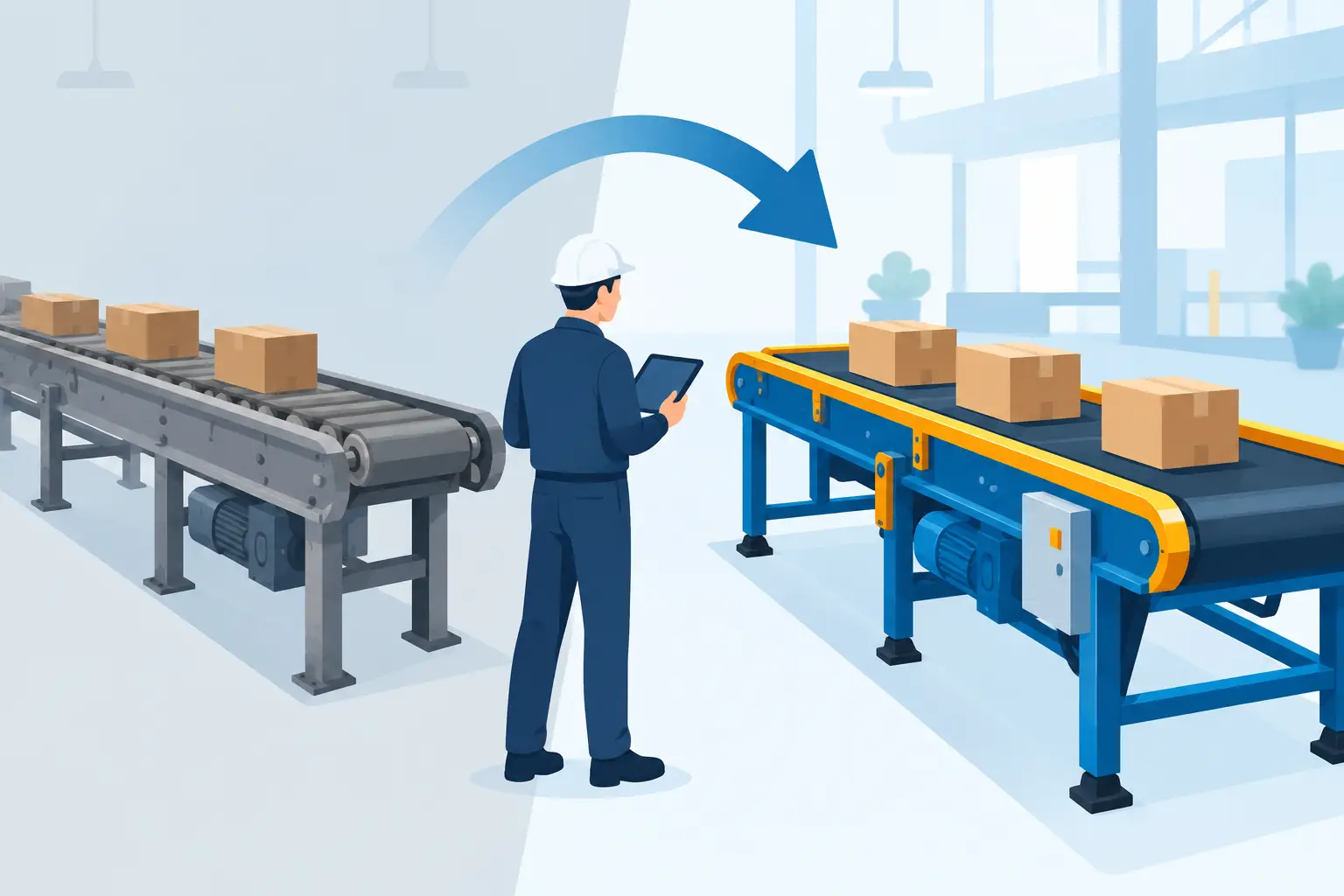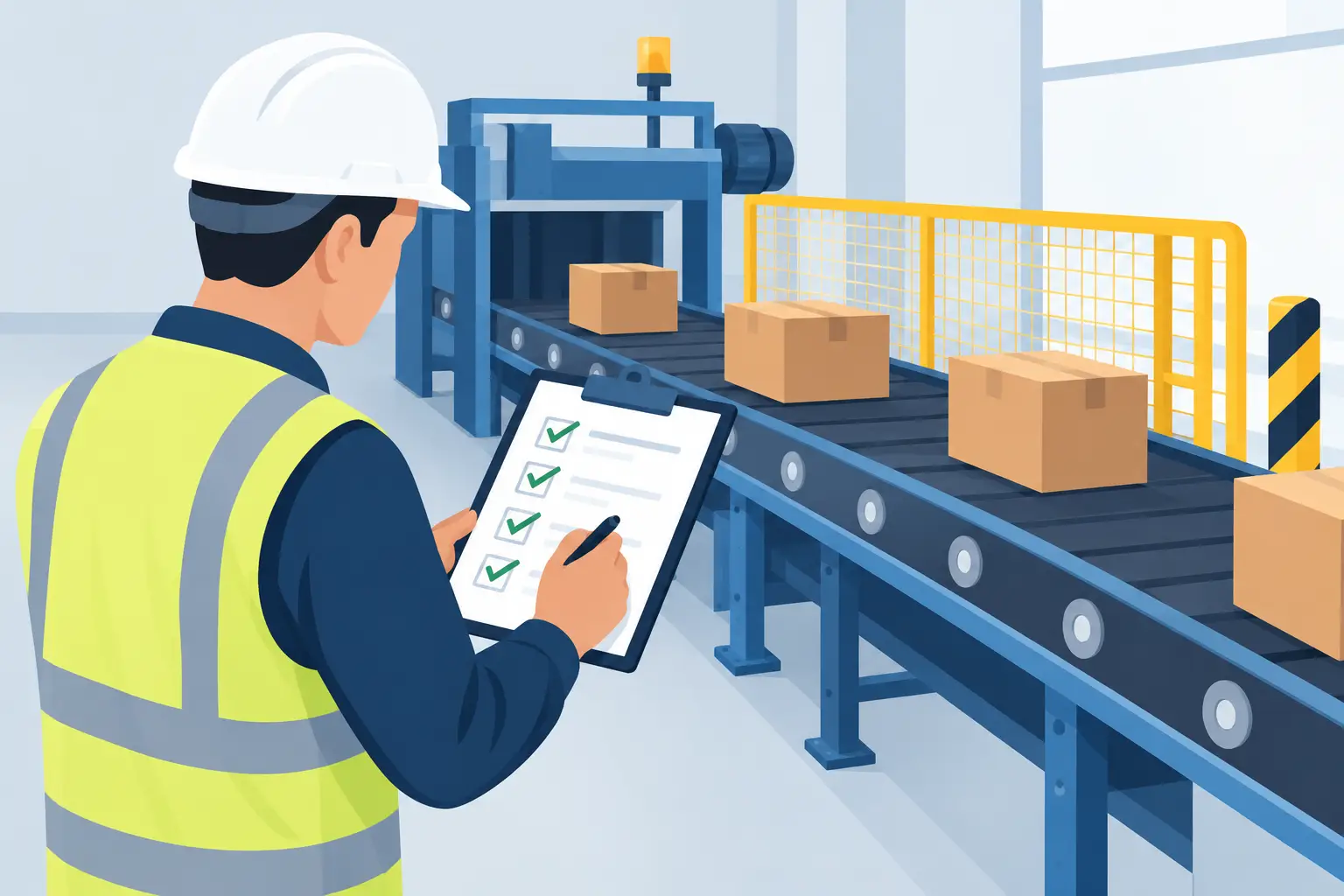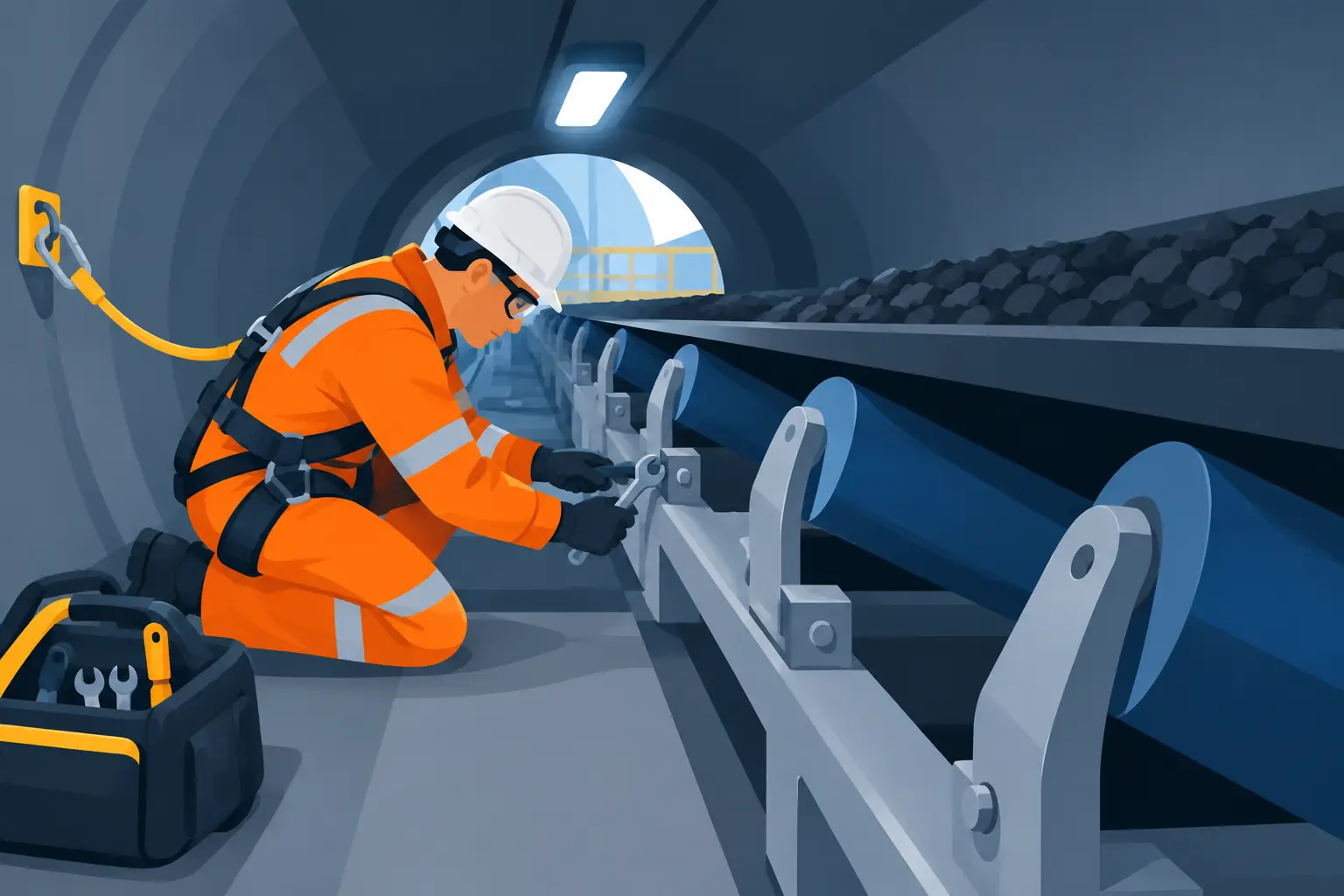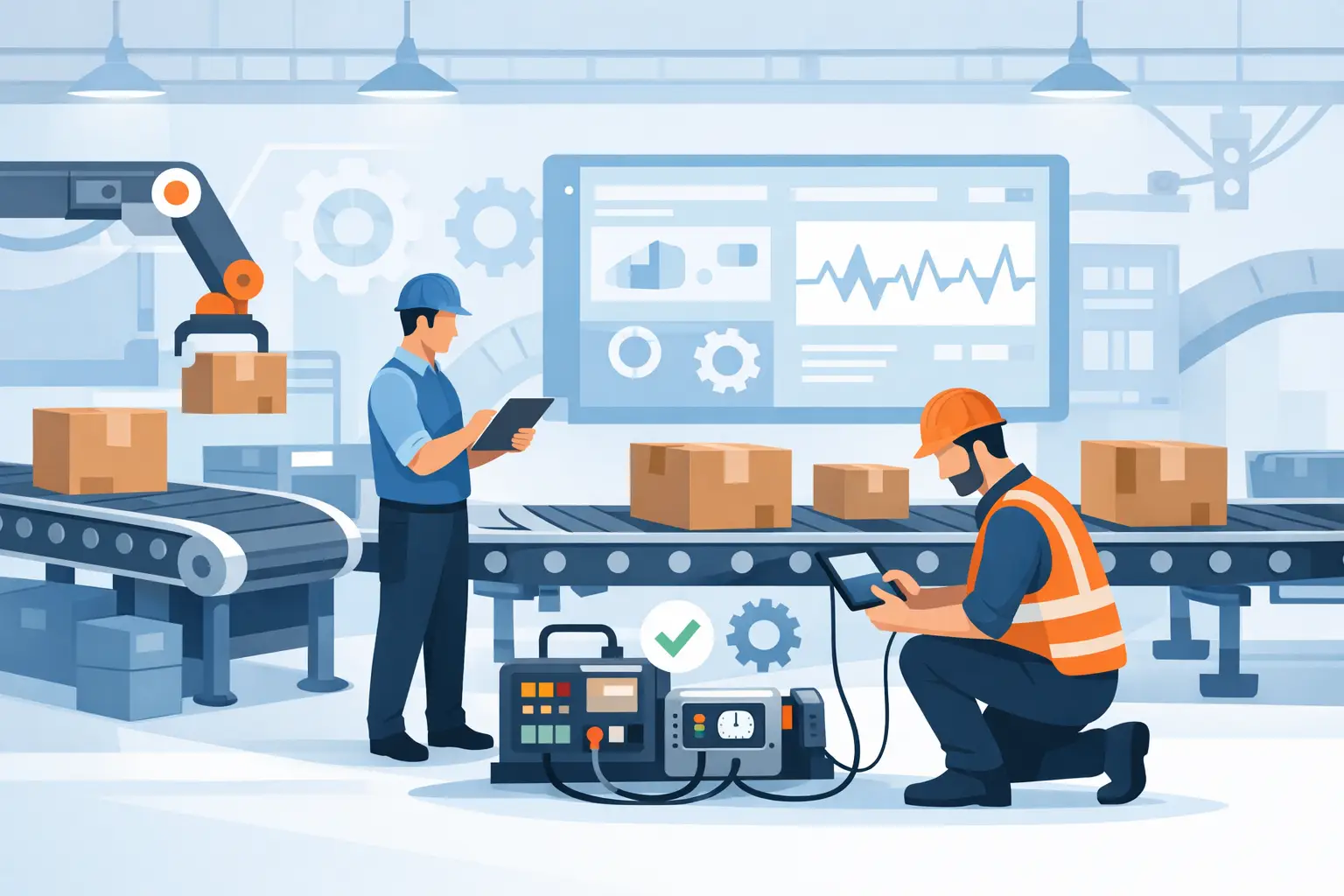
A conveyor can be fully installed, electrically connected and ready to turn, yet still be unfit for production. Conveyor system commissioning testing is the controlled process that proves the equipment, controls and operating procedures will perform safely under the conditions the site actually faces. For tunnelling, civil infrastructure and other continuous material-handling operations, that proof protects people, programme milestones and production capacity.
Commissioning should not be treated as a final tick-and-flick activity once construction is complete. It is the point at which mechanical installation, electrical controls, guarding, emergency systems and operational requirements are brought together. A disciplined process identifies defects while the project team and specialist trades are still available to rectify them, rather than after a shutdown or incident forces the issue.
What commissioning testing needs to prove
The purpose is not simply to demonstrate that belts move. A completed commissioning programme needs to establish that the conveyor can start, stop, carry its intended load, respond to fault conditions and be safely maintained. The required test scope will vary with the conveyor layout, drive configuration, material, environment and client specifications.
In a tunnel, for example, restricted access, transfer points, changing conveyor lengths and wet or abrasive spoil can create conditions not seen in a fixed surface installation. On a quarry, manufacturing line or logistics facility, the priorities may differ, but the need for stable tracking, safe access and dependable controls remains the same.
Testing should confirm the mechanical condition of the system, including belt alignment, idler and pulley operation, take-up travel, chute arrangement, skirting, fasteners and guarding. It must also verify electrical and control functions such as motor rotation, start-up sequences, interlocks, alarms, pull-wire switches, emergency stops, belt drift switches and speed or slip monitoring where fitted.
The critical question is practical: when a fault occurs, does the system move to a safe state, communicate the issue clearly and allow the team to return it to service without introducing further risk?
Start with a commissioning plan, not a start button
Successful commissioning begins well before energisation. The commissioning plan should define system boundaries, responsibilities, test records, acceptance criteria, isolation arrangements and the sequence in which each section will be released for testing. It should align with the project’s inspection and test plan, approved drawings, risk assessments and operating requirements.
This preparation is particularly valuable on large conveyor runs with multiple drives, transfer stations and interfaces to other plant. Starting one section without confirming its upstream and downstream dependencies can lead to material build-up, belt damage or unsafe access conditions. Clear hold points give the project team an opportunity to check readiness before the next stage proceeds.
Documentation also matters at this stage. As-built information, equipment data, electrical schematics, control narratives and vendor instructions should be available to the people conducting the work. If the test team is working from outdated drawings or has no agreed cause-and-effect logic, faults become harder to diagnose and handover records lose value.
Pre-commissioning checks find the preventable problems
Pre-commissioning is the inspection and verification work completed before the conveyor runs under power. It is where many expensive start-up issues can be removed with relatively simple corrections.
Mechanical checks should confirm that the structure is secure and correctly aligned, rotating equipment is free from obstruction, belts are correctly spliced and tensioned, and all guards are installed. Chutes and skirting need particular attention. Poor adjustment at a transfer point can create carryback, spillage, belt wear and recurring clean-up work from the first production shift.
Electrical pre-commissioning should verify cable terminations, motor and drive settings, earthing, panel labelling and the status of safety circuits. Control devices must be checked against the approved design, not assumed to be correct because they have been installed. Emergency stops, pull wires and local isolators must be accessible, identifiable and functional in the conditions operators will encounter.
Housekeeping is also an operational control. Tools, packaging, loose fasteners and construction debris around drives, return rollers or walkways can become immediate hazards once the belt starts. A clean, accessible conveyor gives the commissioning team a far better view of tracking, vibration and material flow.
Conveyor system commissioning testing in stages
A staged approach gives technicians time to isolate faults and make adjustments without masking the cause. The exact sequence depends on the project, but it generally progresses from no-load checks to functional tests, controlled loaded operation and performance verification.
No-load running
The initial run checks rotation direction, belt tracking, pulley and idler behaviour, vibration, unusual noise and drive performance. Operators should observe the full length of the system where safe access permits, rather than focusing only on the drive station. Tracking issues often emerge at transitions, curves, loading zones and return runs.
This stage is also used to confirm stopping performance and normal start-up sequences. On linked systems, conveyors may need to start and stop in a defined order to prevent material accumulating at transfer points. The timing must be tested, adjusted and recorded.
Functional and safety tests
Safety devices and control logic are then tested under controlled conditions. This includes verifying that emergency devices stop the required equipment, alarms operate as intended and reset procedures do not allow an unexpected restart. Interlocks with feeders, crushers, TBM systems or downstream conveyors should be proven against the agreed operating logic.
These tests need to be witnessed and documented according to the project requirements. A safety circuit that works in isolation but does not respond correctly through the control system is not a passing result. Fault simulation is essential because the most significant system functions are often those needed only when something goes wrong.
Loaded operation
Load testing establishes how the conveyor behaves with material flow. It can reveal problems that no-load running cannot: inadequate chute design, belt slip, material rollback, excessive dust, unstable tracking, surcharge at transfer points or drive overload.
The aim is not to force the system to maximum capacity before it is ready. Load is introduced in a controlled way while the team monitors belt condition, power draw, motor temperatures, transfer performance and any spillage. If a defect appears, it should be rectified and the affected test repeated. Recording a problem without closing it out simply transfers risk to operations.
Common issues that should not be accepted at handover
Minor defects can quickly become chronic failures on a high-duty conveyor. Belt mistracking may look manageable during an initial run, but it can damage belt edges, structures and rollers over time. Poor skirting adjustment may appear as a housekeeping issue, while the resulting spillage creates slip hazards, accelerates component wear and increases labour demand.
Similarly, nuisance trips should be investigated rather than bypassed. Repeated trips may indicate an incorrectly set device, a control logic issue, belt movement beyond tolerance or a genuine mechanical fault. Defeating protective equipment to maintain production creates a larger risk than a planned correction during commissioning.
The same principle applies to access and maintainability. If an idler, pulley or safety device cannot be safely inspected or replaced, the installation may meet the drawing but still create avoidable downtime during operation. Practical input from maintenance personnel before final handover can identify these issues early.
Handover is the start of reliable operation
A commissioning package should provide more than a signed test sheet. It should give the operations and maintenance team a reliable baseline for future decisions. This commonly includes completed inspection and test records, outstanding-defect status, settings and set-points, as-built documentation, operating information, spare-parts recommendations and maintenance requirements.
Operator familiarisation is equally valuable. The people running the system need to understand normal operating limits, start and stop procedures, alarm responses, isolation requirements and escalation pathways. In continuous operations, early recognition of abnormal noise, tracking movement or spillage can prevent a small issue from becoming an unplanned shutdown.
There is a trade-off between commissioning speed and commissioning quality. Projects under programme pressure may be tempted to compress testing, particularly when the conveyor is needed to support the next construction stage. The better approach is to sequence the work efficiently, provide the right specialist resources and resolve defects promptly, while preserving the checks that demonstrate safe performance.
For critical conveyor assets, commissioning is where installation work becomes an operating system. A properly tested conveyor gives project teams a clear starting condition, maintenance teams a dependable reference point and operators the confidence to keep material moving safely when the schedule leaves little room for disruption.